Short answer
Expect professional biohazard waste transport to start with onboarding: the hauler reviews your waste types, supplies approved containers, and sets a schedule. At each pickup, the driver checks packaging and labels, you sign a manifest or shipping paper, and the waste travels to a permitted treatment facility. Afterward you receive proof of treatment to keep in your records.
Onboarding
Onboarding is where most future problems are prevented. A good transporter will ask what kinds of waste you produce, roughly how much, where it is generated in your building, and where it is stored until pickup.
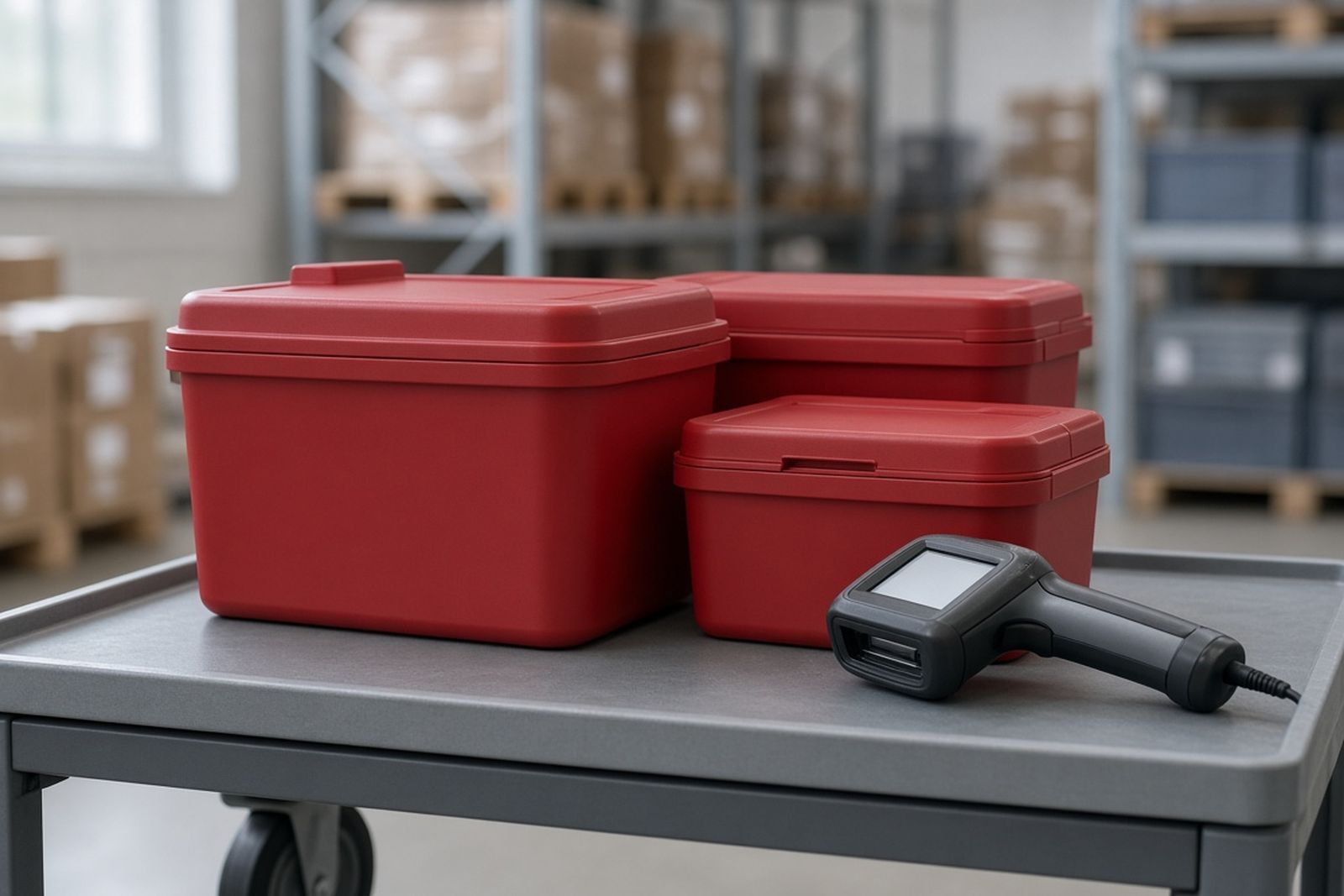
Based on those answers, the transporter recommends container types and sizes: sharps containers for needles and blades, lined boxes or tubs for red-bag waste, and separate containers for pathological or trace chemotherapy waste if you produce them. Some vendors also handle pharmaceutical waste, while others refer you elsewhere.
You will agree on a pickup schedule and receive the paperwork you need. That often includes a service agreement, sample manifests, labeling instructions, and a contact for questions. Many vendors offer brief staff training or a sorting poster, and it is worth accepting.
Ask during onboarding who at your business will sign manifests. That person needs to understand what they are signing, since the generator remains responsible for describing its waste correctly.
If you are switching from another vendor, ask how the changeover works. You will want to know who collects the old vendor's containers, whether any waste already packaged in them can go with the new hauler, and when the first pickup under the new agreement will happen.
How should the waste be packaged before pickup?
Packaging is the generator's job, and it is the most common reason pickups go wrong. The driver is trained to refuse containers that are unsafe or improperly prepared.
Federal transport rules set limits that your containers are designed to meet, down to how much liquid an inner packaging may hold. Your vendor's containers and instructions reflect limits like these, so follow them closely.
Give the storage area a quick check the day before pickup. Look for containers that have been left open, bags that were set down outside a box, or labels that have peeled off. Five minutes of checking saves a refused container and a return trip.
- Fill containers only to the marked fill line, never above it
- Close bags with the method the vendor specifies, then close and seal the outer box or tub
- Keep sharps in rigid sharps containers, never loose in bags
- Do not mix chemical waste, batteries, or ordinary trash into regulated medical waste
- Apply every required label, including the biohazard symbol and your generator information
- Store sealed containers in a secure, labeled area away from public access
Pickup day, and what happens if a container is refused
A typical pickup is short if everything is ready. The driver confirms your account, counts the containers, checks that each one is closed, labeled, and intact, and may weigh them. Any container that fails inspection may be left behind with an explanation.
Drivers who handle hazardous materials must be trained under federal rules, and new hires may work only under direct supervision until that training is complete. You can ask your vendor how its drivers are trained.
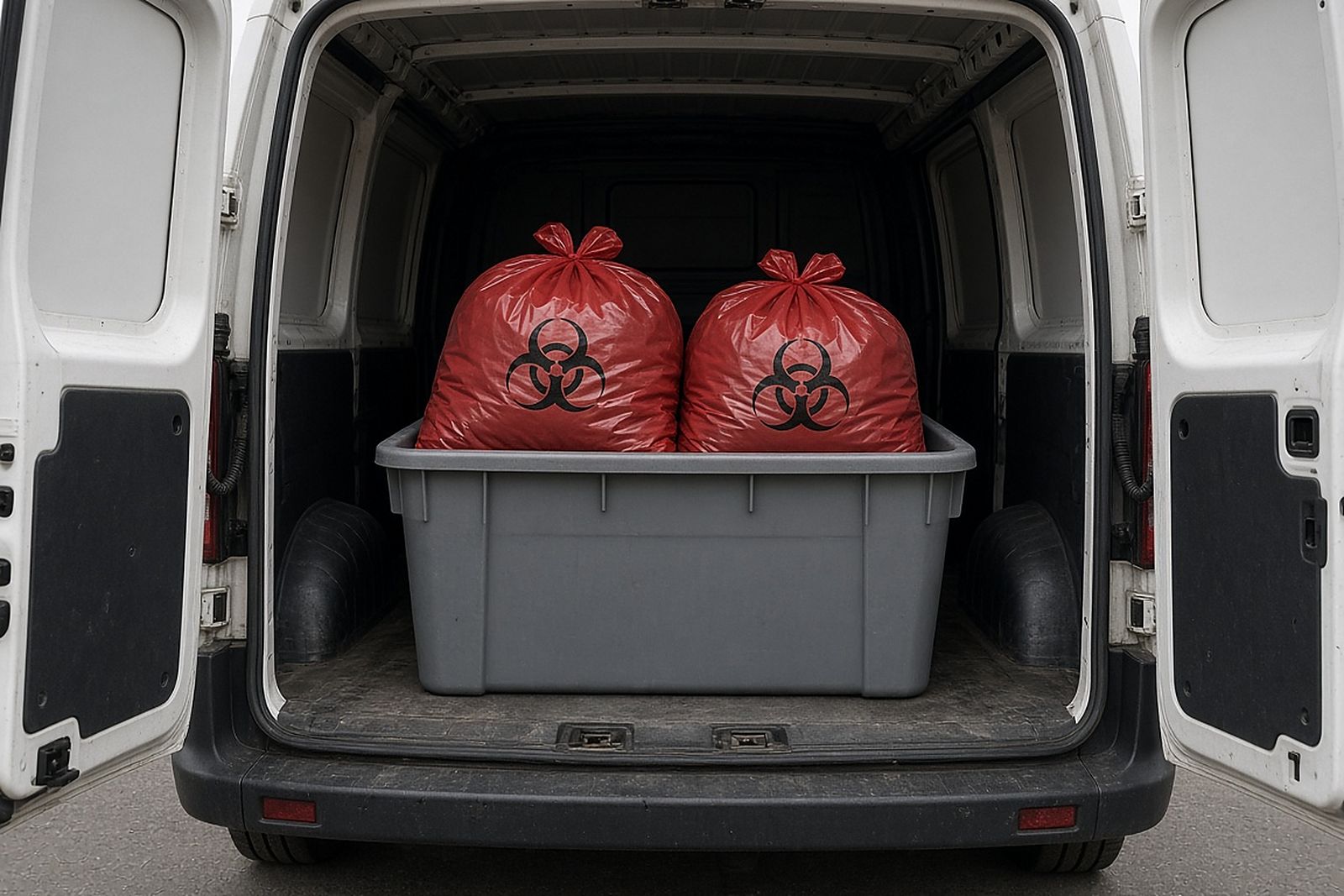
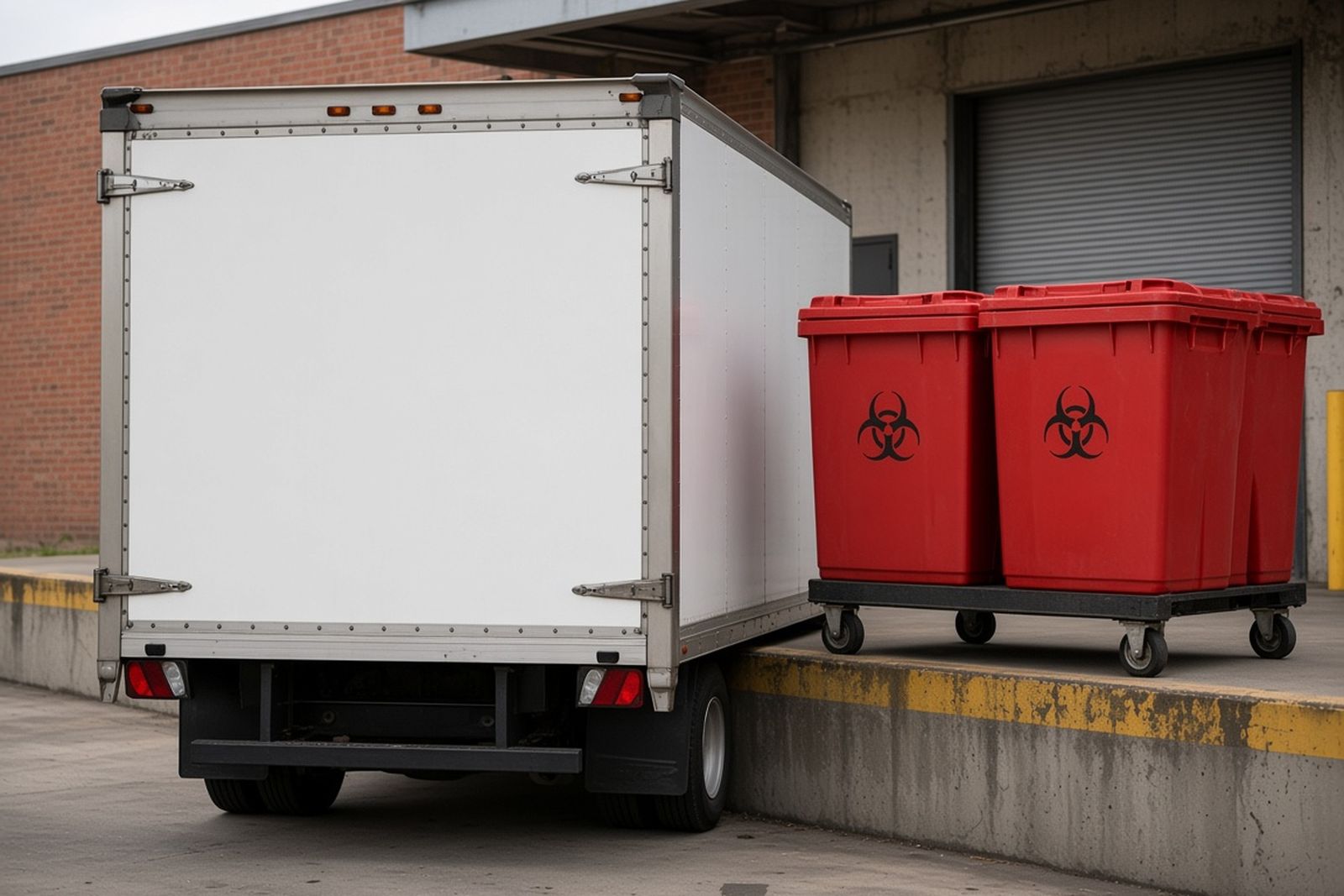
The driver loads the containers into a vehicle designed for this purpose, keeping them secured and separated as required. Reusable carts may be exchanged for clean ones.
Before leaving, the driver presents the shipping document for signature. Do not sign until the container count and waste description match what you are handing over.
Refusals usually come from overfilled containers, missing labels, torn bags, leaks, or waste that does not belong in that container, such as chemicals mixed into red bags. The driver should explain why a container was refused.
Fix the problem safely. That may mean repackaging into a new container, applying the correct labels, or separating out the wrong material. If you are unsure how to repackage, call the vendor before handling it. Never open a sealed sharps container to rearrange its contents.
Ask whether the refused container can be picked up at the next scheduled visit or requires a special trip, and whether a fee applies. Then review what caused the refusal and adjust your staff training so it does not happen again.
What is the manifest, and why does it matter to me?
The manifest, or tracking form, is the paper trail that follows your waste from your door to the treatment facility. Its exact form and name vary by state, but its purpose is the same: to show who generated the waste, who carried it, where it went, and what happened to it.
Your signature confirms that the waste is described correctly. That matters because classification drives how the waste is handled. Waste containing the highest-risk infectious substances, known as Category A, is classed and packaged under stricter rules than routine regulated medical waste. Most generators never handle Category A material, but the example shows why accurate description matters.
Keep your copy of every manifest. Many states require generators to retain these records for a set period; your state medical waste program or your vendor can tell you how long.
If you ever notice a mistake on a manifest after the driver has left, contact the vendor promptly and ask how to correct it.
Treatment, and the proof you receive
Waste travels to a permitted treatment facility, sometimes directly and sometimes through a transfer station where loads are consolidated. Treatment methods include autoclaving with steam, incineration, and other approved technologies, depending on the waste type and state rules.
Sharps and red-bag waste are often autoclaved and then shredded or compacted so they are unrecognizable before landfill disposal. Pathological and trace chemotherapy waste are commonly incinerated.
You do not need to visit the facility, but you should know which one your vendor uses. Ask for its name and location during onboarding, especially if your state requires that information on your records.
Transfer stations are a normal part of many routes, so do not be concerned if your waste does not go straight to treatment. What matters is that each stop is permitted and that the paper trail stays unbroken from your signature to the final certificate.
Most vendors provide a certificate of treatment or destruction, or a completed copy of the manifest showing the treatment facility's signature. Some deliver these through an online portal.
Match each certificate to the pickup it covers. If a certificate is missing weeks after a pickup, follow up. A gap in your records can be a problem during an inspection even if the waste was handled correctly.
Store certificates alongside manifests, training records, and your written waste procedure. Together they show that your business handled its responsibilities from start to finish.
Some vendors charge for certificates or bundle them into monthly fees. Confirm this in your contract so you are not surprised.
A one-time pickup after a cleanup
Transport is not only for clinics. In an illustrative case, a remediation company finishes cleaning a home after a traumatic injury. The crew has packaged removed carpet, pad, and bedding in lined boxes, and has placed a few needles found in a nightstand into a rigid sharps container.
The remediation company arranges a one-time pickup with a licensed transporter. On pickup day, the driver checks the boxes, confirms the labels, and reviews the shipping paper with the remediation supervisor. The homeowner is present but does not need to handle anything.
A few weeks later, the homeowner receives a copy of the certificate of treatment through the remediation company. She keeps it with her insurance file, since her adjuster asked for proof that the contaminated materials were disposed of properly.
If she had been handling the pickup herself, she would have asked the transporter to explain each item on the shipping paper before signing. Families in this situation are often grieving or exhausted, and it is perfectly reasonable to ask the remediation company to coordinate the entire pickup on their behalf.
Signs your transporter is doing its job well
Reliable pickups on schedule, complete paperwork, and clear communication are the basics. Beyond those, a good transporter answers questions about classification, flags problems early, and helps you improve sorting.
Watch for warning signs: missed pickups, missing certificates, drivers who do not check containers, or a vendor that cannot tell you where your waste is treated. Any of these is worth raising directly, and repeated issues are worth a conversation about switching.
Confirm your vendor holds the permits or registrations your state requires, and check again at renewal.