Short answer
In medical waste transport, ATP testing is a quick check on how well a hard surface was cleaned, such as a reusable cart, tub, or cargo floor after a leak. It measures organic residue, not specific germs, and it says nothing about whether waste was properly packaged, tracked, or treated. Use it as one quality signal inside a written cleaning program, never as clearance on its own.
What an ATP reading measures, and where it fits
Adenosine triphosphate, or ATP, is an energy molecule found in living cells and in the organic residue they leave behind, such as dried blood, tissue fluid, and food soils. An ATP test uses a swab to collect material from a defined area. The swab is placed in a reader that uses an enzyme reaction to produce light, and the reader reports the result in relative light units.
A higher number suggests more organic residue on the sampled spot. A lower number suggests less. That is all the test says. It does not identify bacteria or viruses, does not tell you whether anything on the surface is alive, and does not detect chemical residues such as disinfectant films.
Readers from different manufacturers use different scales, so a number from one brand cannot be compared directly to a number from another. Any pass or fail line comes from the user's written program and the manufacturer's guidance, not from a universal standard.
Most of a hauler's work involves closed containers that are never opened by the driver. ATP testing has nothing to say about those. Its value is on surfaces that are meant to be cleaned and reused, and on surfaces that have been cleaned after something went wrong.
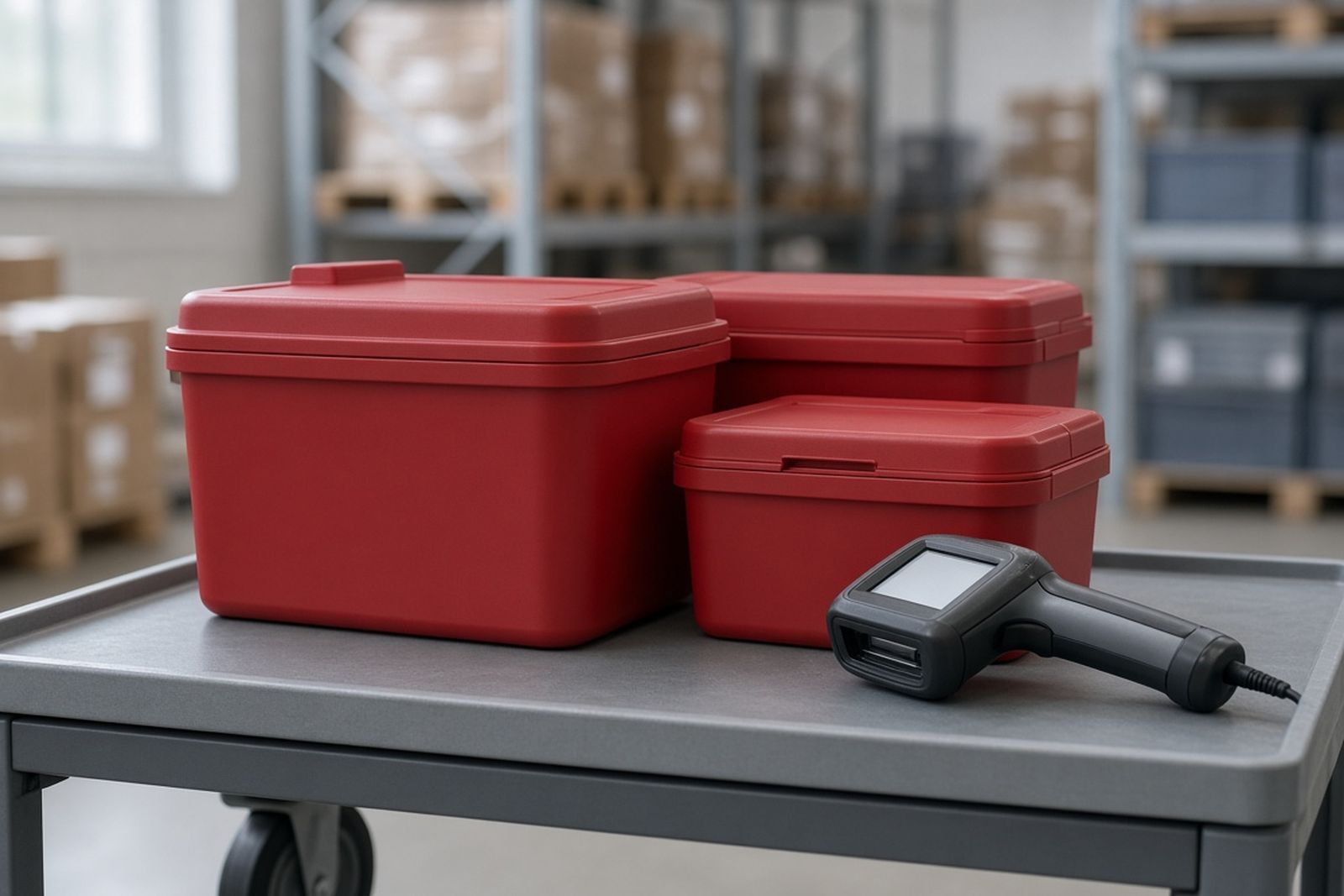
Reusable wheeled carts and rigid tubs are the most obvious candidates. These containers cycle between customers, and federal transport rules require reusable wheeled carts to be made of metal, rigid plastic, or fiberglass. Those hard, nonporous materials are the kind of surfaces ATP swabs are designed for.
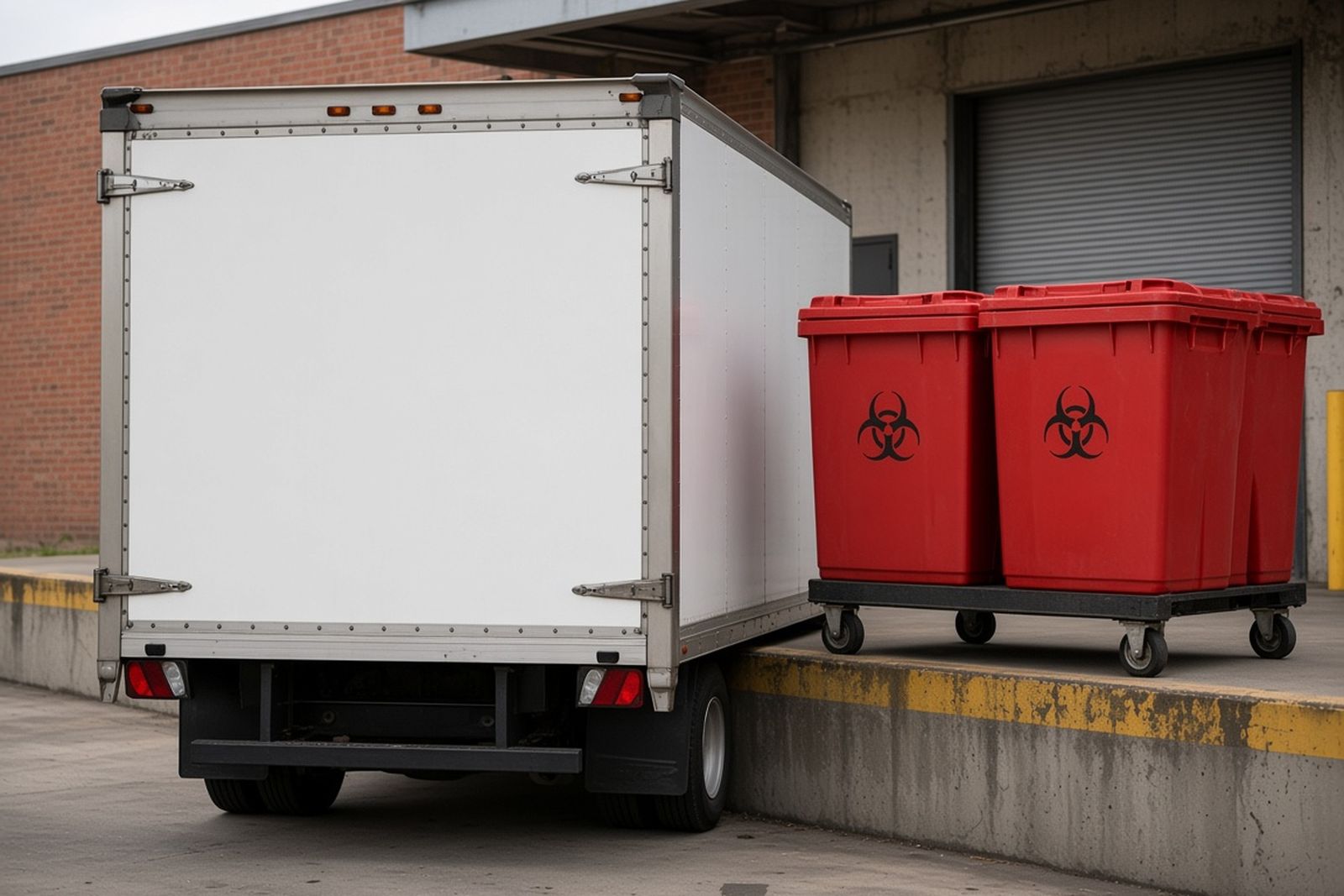
Other uses include cargo floors and walls after a spill, the cart wash area at a transfer site, and loading dock surfaces where containers are staged.
- Interior surfaces of reusable carts and tubs after washing
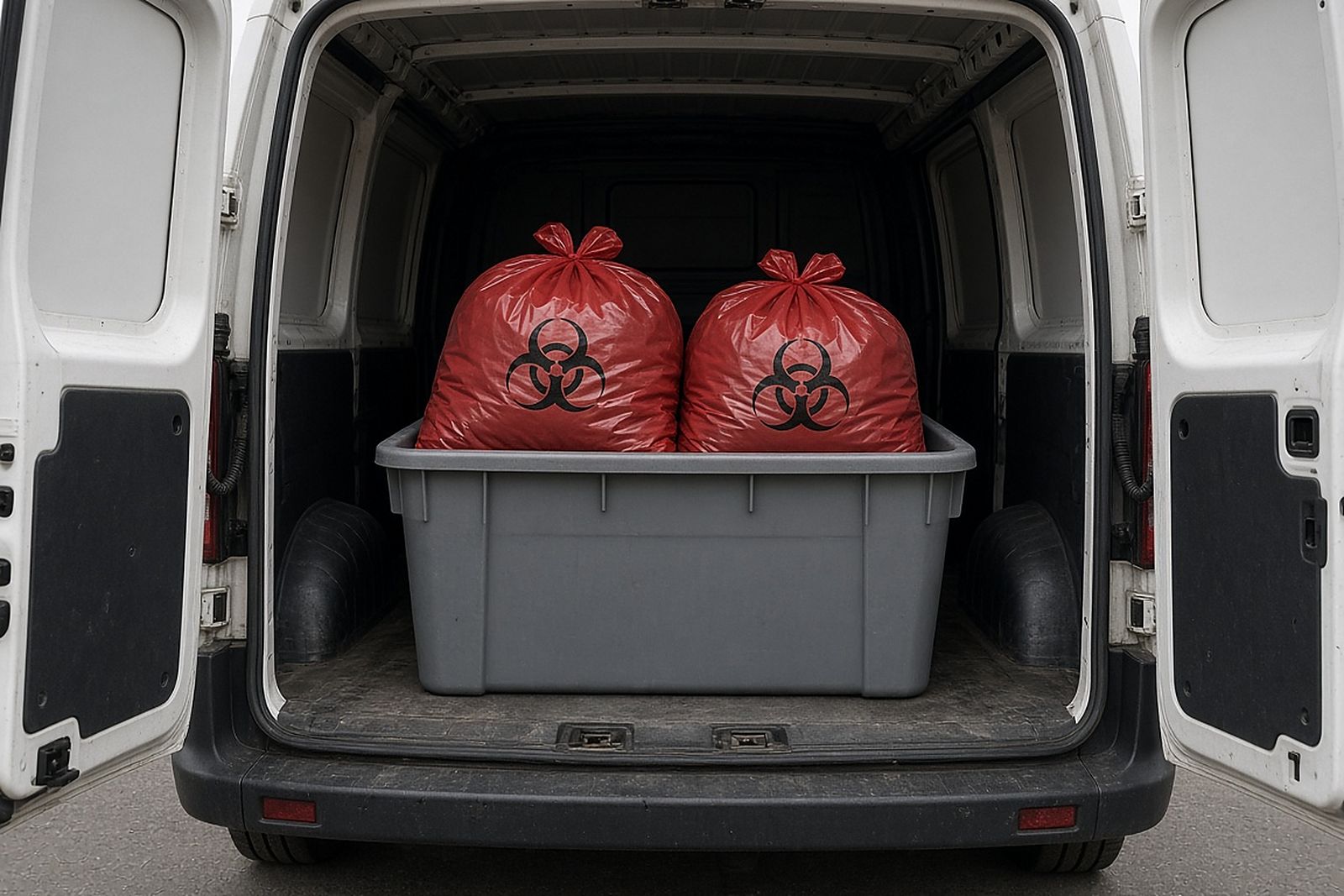
- Truck cargo floors, walls, and door seals after a leak
- Cart wash stations and staging areas at transfer facilities
- Handles and lids that drivers and customers touch often
What ATP cannot tell you
ATP is a cleaning check, so it is easy to stretch it into claims it cannot support. A low reading does not prove that a surface was disinfected. Disinfection depends on using a registered product at the right dilution and for the full contact time on its label. A surface can read clean on ATP and still skip that step.
ATP testing also cannot verify that waste was treated. Treatment facilities typically validate their autoclaves or other treatment systems under their own permits using methods such as biological indicators. A swab of a truck floor has no bearing on that process.
It cannot check a porous surface reliably, either. Wooden pallets, cardboard, and fabric seat covers hold residue in ways a swab will not capture. And it tells you nothing about your paperwork. A spotless cart does not replace a signed shipping paper or a record of where the waste went.
Building ATP into a cleaning program, alongside other checks
ATP works best when it answers a specific question on a schedule. For reusable containers, that question is whether the wash process is consistently removing residue. For a spill response, it is whether the cleaned area still holds visible or invisible soil before disinfection is repeated or signed off.
A written program should spell out which surfaces are tested, how large an area is swabbed, which instrument is used, what action level triggers re-cleaning, and who reviews results. It should also say what happens after a failed reading: re-clean, re-disinfect with full contact time, retest, and record both results.
Trends matter more than single numbers. If one wash line keeps producing higher readings, that may point to worn brushes, low water temperature, or a staffing gap. Those are problems a hauler can fix, and ATP data helps find them.
ATP is one of several tools, and each answers a different question. Visual inspection under good lighting catches obvious soil, cracks, and damaged gaskets that no swab would flag. A cracked cart lid or a split tub seam is a reason to pull the container from service, whatever its reading.
Disinfectant logs answer whether the right product was used at the right strength for the right time. Some operations use test strips to confirm dilution at wash stations, which is a separate check from ATP and arguably a more direct one for disinfection quality.
Culture-based sampling, where swabs are sent to a laboratory to grow specific organisms, can answer narrower questions but takes days and costs more. It is rarely part of routine cart washing and is more likely to appear in an investigation or validation study.
Think of these checks as layers. Visual inspection confirms the container is sound. Dilution and contact-time records confirm the disinfection step. ATP readings confirm residue removal on sampled spots. Paperwork confirms the waste itself went where it should. Leaving out any one of those layers leaves a gap the others cannot fill.
ATP after a spill in transit
Walk through an illustrative incident: a regional medical waste hauler's box truck hits a pothole hard enough to crack a rigid tub from a surgical center. The driver notices a small amount of fluid on the cargo floor during an unloading stop.
Following company procedure, the driver secures the load, places the damaged tub in an overpack, and calls dispatch. Because the incident involves an infectious substance, the safety manager reviews whether federal notice is required. PHMSA's incident notice rule at 49 CFR 171.15 lists incidents involving infectious substances among those that must be phoned in promptly. The manager makes the call and documents it.
Back at the yard, a trained worker in protective equipment removes gross contamination, cleans the floor and nearby wall with detergent, and then applies a registered disinfectant for its full labeled contact time. After it dries, the worker swabs six marked spots. Five read below the program's action level. One, in a floor seam near the rear door, reads high.
The worker scrubs the seam again, repeats disinfection, and retests. The new reading falls below the action level. The file records the incident, the notice, the products used, contact times, and all seven ATP readings. The ATP numbers did not clear the truck by themselves. They showed where the cleaning had missed a spot, which is exactly what they are good for.
What should a waste generator ask about a hauler's ATP use?
If you are a clinic, lab, or cleanup company choosing a transporter, ATP testing is a reasonable topic to raise, especially if you use the hauler's reusable carts. You are not asking for a lab report. You are asking whether the company checks its own cleaning.
Good answers will be specific about where testing happens, how often, and what the company does when a reading is high. Weak answers will treat ATP as a marketing badge or claim it proves containers are sterile. No swab can prove that.
- Do you test reusable carts or tubs, and how often?
- What instrument do you use, and what is your action level?
- What happens when a container fails a test?
- Do you disinfect for the full labeled contact time before testing?
- Can you share a redacted summary of recent results?
Compliance records and the bottom line
ATP results are internal quality data. They are not a substitute for the records regulators expect, such as shipping papers, manifests or tracking forms, and treatment confirmations. Keep those regardless of what a hauler's cleaning data shows.
That said, if your organization performs its own cleanup of a spill area before a hauler removes the waste, documenting cleaning with ATP readings can strengthen your internal file. Record the product, contact time, sampling locations, and readings together so a reviewer can follow the logic later.
Your state's medical waste program may also set specific cleaning requirements for medical waste vehicles and containers, and those requirements take priority over any quality tool a company chooses to use.
ATP testing is a useful flashlight, not a verdict. It helps a hauler see whether reusable equipment and cleaned surfaces still carry organic residue, and it gives supervisors a way to track cleaning quality over time.
It cannot identify pathogens, prove disinfection, validate treatment, or replace a clean paper trail. A transporter that understands those limits, and says so plainly, is more trustworthy than one that promises a number will prove everything is safe.