Short answer
Biohazard waste transport grew from a loosely regulated practice, when most infectious waste was burned on site, into a system of state permits, federal packaging and shipping rules, trained drivers, and tracked shipments to dedicated treatment facilities. Public alarm over medical waste on beaches, a short federal tracking program, and air pollution concerns about incinerators each pushed the industry toward today's practices.
Before modern transport rules
For much of the twentieth century, hospitals and clinics dealt with infectious waste largely on their own. Many facilities burned it in small incinerators on site. Others sent it out with general trash or relied on local haulers who treated it like any other load.
Incineration was the dominant method for a long time. EPA notes that more than 90 percent of potentially infectious medical waste was incinerated before 1997. Burning reduced volume and destroyed pathogens, but many small incinerators had few pollution controls.
Because so much waste was handled at the point of generation, there was little need for a specialized transport industry. Where waste did travel, packaging, labeling, and tracking varied widely. A bag from a clinic could end up in a landfill with no record of where it came from or whether it had been treated.
Worker protection was also thin. Housekeeping staff, janitors, and sanitation workers often had no idea that a bag held used needles until one poked through. Needlestick injuries among people who never worked in patient care were one of the quiet problems that later rules set out to reduce.
Syringes on the beach
Public attention changed sharply when syringes, vials, and other medical debris began washing up on beaches along parts of the East Coast. Images of beach closures and medical waste in the surf alarmed the public and put pressure on lawmakers to act.
The actual health risk from those incidents was debated, but the political effect was clear. People wanted to know where medical waste was going and who was responsible for it. The idea that a generator should be able to trace its waste from pickup to final treatment took hold.
That concern shaped the modern system. Tracking forms, labeling requirements, and the principle that generators share responsibility for their waste all grew out of the demand for accountability that followed.
The episode also exposed how little anyone knew about the size of the problem. Few agencies could say how much medical waste was produced, how it was handled, or how much reached landfills untreated. Better data became one of the goals of the reforms that followed.
What was the Medical Waste Tracking Act, and what happened to it?
Congress responded with the Medical Waste Tracking Act, which created a federal demonstration program in a small group of states. The program required generators, transporters, and treatment facilities to use tracking forms so that waste could be followed from its source to its destination.
The program was designed to be temporary and to inform future policy. Its regulations expired on June 21, 1991, and, as EPA describes on its 2024 medical waste page, medical waste has since been regulated primarily by state environmental and health departments rather than by a single federal program.
The tracking concept outlived the program. Many states built their own manifest or tracking systems modeled on the demonstration, and generators today still see its influence every time they sign a pickup record. Your state's medical waste program can tell you which tracking forms it requires today.
- Tracking forms followed waste from generator to treatment
- Generators, transporters, and treatment sites each signed off
- The federal program was temporary by design
- States adopted and adapted its tracking approach
Federal transport rules: packaging and drivers
While states took the lead on who could haul medical waste and where it could go, federal transportation rules came to govern how it moves on the road. Regulated medical waste is treated as a hazardous material for transport, which brings requirements for classification, packaging, marking, labeling, shipping papers, and training.
Packaging standards became more specific over time. Rules now address the strength and leak resistance of bags and boxes, limits on bag size and weight, requirements for liquids, and standards for reusable carts. Each rule answers a practical problem: bags that split, boxes that crushed, and liquids that leaked in transit.
Training requirements followed the same logic. Drivers, loaders, and anyone preparing shipping papers must be trained for their role, so that the people moving waste understand the hazards and know what to do if something goes wrong.
Workplace rules add a parallel layer
Workplace rules added a parallel layer. OSHA's Bloodborne Pathogens standard required employers to protect workers who handle blood and other potentially infectious materials, including those who handle waste. Between transportation and workplace rules, the people who pick up and move medical waste gained protections that had not existed before.
Why did treatment shift away from incineration?
As air quality rules tightened, many small medical waste incinerators became too costly to upgrade or operate. Concerns about emissions from burning plastics and other materials led to stricter standards, and a large number of on-site incinerators closed.
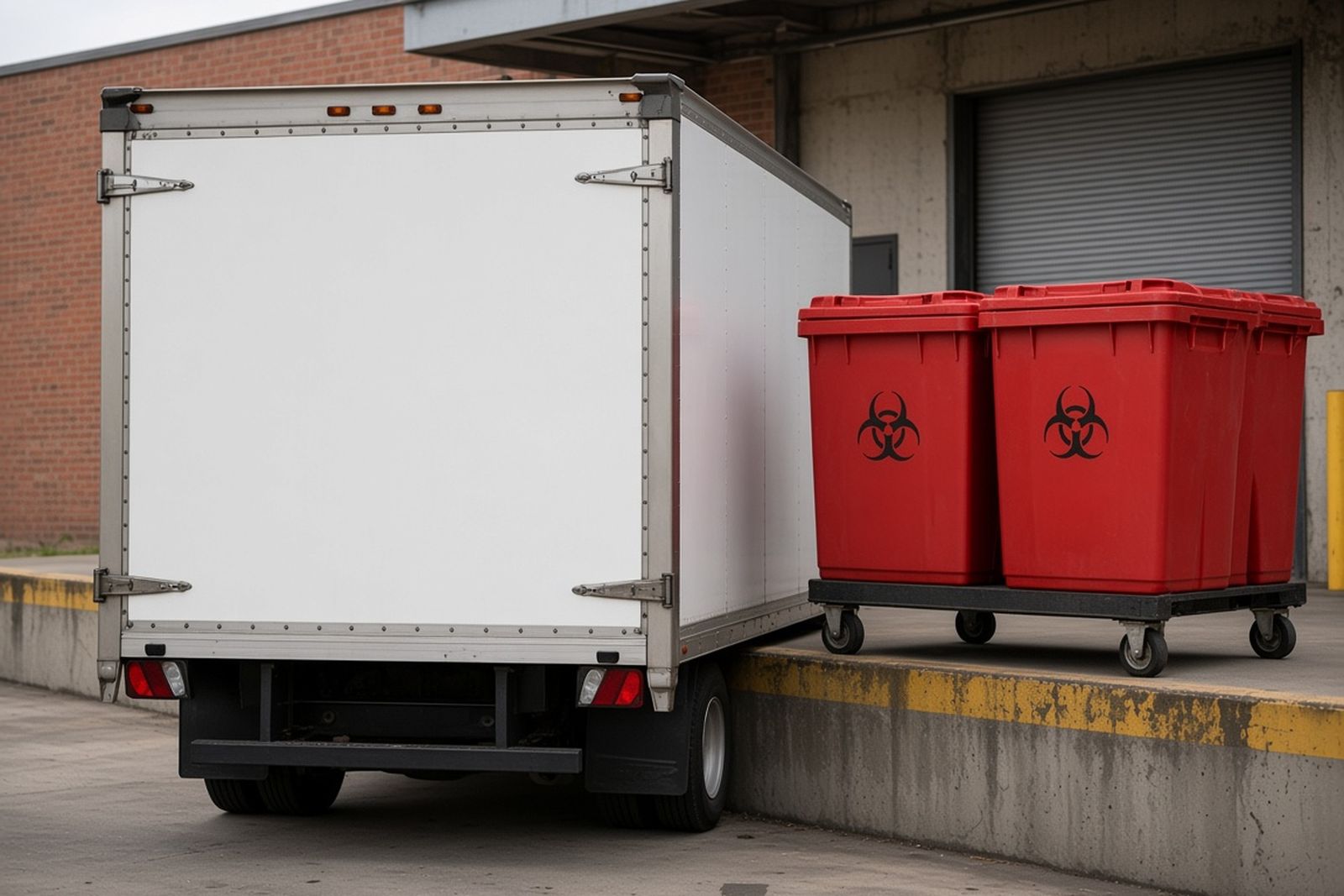
That change had a direct effect on transport. Waste that had once been burned in the hospital basement now needed to travel to a regional treatment facility. The need for reliable, regulated transport grew quickly.
Alternative treatment methods expanded at the same time. Autoclaving, which uses steam under pressure, became the most common approach for many types of regulated medical waste. Other technologies, such as chemical and microwave treatment, found niches. Incineration remained necessary for certain streams, including some pathological and pharmaceutical waste, but it was no longer the default.
The shift also changed what generators had to know. Because different streams go to different treatment methods, facilities had to separate sharps, red-bag waste, pathological waste, and pharmaceuticals more carefully than before. Segregation at the source became a core part of working with a hauler.
Growth and consolidation in hauling
With more waste leaving facilities, a specialized industry formed to collect, transport, and treat it. Some companies grew by acquiring smaller regional haulers and building networks of transfer stations and treatment plants.
The scale became substantial. Stericycle, the largest U.S. medical waste hauler, reported about 459,200 customers in 2009, including 11,300 large-quantity and 447,900 small-quantity generators, according to its SEC Form 10-K for that year. That customer mix shows how far service had spread beyond hospitals to dental offices, clinics, and other small generators.
Consolidation brought efficiencies and consistent procedures, but it also led to complaints about long contracts and fees from some customers. Regional and independent haulers continued to compete, often on flexibility and service for smaller generators.
For generators, the growth of the industry meant more choice but also more fine print. Comparing haulers became a task in its own right, with contract terms, fee schedules, and service areas to weigh alongside the basic question of whether a company was registered and reliable.
Mail-back, on-call service, and portals
Small generators, such as tattoo studios, home health agencies, and individual practitioners, often produce too little waste to justify regular truck pickups. Mail-back programs filled that gap by letting generators ship approved sharps containers through the mail to a treatment facility under specific packaging rules.
Trauma and crime scene cleanup companies became another distinct customer group. Their waste volumes are irregular, and they may need a pickup from a warehouse one week and none the next. Haulers adapted with on-call service and flexible scheduling.
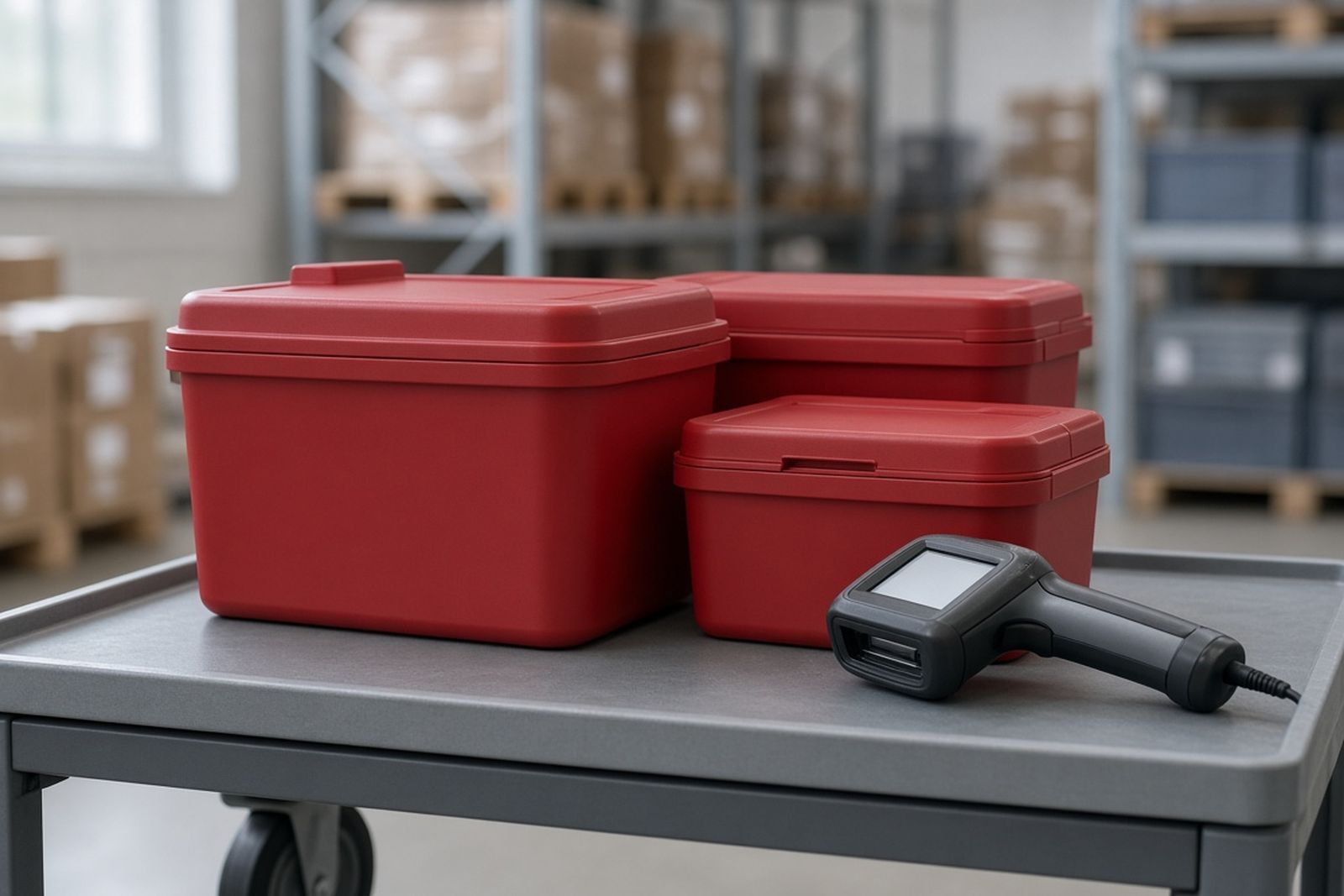
Electronic records are the most recent shift. Many haulers now provide online portals where generators can view pickup history, download manifests, and confirm treatment. That replaced filing cabinets full of paper forms and made it easier for small businesses to keep organized records.
Then and now
The difference is easiest to see in the routine of a small office. In the earlier era, used gauze and extracted teeth might go into ordinary trash bags, sharps into a lidded coffee can, and everything out with the regular trash. No one recorded where it went.
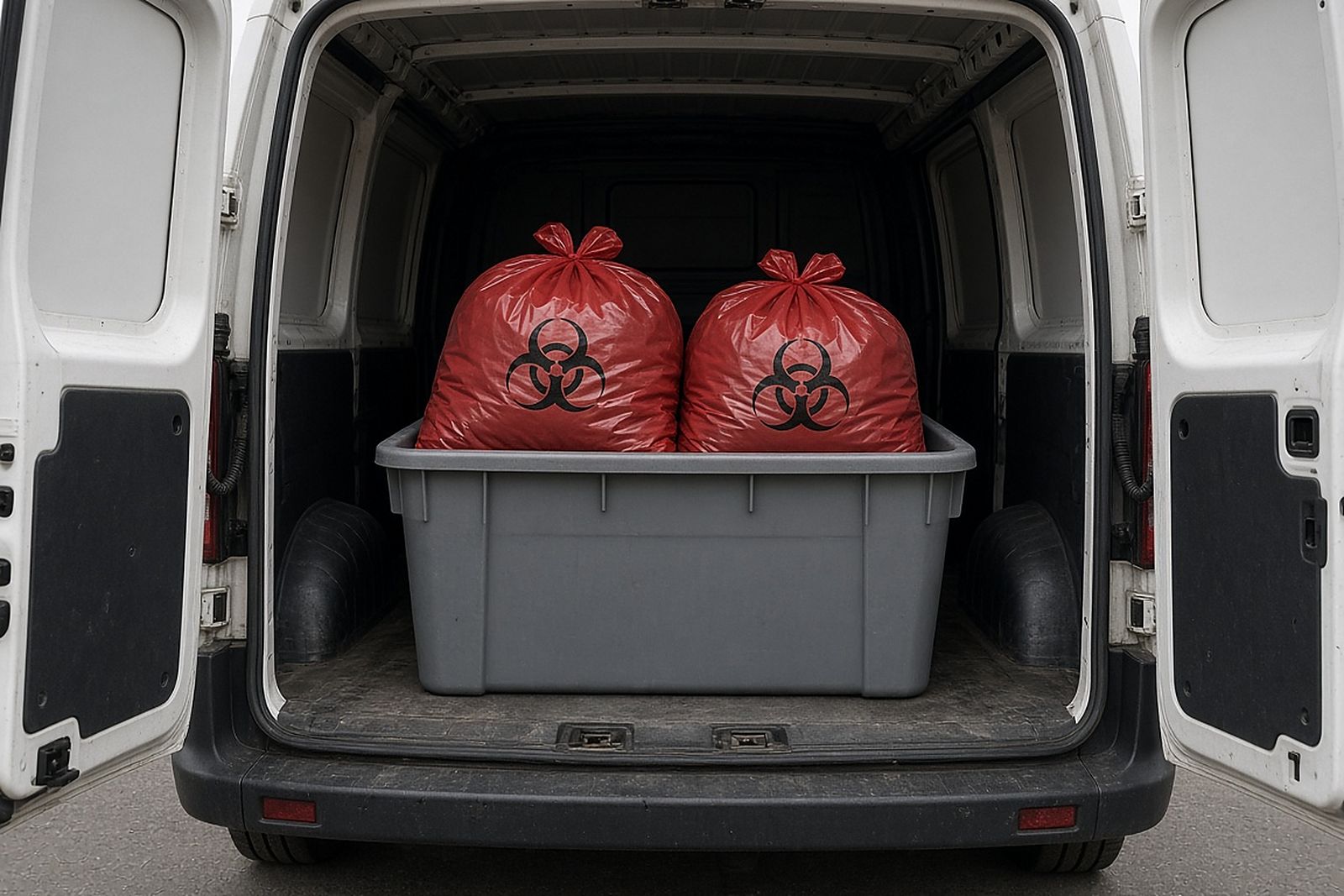
Today, sharps go into approved containers and other regulated waste into labeled red bags inside rigid boxes. A registered transporter picks up on a set schedule, the driver completes a shipping paper, and the generator receives a record confirming the waste was treated at a named facility. If an inspector asks about waste handling, the records are there. Every step in that modern routine traces back to a lesson from the past.
What does this history mean for generators today?
The system you work within today reflects decades of public concern, regulatory experiments, and practical lessons. Tracking forms exist because people once could not say where waste went. Packaging rules exist because containers failed. Training requirements exist because untrained handlers were hurt or caused releases.
When you choose a hauler, look for one that honors those lessons: a valid state registration, trained workers, approved containers, a named treatment facility, and records you can access. Understanding why each piece exists makes it easier to spot a provider that skips them.
History is still being written. Rules continue to change at the state level, treatment technology keeps improving, and electronic tracking keeps spreading. Checking in with your hauler and your state agency from time to time keeps your own practices current with where the system is heading.