Short answer
To evaluate equipment proposed for biohazard waste transport, check that every container is designed for the waste it will hold, that packaging meets transport rules, that the vehicle can keep loads secure and contained, and that spill response and tracking tools come along. Ask for container specifications, how reusable carts are cleaned, what is in the spill kit, and how pickups are documented.
Four groups of equipment
A medical waste transporter's equipment falls into four groups: primary containers that hold waste where it is generated, outer packaging that protects those containers in transit, the vehicle and its loading gear, and the tools used to handle spills and track shipments.
Some transporters supply every container. Others expect you to buy approved supplies and simply collect them. Either way, you should understand what is being provided, whether it meets transport requirements, and who is responsible if a container fails.
A proposal that lists only a pickup price and a truck is incomplete. Ask for a written description of containers, sizes, labels, and any reusable equipment that will stay on your site between pickups.
Equipment choices also reflect the kind of generator you are. A hospital, a home health agency, a tattoo studio, and a remediation crew leaving a single job all produce different volumes and waste types. The right containers for one may be wrong for another.
Primary containers: bags, liners, and sharps containers
Red bags are the most familiar item, but not every red bag is suitable. Bags used for regulated medical waste should meet recognized strength and puncture-resistance standards and be marked with the biohazard symbol. Thin trash bags dyed red are not an acceptable substitute.
Size and fill limits matter because heavy bags split. Liners should fit the outer container properly, be closed by twisting and tying or taping rather than being packed tight, and never be filled beyond the point where they can be sealed without pressing down on the contents.
Ask the transporter to show you the specifications on the bags they supply or approve. The manufacturer should be able to state which tests the bag passes.
Color alone is not the test. Some states require specific markings, and waste that must be incinerated, such as certain pathological or pharmaceutical items, may need a different container color or label. Ask the transporter which streams your site produces and which container goes with each.
Sharps containers must resist puncture, stay closed once locked, and remain upright during handling. They are typically rigid plastic with a clearly marked fill line and a lid that seals permanently when full.
Sharps injuries remain common in health care, and that background explains why transporters refuse overfilled or unlocked containers and why drivers never reach inside to rearrange contents.
For transport, closed sharps containers usually go inside an outer box or cart. Ask whether the transporter provides mail-back or wall-mounted units, and what sizes suit the volume you generate.
Placement is part of container selection. A sharps container mounted at a convenient height near where needles are used, rather than across the room, reduces the distance someone carries an uncapped sharp. For remediation crews, a portable container carried to the work area serves the same purpose.
Why do outer boxes and carts matter so much?
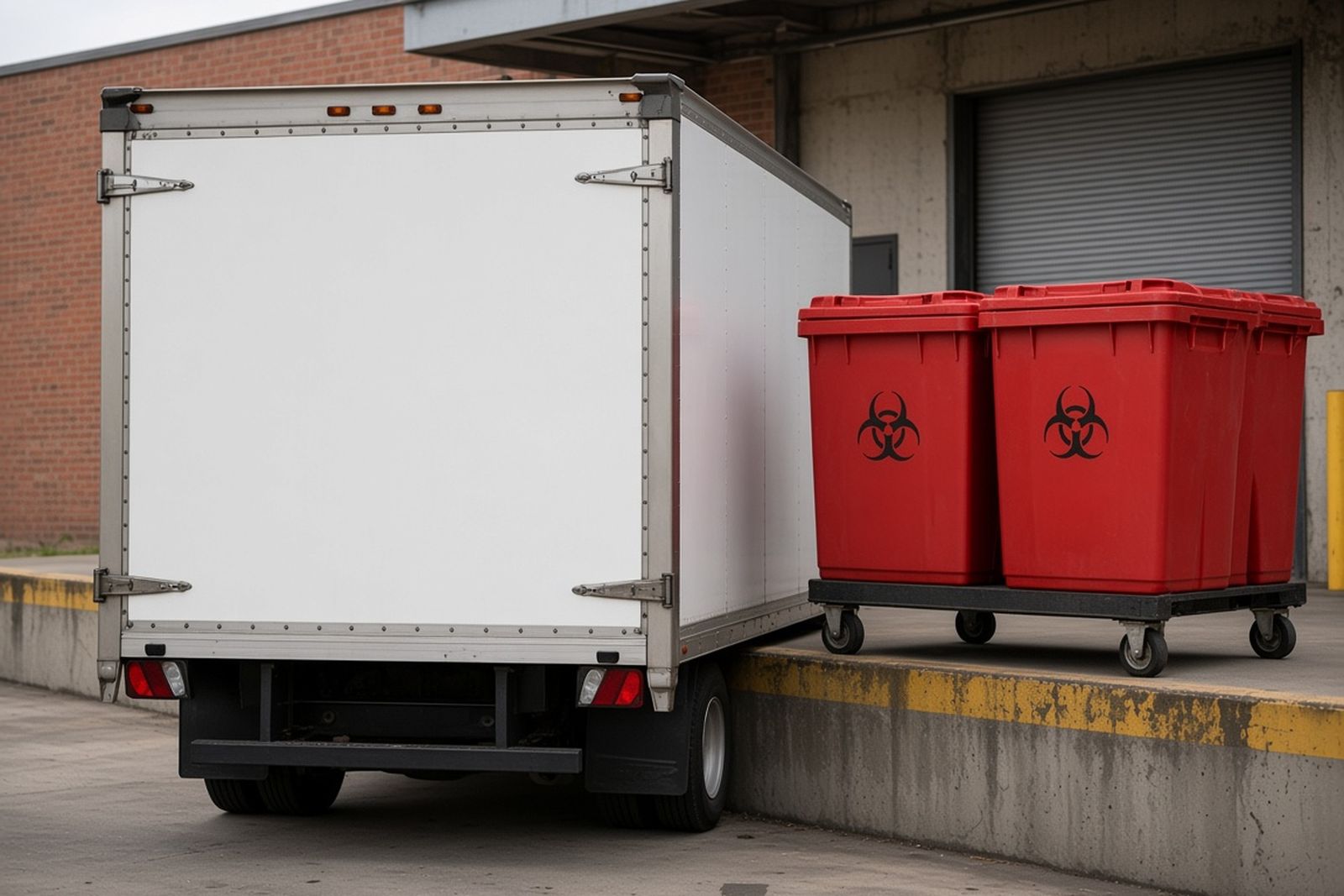
Outer packaging protects the primary container from crushing, dropping, and punctures during handling. Corrugated boxes rated for medical waste are common for small generators and one-time pickups. Larger generators often use reusable carts or tubs.
Federal rules set limits on what reusable carts can be. DOT PHMSA regulations, as published through Cornell's Legal Information Institute in 2024, state that reusable wheeled carts for regulated medical waste are limited to a nominal 1,655 liters (437 gallons) and must be metal, rigid plastic, or fiberglass. Ask the transporter what material and size its carts are and how they are sealed during transit.
Liquids need special attention. The same regulations state that inner packagings for liquid regulated medical waste may hold no more than 19 liters (5 gallons) under federal transport rules. If your site produces liquid waste, ask how it will be packaged, what absorbent is included, and whether any liquids must be solidified first.
Reusable containers must be cleaned and disinfected between uses. Ask how and where that happens and whether you will receive containers that are visibly clean and free of residue.
- Box or cart rated for regulated medical waste
- Leak-resistant liner that fits properly
- Absorbent material for any damp or liquid contents
- Secure closure, such as tape, lid latches, or seals
- Biohazard marking and any required shipping labels
The vehicle and its spill kit
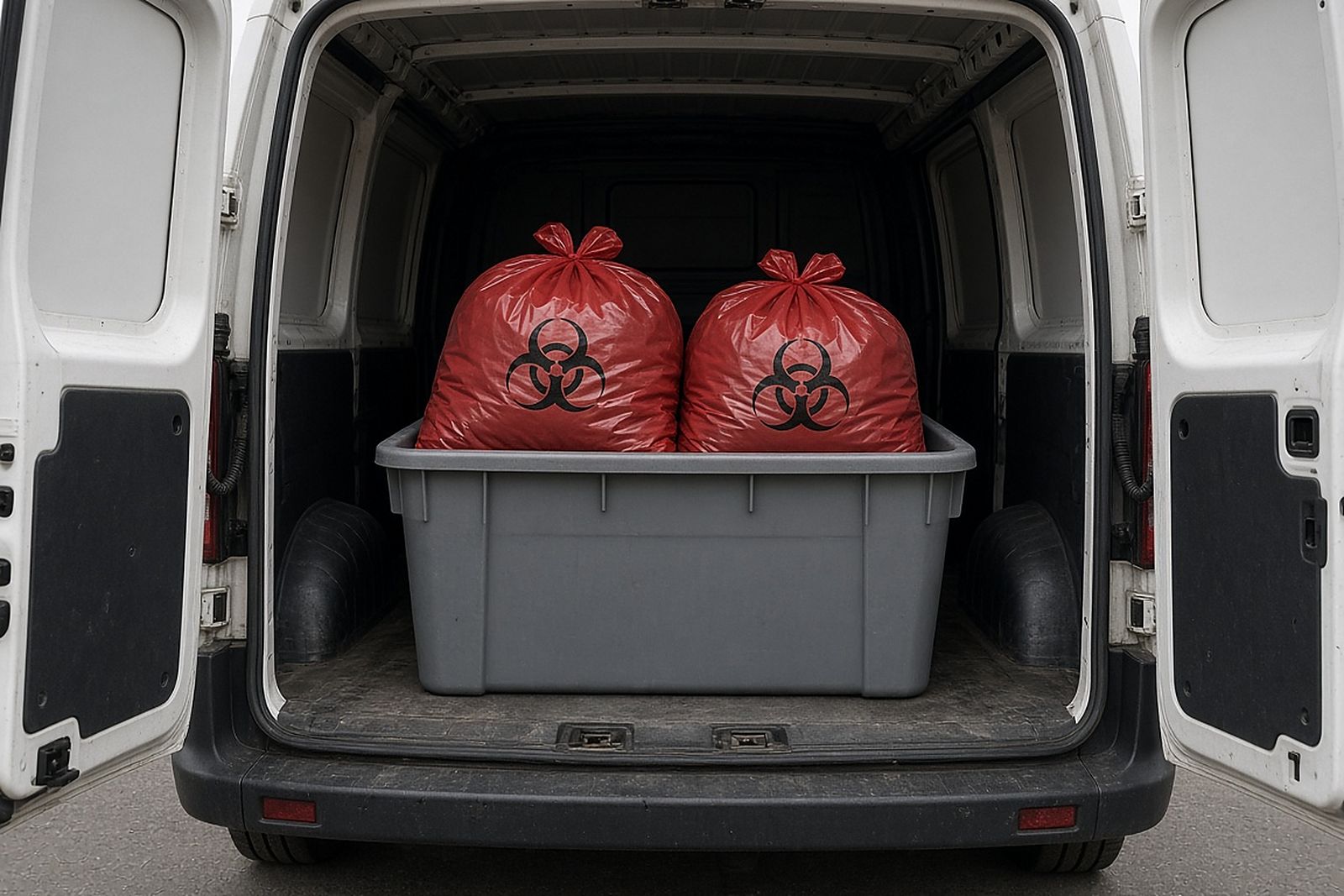
A vehicle hauling regulated medical waste should have a fully enclosed cargo compartment separated from the driver, with interior surfaces that can be cleaned and disinfected. Floors and walls should be free of damage that could trap residue.
Load securement equipment, such as straps, bars, or shelving, keeps containers upright and prevents shifting during turns and sudden stops. Liftgates, ramps, or dollies reduce the chance that a driver drops a heavy box or cart while loading.
Depending on the load and jurisdiction, placards or markings may be required. Some transporters use refrigerated vehicles or storage for waste that will not be treated quickly. Ask what vehicles will serve your site and whether they meet your state's requirements; your state medical waste program can tell you what it expects of transport vehicles.
You can also ask whether the vehicles are inspected on a set schedule and who keeps the inspection records. A well-maintained truck with working locks, lights, and liftgate is less likely to cause a delay or a handling accident at your door.
Every transport vehicle should carry a spill kit sized for the loads it hauls. At minimum, that includes gloves and other protective equipment, absorbent material, a disinfectant suitable for biological spills, spare bags and boxes, and tools for picking up broken glass or sharps without touching them.
Ask the transporter to describe what is in the kit and whether drivers are trained to use it. A spill kit sitting unopened in a truck is only useful if the driver knows how to contain a leak and when to call for backup.
Drivers should also carry emergency response information and contact numbers so that responders arriving at a crash or spill know what they are dealing with.
Tracking and documentation tools
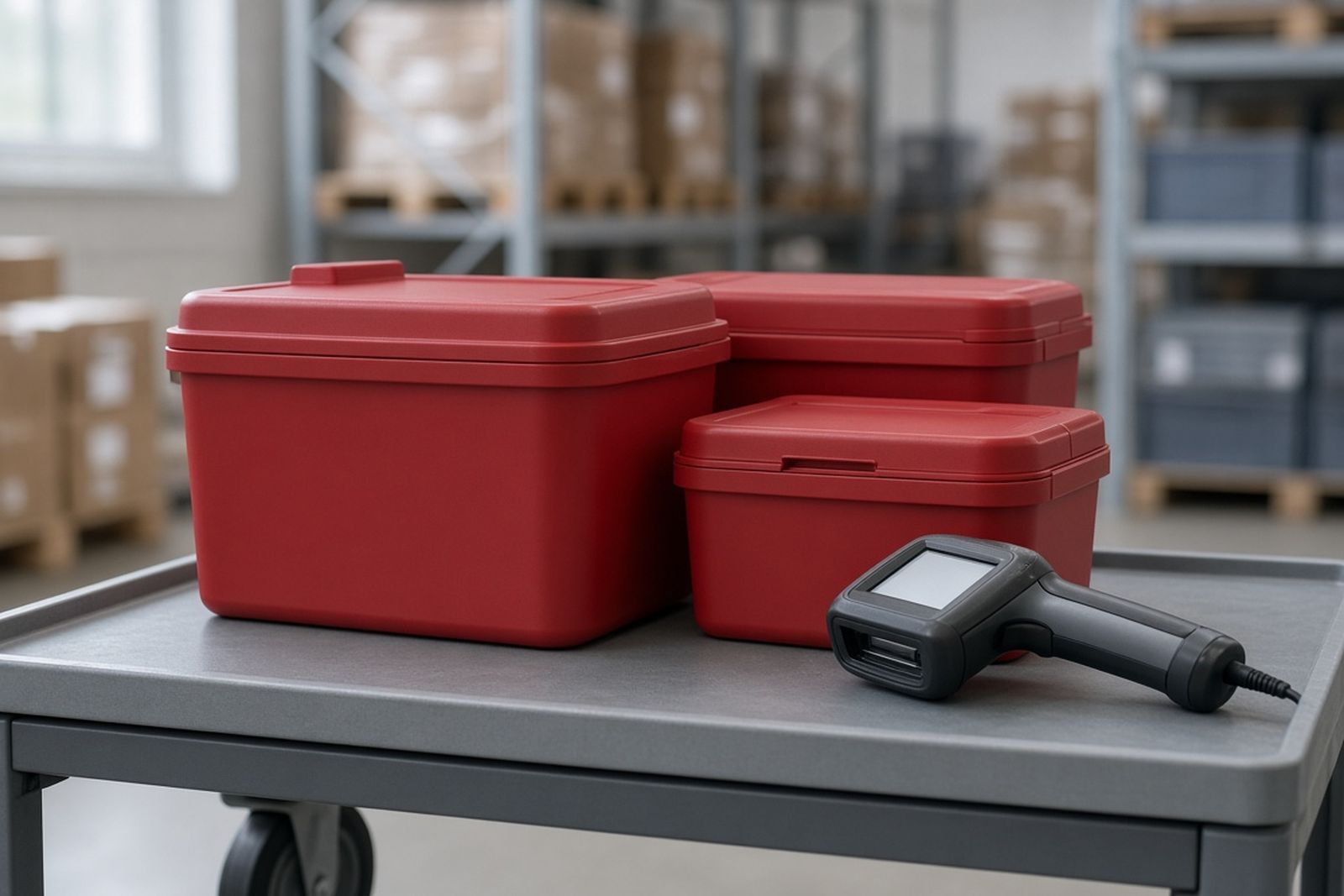
Documentation is part of the equipment. Manifests or tracking forms record what was picked up, how much, from whom, and where it went. Many transporters now use handheld scanners or electronic signature pads at pickup.
Barcodes or labels on each container let the transporter track it through transfer stations and treatment. At the end, you should receive a record showing that the waste was treated.
Online portals can store pickup histories and certificates. They are especially useful for businesses that need to show compliance during inspections or audits.
Ask whether the transporter's records match your state's requirements. Some states specify which information must appear on a tracking form and how long generators must keep copies. A national hauler should be able to explain how its forms fit your jurisdiction.
Two proposals, side by side
A side-by-side comparison, invented for illustration, shows what to look for. A small veterinary clinic is switching medical waste haulers and receives two proposals.
Hauler A offers a low price and says the clinic can use any red bags and cardboard boxes it has. There is no mention of container specifications, sharps units, or spill equipment.
Hauler B offers approved boxes with rated liners, wall-mounted sharps containers sized for the exam rooms, absorbent pads for damp waste, a description of its enclosed and cleanable trucks, a spill kit inventory, and electronic tracking with an online portal for treatment certificates.
The manager also asks each hauler to describe what would happen if a box leaked in the clinic's storage room. Hauler A says to call if it happens. Hauler B describes its spill kit, offers a short staff briefing on packaging, and names the contact who would respond.
The clinic manager notices that Hauler B's price includes the containers, while Hauler A's does not. After comparing the full cost, including buying proper supplies elsewhere, the difference is smaller than it first appeared. The clinic chooses Hauler B for its clarity and documentation.
What questions should I ask before signing?
Ask the same questions of every hauler so you can compare fairly. Request answers in writing and keep them with your service agreement.
If you generate waste only occasionally, such as after a cleanup at a rental property, ask whether the hauler supplies one-time packaging and whether a remediation company you hire can handle packaging for you.
- Which bags, boxes, and sharps containers do you supply, and what standards do they meet?
- How are reusable carts cleaned between uses?
- How are liquids and damp waste packaged?
- What vehicle will serve my site, and how are loads secured?
- What is in your spill kit, and how are drivers trained to use it?
- How will pickups be documented, and when will I receive treatment records?