Short answer
OSHA regulates the workers who handle medical waste, not the waste itself or the road trip. Its Bloodborne Pathogens standard covers containers, labels, training, vaccination, and exposure plans for anyone who packages or moves regulated waste on the job. Transport packaging and shipping papers fall under DOT, and treatment and disposal fall mostly under state agencies. You usually need to satisfy all three.
Where does OSHA's authority stop and DOT's begin?
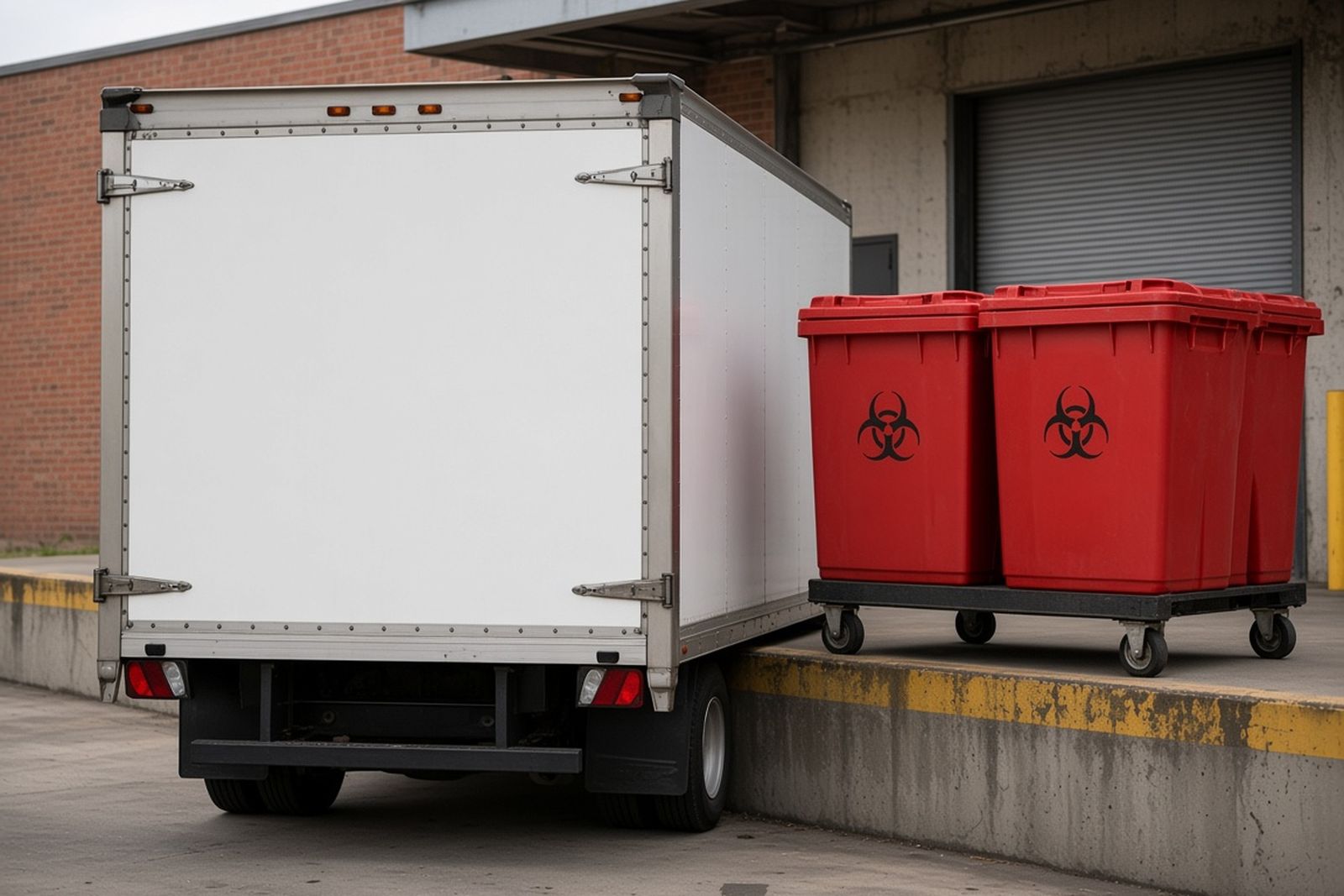
Think of a medical waste pickup as a relay with three runners. OSHA watches the people inside your building who generate, segregate, and package the waste. The U.S. Department of Transportation, through its hazardous materials rules, takes over once the waste is offered for shipment and loaded onto a vehicle. State environmental or health agencies decide how the waste must finally be treated and where it may go.
OSHA is a workplace safety agency. Its rules attach to employers and employees, so it asks questions like whether your staff were trained, whether the sharps container was within reach, and whether anyone was stuck by a needle while closing a box. It does not issue permits to haul waste or approve treatment plants.
That split matters because many generators assume their hauler's paperwork covers everything. It does not. The hauler answers for its own drivers and trucks, while you remain responsible for the employees who touched the waste before it left your dock.
The Bloodborne Pathogens standard
For most clinics, labs, funeral homes, tattoo studios, and cleanup contractors, the controlling rule is the Bloodborne Pathogens standard at 29 CFR 1910.1030. It applies whenever employees have reasonably anticipated contact with blood or other potentially infectious materials as part of their duties, and packaging regulated waste usually meets that test.
The standard defines regulated waste broadly. It includes liquid or semi-liquid blood, items that would release blood if compressed, items caked with dried blood, contaminated sharps, and certain pathological and microbiological wastes. If your team handles any of those, the standard's waste-handling, training, and exposure-control provisions come into play.
Overlapping OSHA rules and state plans
Other OSHA rules can overlap. The Hazard Communication standard reaches chemical disinfectants and preservatives that ride along with the waste, and the general personal protective equipment rules require a hazard assessment for tasks such as lifting heavy boxes or cleaning up a torn bag.
Your state may also run its own OSHA-approved plan. Those state programs must be at least as effective as the federal rules and sometimes add requirements, such as broader injury logging or specific training topics, so check which agency has jurisdiction over your workplace before relying on federal guidance alone.
Container rules inside your building
OSHA's container requirements are about keeping workers from being exposed while waste sits in your building and moves toward the pickup point. They overlap with, but are not the same as, DOT's shipping packaging rules.
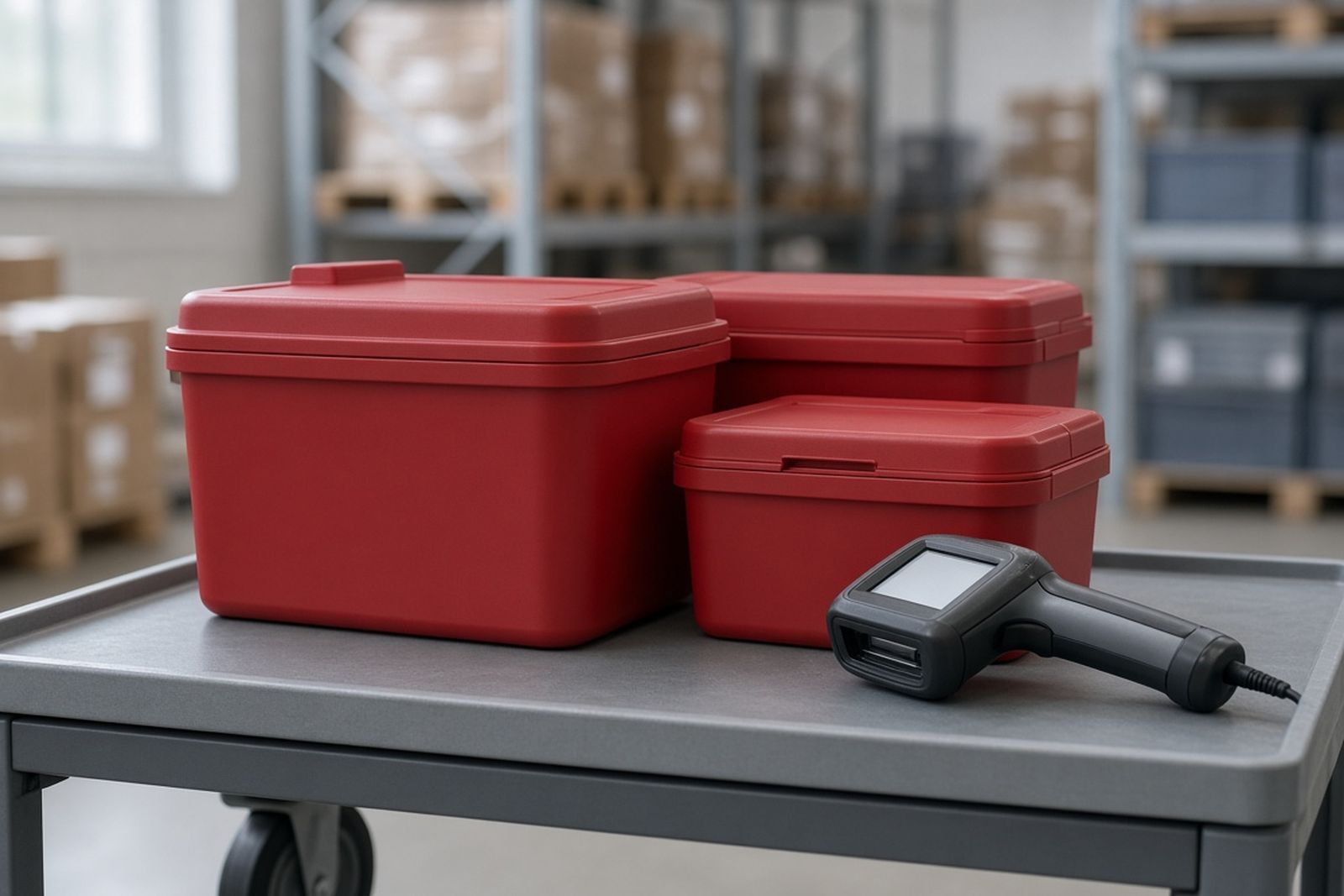
In general terms, the Bloodborne Pathogens standard expects regulated waste containers to be closable, built to hold contents without leaking during handling, and labeled or color-coded to warn anyone who picks them up. Sharps containers must be puncture resistant, leakproof on the sides and bottom, kept upright, and replaced routinely so they are not overfilled.
When a container is moved, it must be closed first. If the outside becomes contaminated, it goes inside a second container that meets the same criteria. These are the everyday moments where injuries happen, which is why OSHA focuses on them.
- Closable and leak resistant during handling
- Labeled with the biohazard symbol or colored red
- Sharps containers upright, puncture resistant, and not overfilled
- Closed before moving; overpacked if the outside is contaminated
Handoff to DOT, and what OSHA leaves to the states
Once the box is sealed and handed off, DOT's packaging performance standards and marking requirements apply. Your hauler should tell you which outer boxes and liners they accept so you are not repacking at the dock.
OSHA says little about how long boxes may sit before pickup or how cold a storage room must be. Where limits like that exist, they usually come from state medical waste rules, so read your state program alongside the federal worker safety standard rather than expecting one to answer for the other.
Who in your building counts as an exposed employee?
OSHA asks employers to make a written exposure determination. That means listing the job classifications and tasks where blood or infectious material contact is reasonably anticipated, without factoring in whether gloves or other protective equipment are worn.
In a medical waste context, the list often goes beyond clinical staff. The maintenance worker who rolls carts to the storage room, the housekeeper who swaps full sharps containers, and the receptionist asked to meet the driver at the back door may all belong on it if their duties reasonably involve that contact.
Employees on the list must be offered the hepatitis B vaccination series at no cost, trained before assignment, and included in the exposure control plan. OSHA's Bloodborne Pathogens standard (2024 text) requires employers to review the written exposure control plan at least annually and retrain exposed workers at least annually.
If you are unsure whether a role belongs on the list, err toward including it and ask your safety consultant or the relevant OSHA office to help you draw the line.
The hauler's crew is covered too
The transport company is an employer, and its drivers and plant workers are its employees. The hauler must run its own exposure control plan, provide protective equipment, and train its crew under the same Bloodborne Pathogens standard.
Drivers also sit under DOT's hazmat training rules. PHMSA's training rule at 49 CFR 172.704 gives new hazmat employees a limited window after hire to complete DOT training, and they may work only under direct supervision until they do. A reputable hauler can describe both training tracks without hesitation.
Your staff and the driver may share the loading area for only a few minutes, but that is where two employers' programs meet. Agree in advance who lifts, who opens doors, and what happens if a box is leaking when the driver arrives.
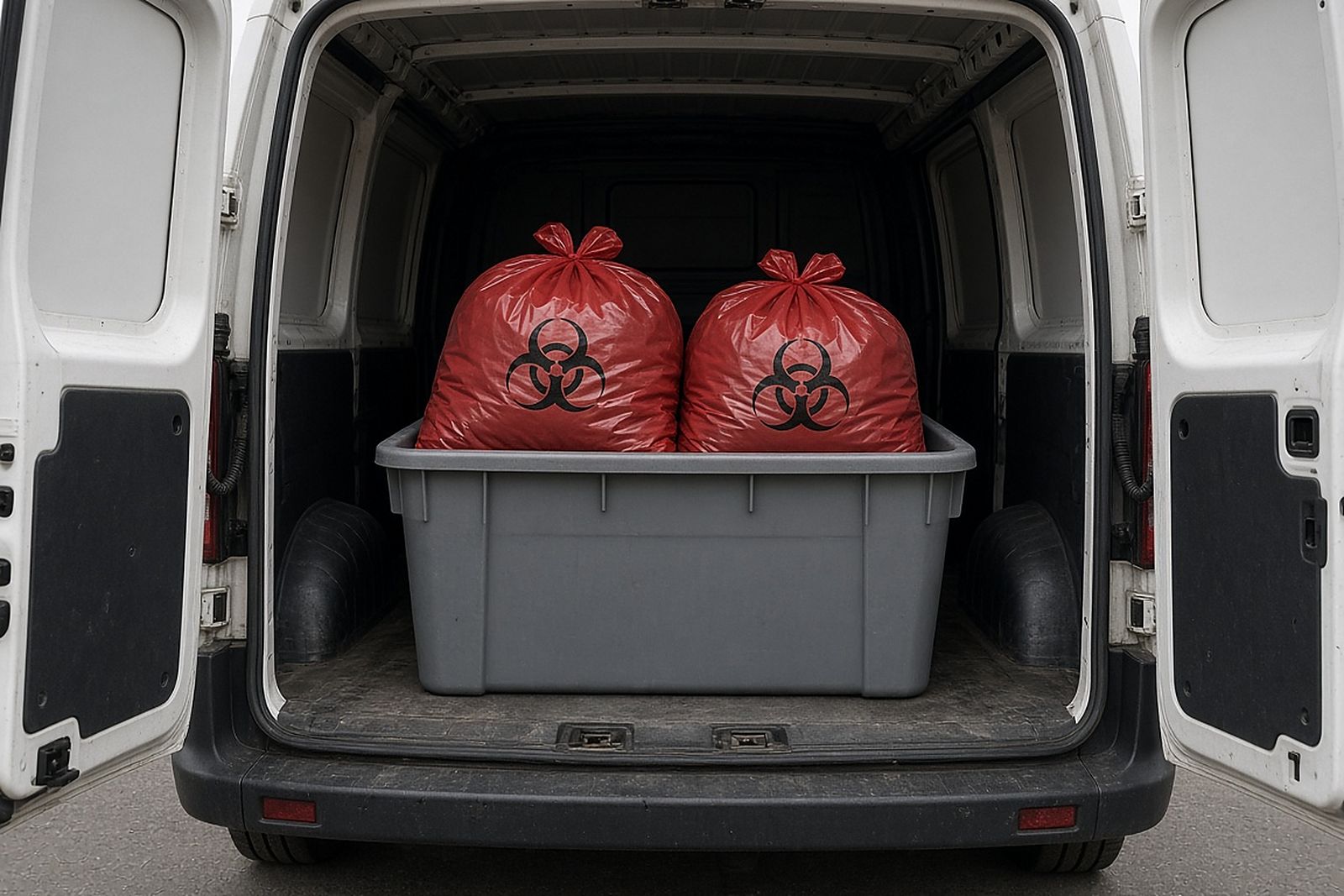
Some businesses play both roles. A trauma cleanup company or a mobile phlebotomy service may package waste at a client site and then drive it to a transfer facility in its own van. In that case the same employer answers for OSHA duties during packaging and for DOT and state transporter duties on the road, and its training program has to cover both.
Records and retention periods
OSHA-related records and waste shipment records serve different purposes, so keep them in separate files. Training records show who was taught what and when. Exposure incident records and medical evaluations document what happened after a needlestick or splash.
The retention periods are long. OSHA's 2024 standard requires employee medical records related to bloodborne pathogen exposure to be kept for the duration of employment plus 30 years. Those files are confidential and should not be stored with pickup manifests or invoices.
Shipping papers, tracking forms, and certificates of treatment or destruction usually fall under DOT and state rules instead. Their retention periods differ by state, and your hauler or state agency can confirm what applies to you.
- Written exposure control plan with annual review notes
- Training attendance and content records
- Hepatitis B vaccination offers and declinations
- Exposure incident reports and post-exposure follow-up
- Sharps injury log, if your establishment must keep one
An ordinary pickup day that went wrong
The following case is invented to show how small gaps line up: a dermatology practice with six employees. Waste pickup comes every other week. The office manager asks a newly hired front-desk assistant to carry three boxes and two sharps containers from the back hallway to the loading door, since the medical assistants are busy with patients.
One sharps container is packed past its fill line, and its lid will not snap shut. The assistant presses the lid down with a palm, and a lancet pokes through a gap. No one had listed the front-desk role in the exposure determination, so the assistant was never trained or offered vaccination.
The practice now has an exposure incident to manage: prompt medical evaluation, documentation, and confidential follow-up. It also has a gap in its written program, because a job that routinely handles waste was left out.
The fixes are practical. Replace sharps containers before they reach the line, keep a spare within arm's reach of every procedure room, list any role that moves waste, and train that person before the next pickup. The hauler cannot solve this for the practice, because the injury happened before the waste was ever offered for transport.
What should you ask your hauler about worker safety?
A transport vendor does not certify your OSHA compliance, but a good one will help you hand off waste safely. Asking a few pointed questions reveals whether their program is real.
Listen for specifics rather than reassurance. A hauler that explains its spill kit, its driver training cycle, and its process for refusing a damaged container is showing you a working program. One that says only that everything is handled may be leaving the gaps for you to discover.
You can also ask whether they offer staff training on packaging, since many generator injuries happen while boxes are being closed.
- How do your drivers handle a leaking or damaged box at pickup?
- What containers and liners do you require, and do you supply them?
- How do you train drivers under both OSHA and DOT rules?
- Who do we call if a spill or needlestick happens during loading?
- Which state permits or registrations do you hold for our area?