Short answer
Biohazard waste transport runs through several stages: packaging on site, a scheduled or on-call pickup, transit to a transfer station or treatment facility, and treatment itself. Routine pickups follow a set route. One-time pickups after a cleanup depend on the transporter's availability, the waste type, and distance to a permitted facility. State storage limits and paperwork also shape how quickly waste must move.
The stages, and the two clocks they run on
When people ask how long transport takes, they usually mean one of two things: how soon a transporter can collect waste from their site, or how long it takes for that waste to be treated and the paperwork to close. Both matter, and they run on different clocks.
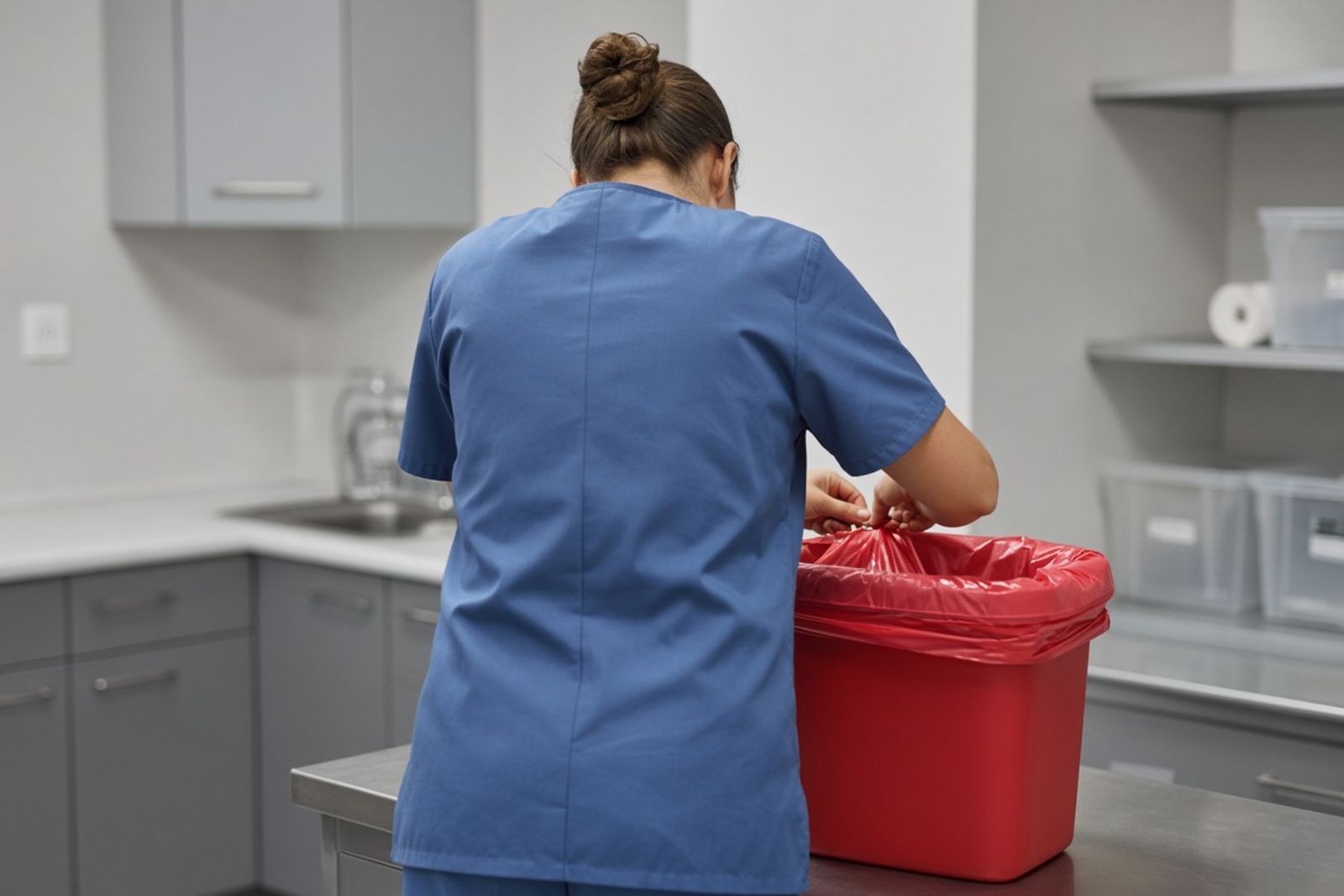
The first stage is packaging, which happens where the waste is generated. Next is staging, where sealed containers wait in a secure spot. Then comes pickup, followed by transit to a transfer station or directly to a treatment facility. Treatment inactivates the waste, and a final record confirms it was handled.
Each stage has its own variables. A crew that packages correctly as it works saves time at pickup. A transporter with a nearby facility closes the loop faster than one hauling waste across the state.
It helps to separate your own responsibilities from the transporter's. Packaging, staging, and having someone available to sign are in your hands. Routing, transit, treatment scheduling, and returning completed records belong to the transporter and the facility.
How quickly can a transporter pick up after a cleanup?
One-time pickups after a crime scene cleanup, unattended death, or other remediation job are scheduled around the transporter's routes and staff. Some providers keep capacity for on-call collections, while others add a stop to an existing route on a set day.
Many remediation companies hold their own transporter relationships and schedule pickup as part of the job, so the property owner never has to arrange it. If you are coordinating directly, call as early as possible and describe the waste type, the approximate number of containers, and any access limits at the property.
Avoid promises of instant pickup without questions. A transporter needs to know what the waste is and how it is packaged before sending a truck, both for safety and to ensure the receiving facility can accept the load.
Recurring generators, such as clinics, tattoo studios, dental offices, and funeral homes, usually move to a fixed schedule instead. Pickup frequency is set by how much waste accumulates and by any storage limits that apply. If your volume changes, ask the transporter to revisit the schedule rather than letting containers pile up between visits.
How long can packaged waste safely wait on site?
Storage limits are set mostly at the state level, because medical waste is regulated primarily by state environmental and health departments. As a result, allowable storage times, temperature requirements, and container standards differ from one state to another.
Beyond legal limits, practical factors matter. Waste containing organic material begins to decompose, which produces odor and can soften cardboard packaging. Warm conditions speed this up. Many facilities and transporters prefer to move waste as soon as reasonably possible, and some use refrigerated storage when a delay cannot be avoided.
Staged containers should sit in a locked or supervised area, away from foot traffic, children, and pets, on a surface that could be cleaned if a leak occurred. Rules vary by state and county; verify with the local authority.
If you are unsure whether a delay is acceptable, ask the transporter or your state health or environmental agency rather than guessing. A short phone call can confirm whether refrigeration or a sooner pickup is needed for your situation.
Transit, and what happens when something goes wrong
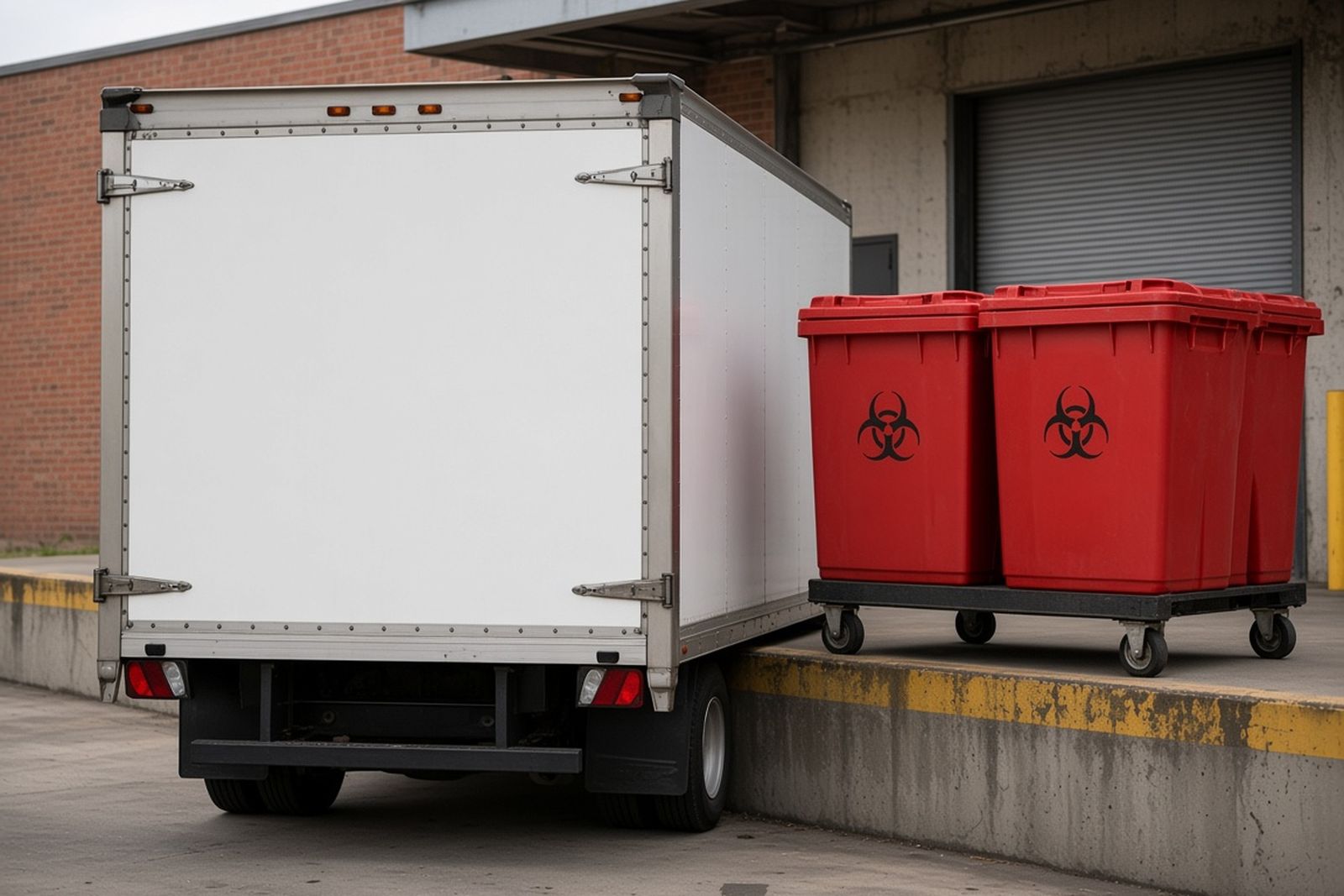
Transit depends on distance and routing. A truck collecting from dozens of clinics may spend a full day on the road before unloading, while a single dedicated pickup might go straight to a facility. Some waste passes through a transfer station, where loads are consolidated before moving to a larger treatment plant.
Drivers follow hours-of-service limits, securement rules, and hazmat requirements, and they cannot rush those for speed. Weather, traffic, and facility receiving hours also affect when waste arrives.
Transporters with multiple facilities or close partnerships can often shorten transit, but the trade-off is sometimes a set pickup day. Ask how waste from your site will be routed and whether it will be consolidated along the way.
Rural properties can face longer waits simply because routes pass through less often. If you are far from a treatment facility, ask whether an off-route pickup is possible and what it would involve, so you can decide whether waiting for the next scheduled pass is reasonable.
Incidents during transport change the schedule. A leaking container, a crash, or a spill must be contained and cleaned before the truck moves on, and serious events trigger reporting duties.
Federal hazmat rules require carriers to phone in serious incidents promptly, including those involving infectious substances. Written follow-up reports and investigation can extend the process well beyond the day of the event.
Most pickups go smoothly. Well-packaged, properly labeled waste is the best way to keep your load from becoming the cause of a delay.
Treatment and the paperwork that proves it
Treatment runs on facility schedules. Autoclaves process loads in cycles that include heating, holding at temperature, and cooling. Incinerators and alternative technologies have their own throughput. Waste may wait briefly in a receiving area before it is processed.
Different streams go to different places. Pathological waste, certain pharmaceuticals, and trace chemotherapy waste may be routed to incineration rather than steam treatment, which can mean a longer trip.
You usually will not see treatment happen. What you receive is documentation that the waste was accepted and treated, which is why paperwork timing matters as much as trucking.
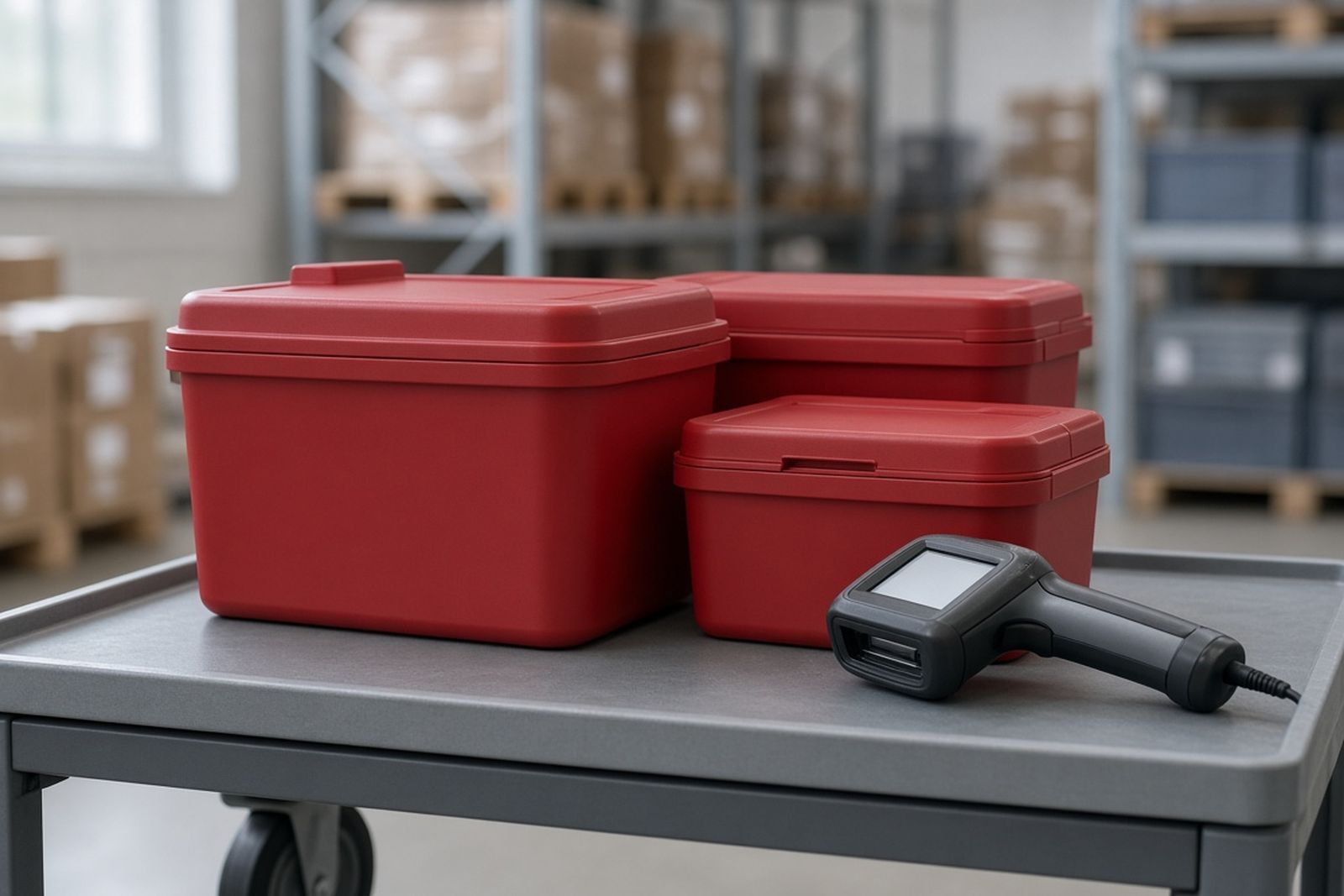
A manifest or tracking document usually starts at pickup, when the driver and the generator sign. Later, the treatment facility completes its portion. Depending on the transporter and your state, you may receive a copy of the completed record within a certain period after treatment.
Keep your copy of the pickup record until the final one arrives. If the completed record does not arrive when expected, contact the transporter to follow up. That gap is exactly what tracking systems are designed to catch.
Some providers offer an online portal where you can see pickup history and download certificates of destruction. For property managers and businesses, that can save time during audits or insurance claims.
Businesses that generate waste on a schedule should reconcile those records regularly. Matching each pickup to a completed treatment record takes a few minutes and prevents a backlog of open questions from building up over months.
One-time pickups, start to finish
One-time pickups follow a predictable sequence, whether the waste comes from a cleanup, a closed office, or a single event such as a community health screening that leaves behind a full sharps container, used lancets and test strips, and some blood-stained gauze.
The first call sets the pace. Expect the dispatcher to ask what was generated, how it is packaged, and whether the sharps container is closed and locked. If an approved outer box is needed, the transporter may offer to bring one.
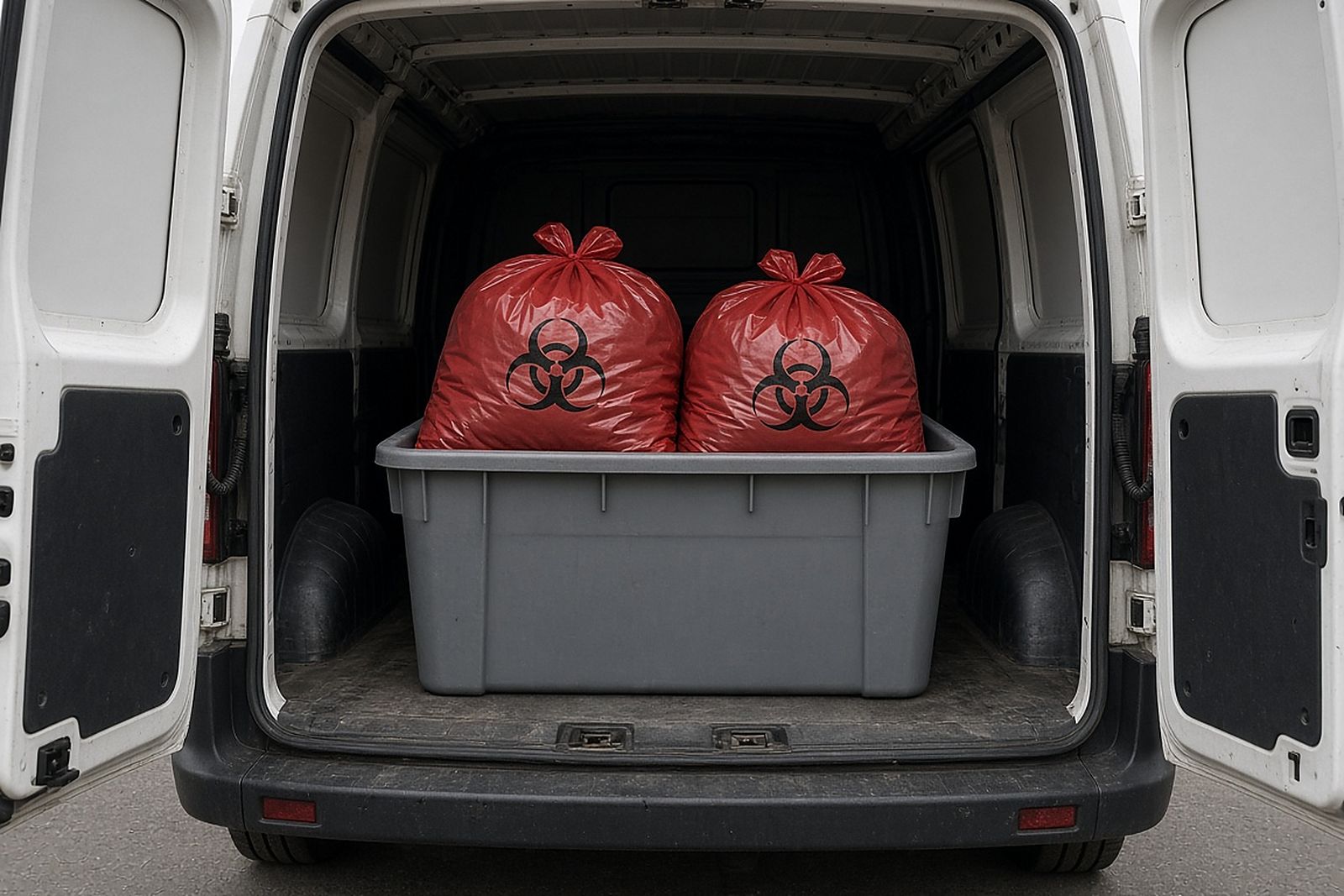
Pickup is usually scheduled for a day when a route passes nearby. Until then, sealed containers belong in a locked closet or similar space. On pickup day, the driver packs the containers into the approved box, both parties sign the tracking form, and the truck continues its route to a treatment facility.
Some time later, a completed record arrives showing the waste was treated. File it with the paperwork for the job or event in case questions come up. Nothing in that sequence is rushed, but nothing is left to chance: the generator knows what it has, the transporter knows what to bring, and the containers stay secure until they are in a trained driver's hands.
Keeping transport on schedule
A few habits make a noticeable difference. Package waste correctly as it is generated rather than sorting later. Keep containers closed, labeled, and dry on the outside. Know roughly how many containers you have and what they hold before calling.
Confirm the pickup window, the access instructions, and who will sign. A driver who arrives to a locked gate or an absent contact may have to leave and return another day.
Ask your transporter how long they typically take to return completed records, and keep a simple log of pickups and documents. That record will help you spot a missing certificate before it becomes a compliance problem.
- Package and label as you go, not at the end
- Store sealed containers in a secure, cleanable area
- Have the waste type and container count ready when you call
- Arrange access and a person to sign at pickup
- Track paperwork until the treatment record arrives