Short answer
Environmental responsibility in medical waste transport starts with the generator: sort carefully so only truly regulated waste goes in red bags and sharps containers. Reusable containers, efficient routes, careful wash-water handling, and treatment matched to each waste type then shrink the footprint further. None of it should weaken safe packaging, tracking, or legal disposal.
Where the footprint comes from
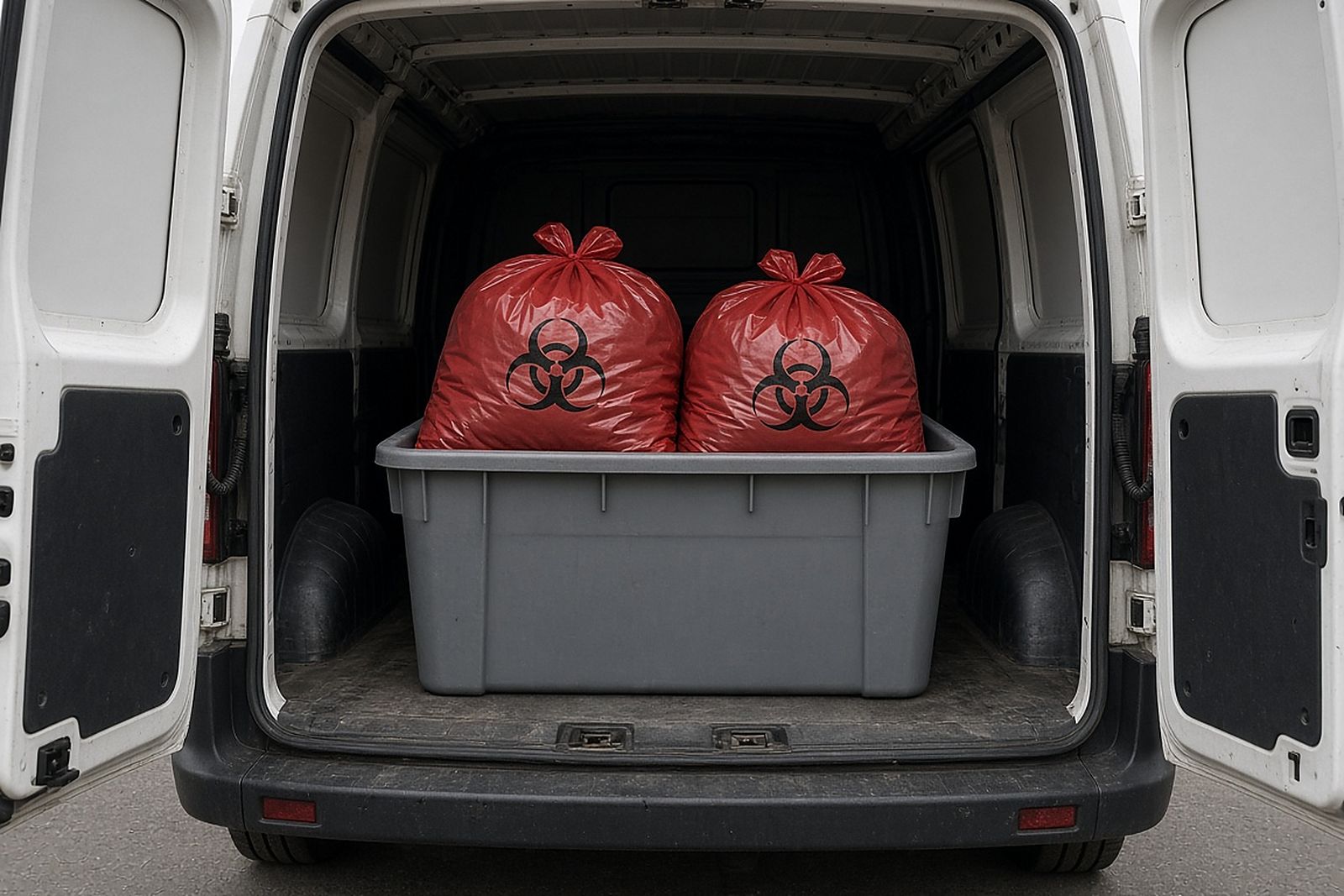
Regulated medical waste has to be collected, carried, and treated in ways that protect people from infection. Each of those steps uses resources. Trucks burn fuel on pickup routes. Single-use boxes and liners add to the waste stream. Treatment consumes energy, water, or chemicals, and some methods produce air emissions or residues that need their own management.
The volumes are not small. Practice Greenhealth, as reported by MedCity News in 2024, estimates that hospitals generate more than 29 pounds of waste per bed per day. Only part of that is regulated medical waste, but every pound that ends up in the wrong stream costs more to haul and treat than it should.
The good news is that many of the most effective environmental steps are also cost savings and compliance improvements. You rarely have to choose between doing the right thing and doing the safe thing.
How much of my waste really needs to be treated as regulated?
Often, less than you might think. Daniels Health, citing a World Health Organization estimate in 2021, reports that worldwide about 85 percent of hospital waste is general non-hazardous material, leaving roughly 15 percent that qualifies as regulated medical waste. Proportions differ by facility type, but the principle carries over to clinics, labs, and cleanup operations.
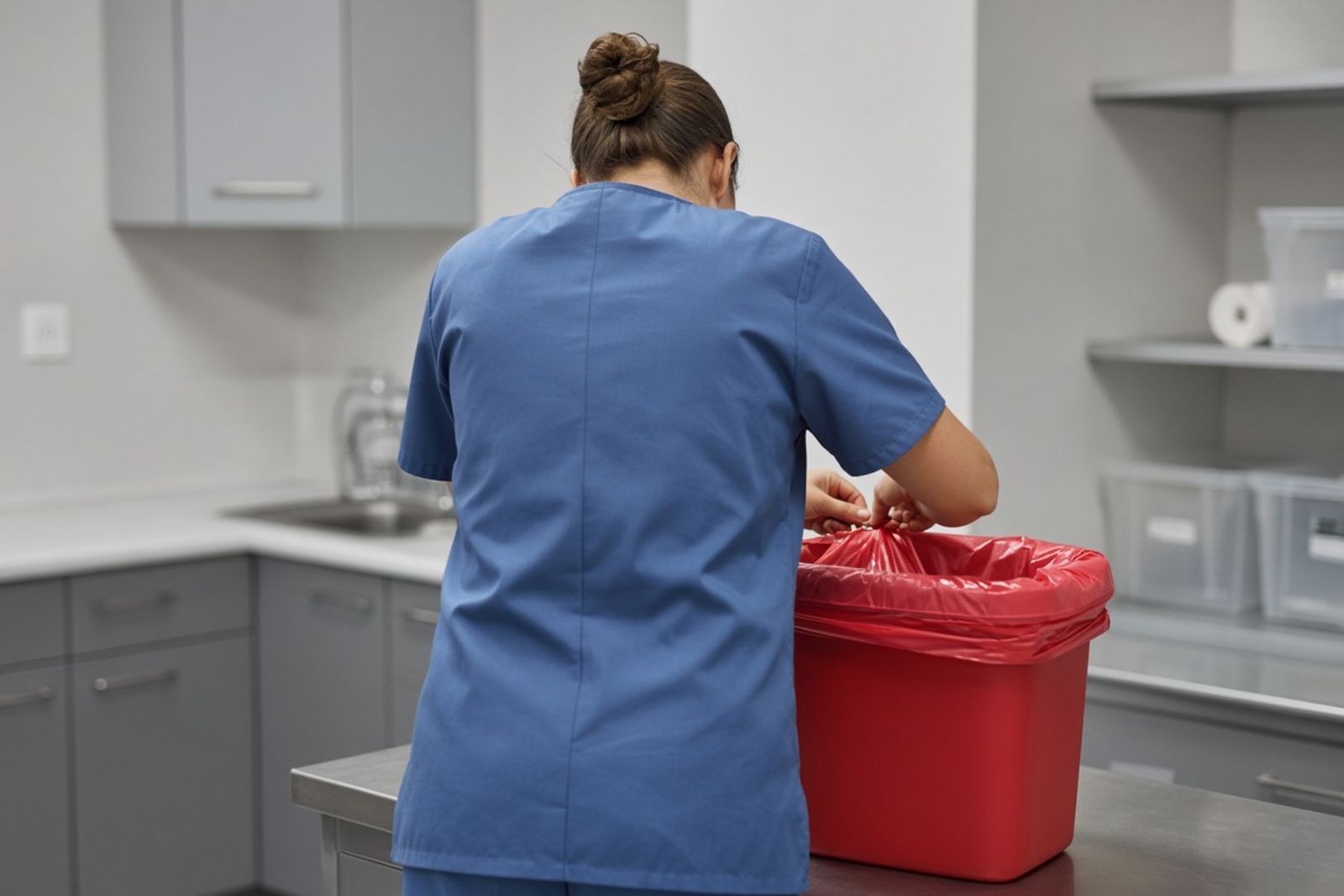
Over-classification is common. Packaging, clean gloves, paper gowns without visible contamination, and office trash frequently end up in red bags because the red container is closer or because staff are unsure. Each misplaced item is carried, tracked, and treated as if it were infectious.
Better sorting starts with clear, local rules posted where waste is generated, containers placed so the right one is always nearest, and training that explains why. It is the single most effective environmental action a generator can take, and it lowers the bill.
- Post your state's definition of regulated medical waste at each waste station
- Place general trash bins beside red-bag containers, not across the room
- Keep recycling for clean packaging in supply areas
- Audit a sample of red bags periodically to see what is inside
- Retrain after audits, focusing on the most common mistakes
Reusable containers and smarter routes
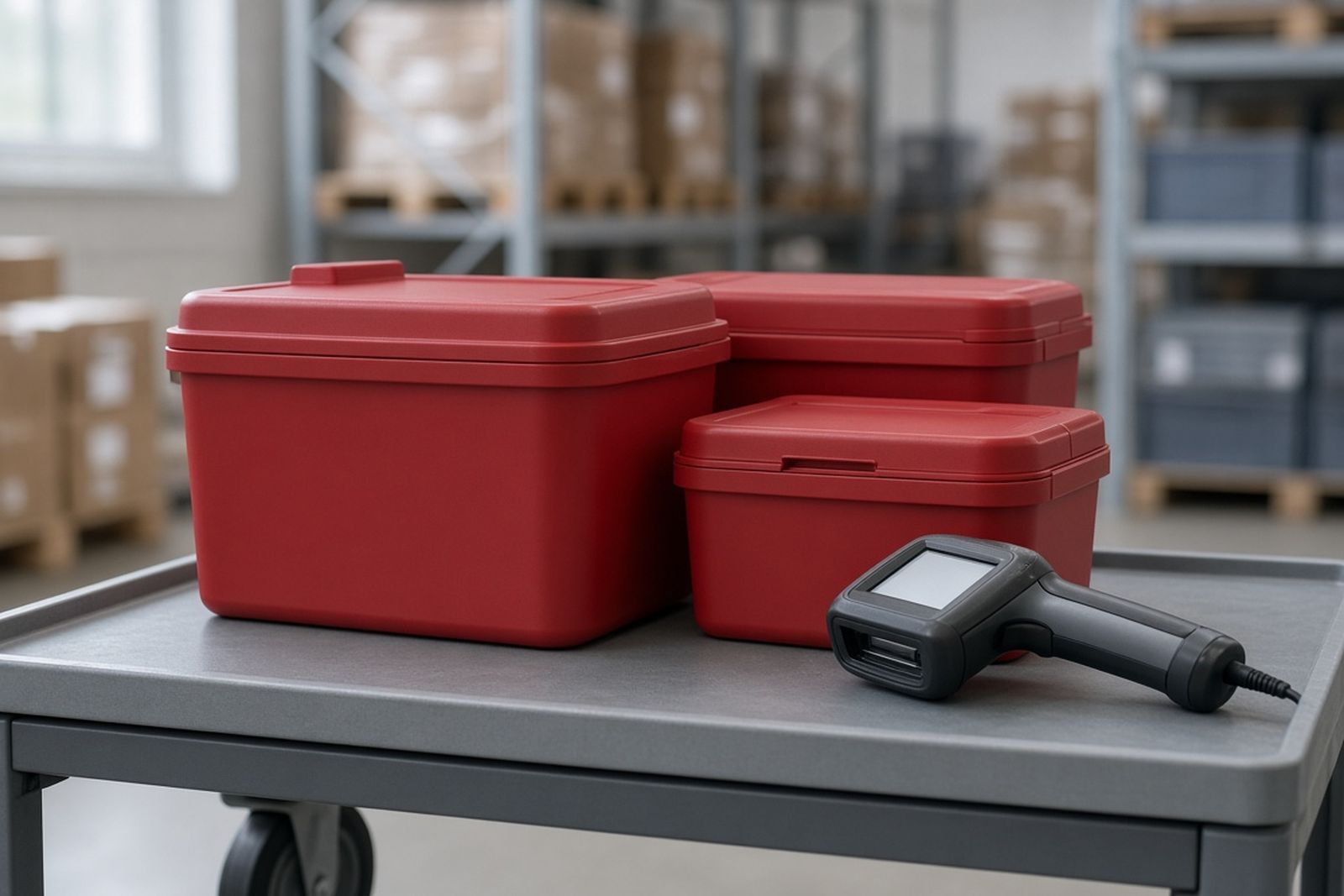
Reusable sharps containers and rigid tubs can reduce the amount of plastic and cardboard that enters the waste stream with every pickup. Instead of being treated along with the waste, the container is emptied, washed, disinfected, inspected, and returned to service.
The environmental benefit depends on how the program is run. Washing uses water, energy, and cleaning chemicals, and containers have to travel back to a processing facility. A well-run program balances those inputs against the single-use packaging it replaces. Ask a hauler what happens to worn or damaged containers and how wash water is managed.
Reusable containers must still meet federal packaging standards and your state's requirements. If a vendor offers them, confirm they are approved for the waste you generate.
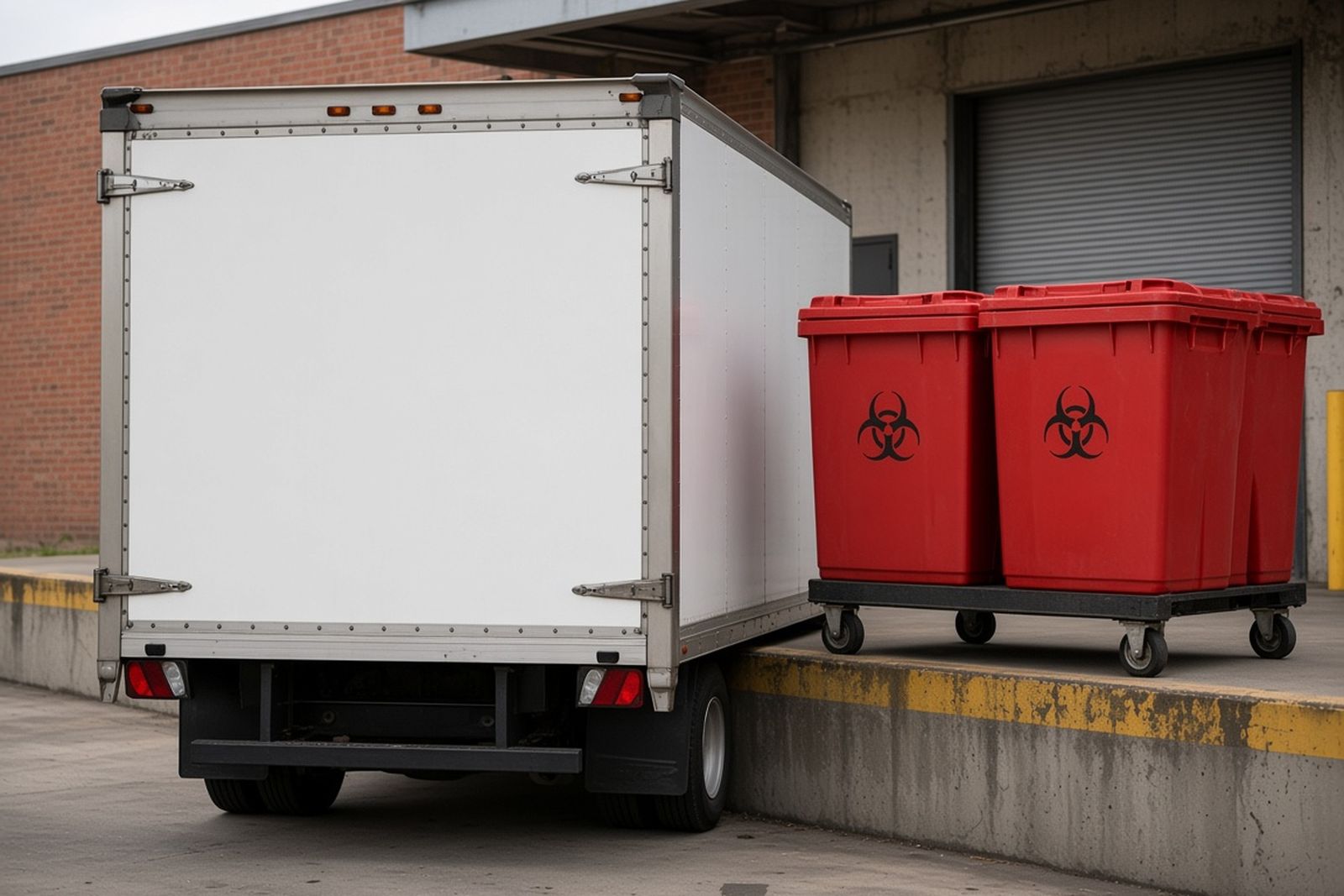
Transportation is one of the most visible parts of the footprint. A truck that stops for a half-empty container every week uses more fuel per pound than one that stops less often for a full load, as long as storage time limits allow it.
Generators can work with haulers to right-size pickup frequency. If your state permits longer storage under certain conditions, such as refrigeration, you may be able to reduce visits. Consolidating pickups across a multi-site organization, or coordinating with neighboring practices in a medical office building, can also cut trips.
Ask whether your hauler optimizes routes, maintains its fleet to reduce emissions, or uses newer vehicles. These are fair questions, but they come after compliance: never stretch storage beyond what your rules allow to save a trip.
Idle time counts as well. A driver who waits twenty minutes at a locked loading dock or searches a building for the holding room burns fuel and time. Giving your hauler clear access instructions, a consistent staging spot, and a contact who answers the phone on pickup day is a small, practical way to make every stop shorter.
Treatment methods, and the streams that need their own
Treatment practices have shifted over time. Incineration was once the default for potentially infectious medical waste; stricter air emission standards and the growth of alternatives have moved much of the volume toward other methods.
Autoclaving uses steam under pressure to inactivate pathogens and is widely used for red-bag waste and many sharps. Other methods include microwave systems, chemical treatment, and various thermal technologies. Treated waste is often shredded and landfilled or, in some cases, used as fuel.
Incineration remains necessary for certain streams, such as pathological waste and some pharmaceutical or trace chemotherapy waste, depending on state rules. Environmental responsibility here means matching each stream to a permitted, appropriate method, not avoiding a method that is required.
Medications and chemical products do not belong in red bags unless your state and hauler specifically allow it. Many drugs need separate handling, and pouring them down a sink sends them into wastewater systems that were not designed to remove them.
Lab reagents, disinfectant concentrates, and fixatives are typically chemical or hazardous waste, not medical waste. Mixing them into regulated medical waste can create hazards for drivers and treatment workers and may send them to a facility not permitted to handle them.
Keep separate, labeled containers for pharmaceutical waste and chemical waste, and use vendors qualified for each. That separation protects both people and the environment.
What role do biohazard cleanup companies play?
Trauma and biohazard cleanup firms generate a different kind of medical waste: bulky, irregular, and unpredictable. Carpet, pad, mattresses, upholstered furniture, and sections of drywall can all become regulated waste after a death, injury, or hoarding situation. How a crew makes removal decisions has a direct effect on how much material is hauled and treated.
A careful crew removes what is contaminated and cleans what can be cleaned. It cuts carpet at a reasonable margin beyond the affected area rather than pulling every room, and it separates unaffected household items, which can go to donation or ordinary disposal, from contaminated ones. It also keeps ordinary construction debris out of red boxes.
That judgment has limits. When material is porous and soaked, removal is the safe choice, and no environmental goal justifies leaving it in place. The point is to avoid treating clean material as infectious simply because it was nearby.
If you hire a cleanup company, ask how it decides what becomes regulated waste and what does not. A clear answer usually signals a crew that thinks about both safety and waste volume.
Running a red-bag audit
For a small practice or a multi-location group, a red-bag audit is the practical starting point. Ask the hauler to look inside a sample of red containers at each location and record what it finds.
Audits commonly turn up paper bibs, plastic wrappers, and cardboard inserts with no visible contamination. Layout is often the cause: the red-bag bin sits by the sterilization area while the general trash is in a hallway closet. Moving a general trash bin next to every red-bag container, posting a one-page guide with pictures, and holding a fifteen-minute team huddle about sorting address most of it.
From there, look at containers and schedules. A reusable sharps program, once you confirm it is approved in your state, cuts single-use plastic, and a location whose containers now fill more slowly may be able to drop pickup frequency within the state's storage limits. Amalgam and expired medications go to separate vendors qualified for those streams.
Repeat the audit after a few months. If red-bag weight has fallen and staff find the setup easier, the change worked without reducing safety; it simply put each item in the right place.
What questions should I ask my hauler about sustainability?
Haulers vary widely in how much attention they give to environmental performance. The questions below help you compare them without losing sight of the essentials: registration, training, proper containers, and a complete paper trail.
You can also look at your own side of the ledger. Track red-bag weight or container counts by month, note changes after training or layout adjustments, and share the results with staff. People sort more carefully when they can see that their effort changes something measurable.
Treat sustainability claims like any other claim. Ask for specifics, check what you can, and choose the partner whose answers are clear.
- Which treatment methods do you use for each of my waste streams?
- Do you offer reusable containers approved for my state, and how are they cleaned?
- Can you audit my waste and suggest sorting improvements?
- How do you plan routes and maintain your fleet?
- What happens to treated residues after processing?