Short answer
Rarely on its own. Homeowners insurance does not pay for ongoing pickup of sharps or medical waste, because that is a routine cost of home care or running a practice. When a covered event such as a death or water loss requires remediation, the licensed transport and treatment of contaminated debris may be reviewed as one line of that larger cleanup claim.
Routine pickup is an operating cost, not a claim
Insurance pays for sudden, accidental losses. Hauling regulated waste on a schedule is neither sudden nor accidental. It is a predictable expense, much like trash service or propane delivery, and policies are not written to absorb it.
That applies whether you are a household managing insulin pens and lancets or a small clinic filling a red bag every week. Home caregivers may find help through pharmacy take-back programs, local health department drop-off sites, or mail-back kits. Businesses budget for a transport contract as part of operating costs.
Where transport can enter an insurance conversation is after an event. If a covered loss creates contaminated debris that must leave the property through a licensed route, the cost of moving and treating that debris may be one item the adjuster evaluates.
When might transport be part of a larger cleanup claim?
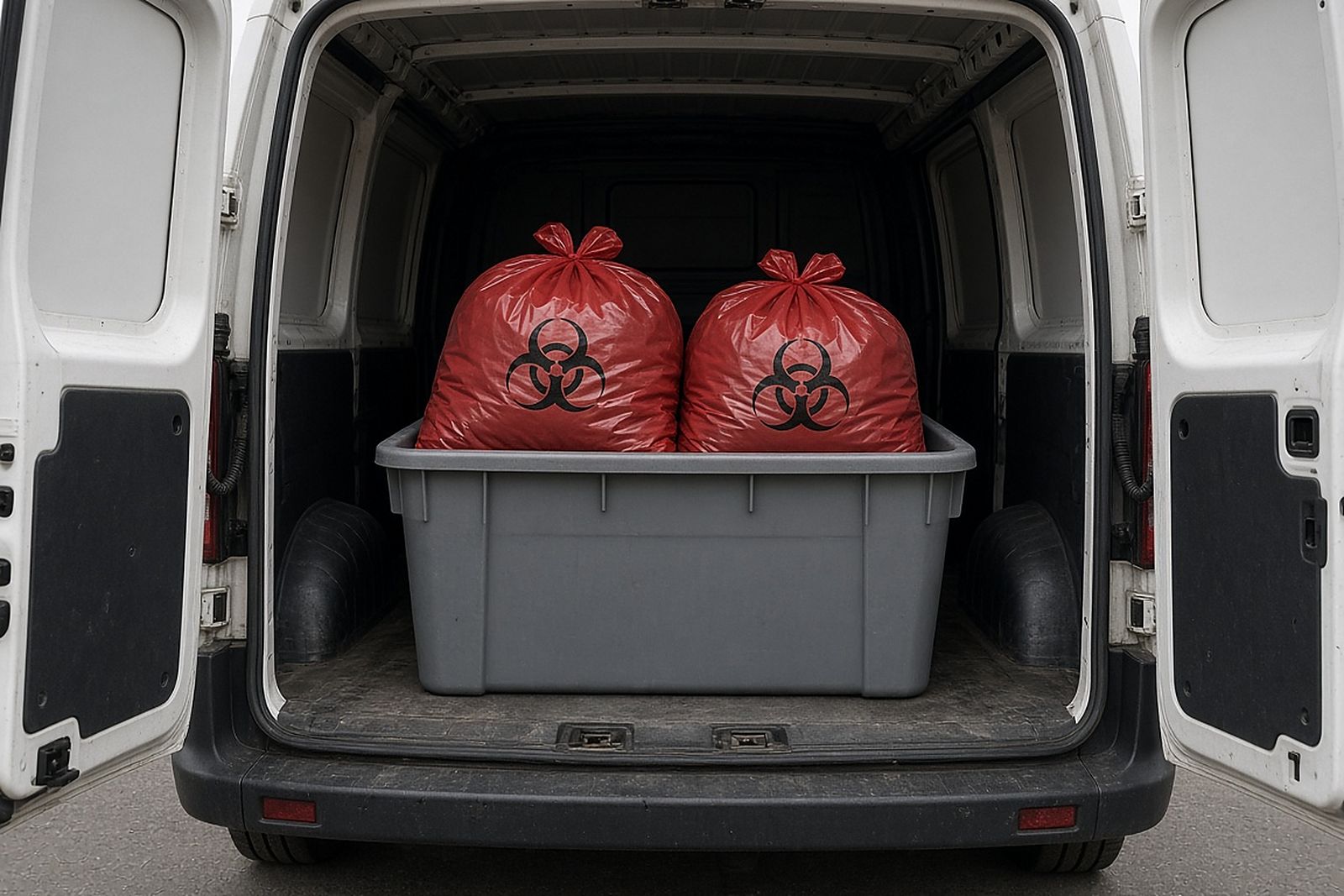
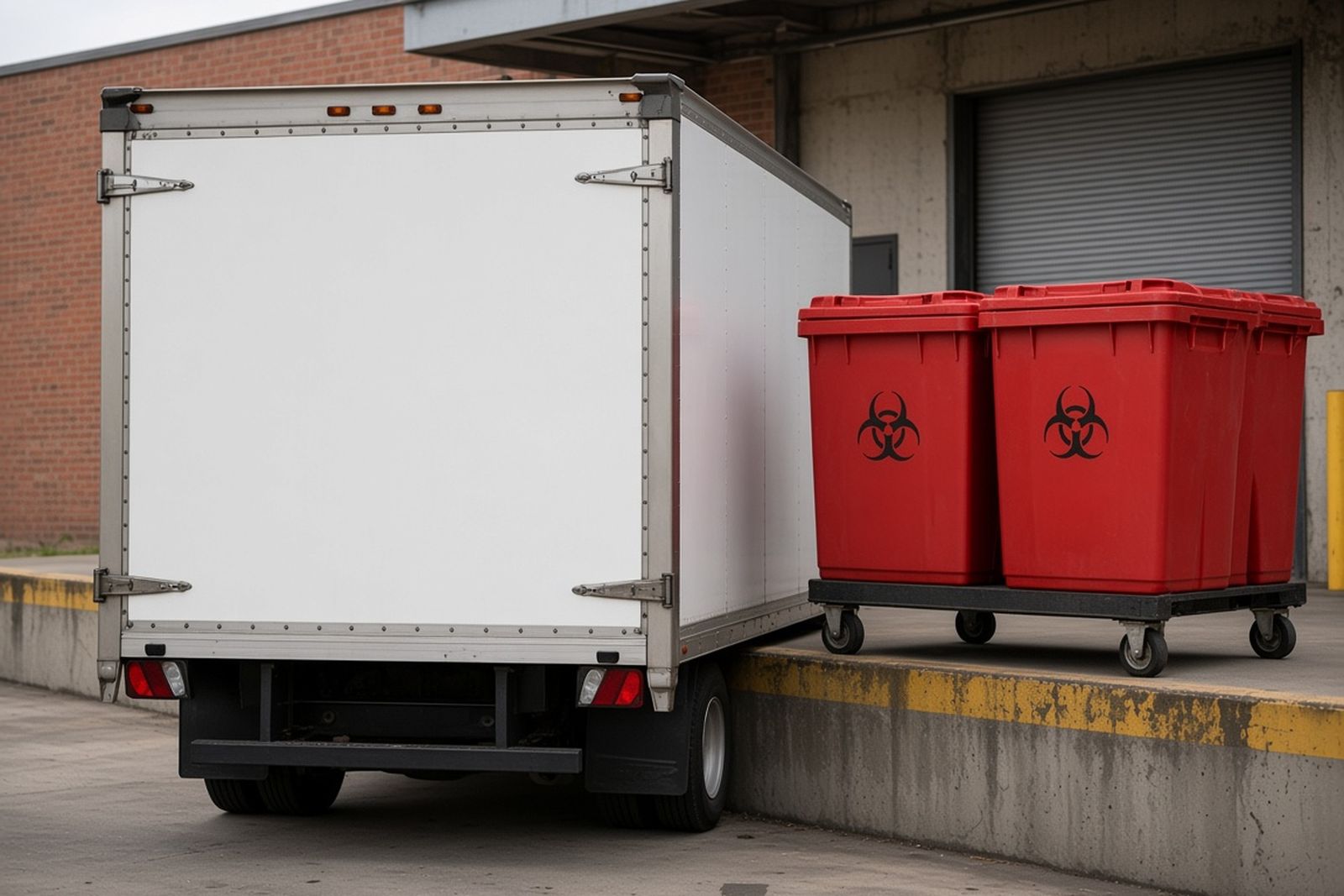
Think of transport as the last step in a remediation job. Carpet, drywall, mattresses, and other porous materials soaked with blood or body fluids cannot go to the curb. They are packaged, labeled, manifested, and handed to a transporter who takes them to a permitted treatment facility.
If the underlying cleanup is evaluated under your policy, the adjuster may look at the waste line alongside the labor and materials. Whether it is paid depends on the triggering event, your coverage parts, and exclusions. Nothing about the waste line makes it more or less likely to be approved than the rest of the scope.
- Debris from an unattended death or trauma cleanup inside the home
- Saturated materials removed after a sewage backup, if you have that endorsement
- Contaminated contents that cannot be cleaned and must be destroyed
- Sharps discovered during a cleanup, such as needles hidden in furniture or bedding
Business waste belongs to the business
A dental office, tattoo studio, veterinary clinic, or funeral home is the generator of its own regulated waste. That means it carries responsibility for sorting, packaging, storing, and handing the waste to a properly permitted transporter. None of that is a homeowners question, even if the business runs out of a converted house.
A commercial general liability or business owners policy may respond if improper handling leads to an injury claim, such as a sanitation worker stuck by a needle in a misrouted bag. Pollution and environmental exposures are commonly excluded from standard commercial forms and may require a separate policy. Ask your commercial agent which form addresses waste-related incidents.
Where you operate matters too. Medical waste is regulated mainly by state environmental and health departments, so your documentation duties and your exposure depend heavily on your state's program.
A claim with a transport line, step by step
The sequence below is illustrative, not a real claim. An adult son discovers that his father died alone in his apartment several days earlier. After the medical examiner releases the scene, a remediation company removes the recliner, a section of carpet and pad, and a portion of subfloor. It also finds a shoebox of used insulin syringes in the bedroom closet.
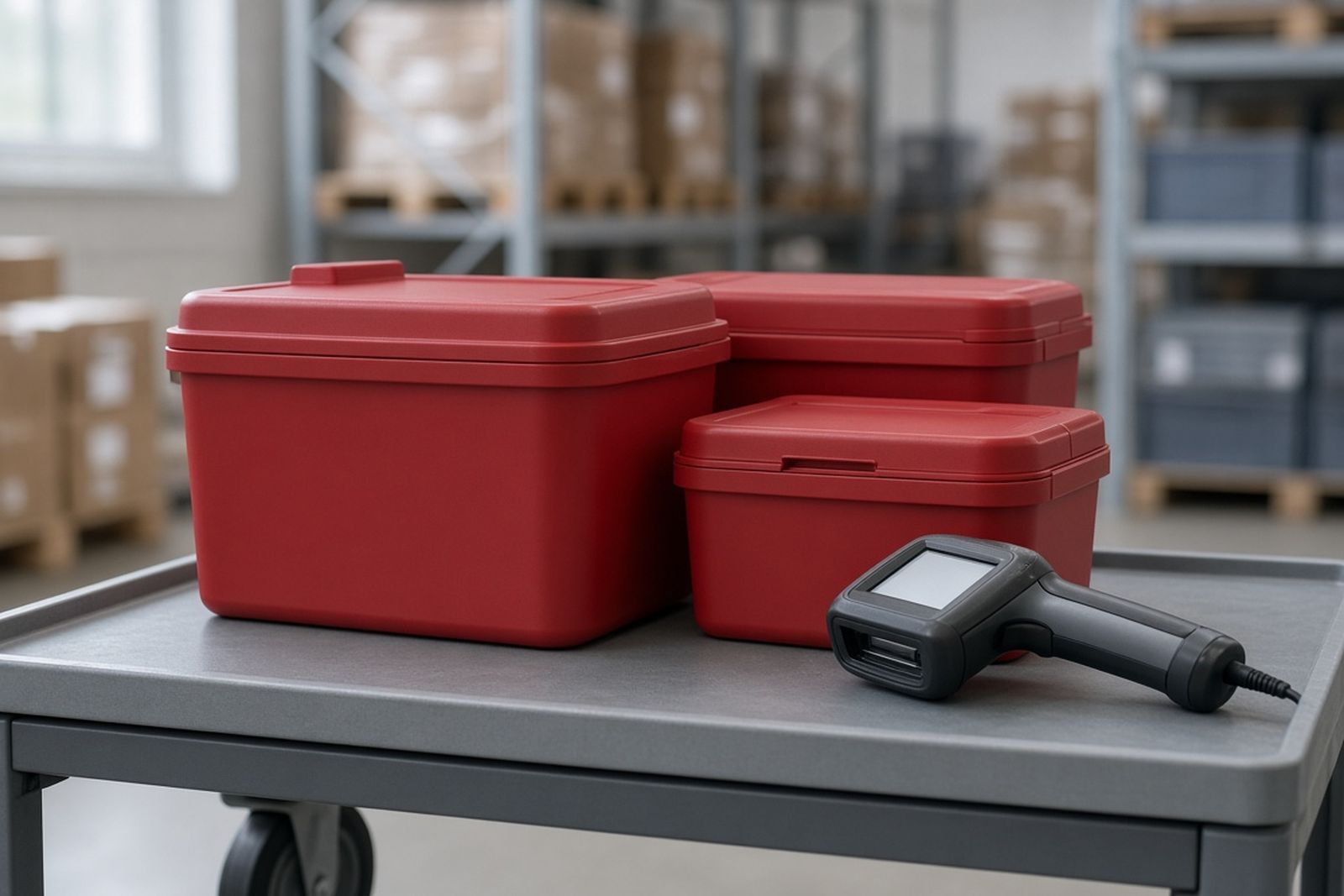
The provider's scope lists the removal work, then a separate line for packaging those materials in approved containers, completing a waste manifest, and transferring them to a licensed transporter. The syringes go into a rigid sharps container rather than a bag. The provider gives the family a copy of the manifest and, later, the treatment facility's confirmation.
The son sends the scope and manifest to his father's renters insurance carrier. The adjuster may evaluate the contents and cleanup under the renters policy, while the landlord's carrier looks at the subfloor. Each carrier makes its own decision. Having the transport documented as its own line lets both of them see exactly what left the building and where it went.
Paperwork to keep for the adjuster
Waste paperwork is proof that contaminated material was handled lawfully, and it tells the carrier exactly what was removed. Ask your remediation provider for copies at each stage, not just at the end.
Keep these documents with the rest of your claim file and store a digital copy somewhere you can find it later. Questions sometimes come up months after the job closes.
- The written scope showing which materials were removed as regulated waste
- Photos of materials before removal and of packaged, labeled containers
- The waste manifest or shipping paper listing container count and type
- The transporter's name and state permit or registration number, if your state issues one
- The treatment facility's certificate or confirmation that the waste was destroyed
- The final invoice with the transport and disposal line separated from labor
Can I haul the waste myself to save on the claim?
In most situations, no, and you should not try. Regulated medical waste has packaging, labeling, and shipping requirements, and many states limit who can move it on public roads. Self-transport rules exist in some states for small generators, but they come with registration, container, and record requirements that do not fit a one-time household cleanup.
There is also a safety reason. A bag that tears in your trunk or a needle that punctures a box can expose you or a family member. Let the licensed provider handle it, and let the cost appear on the scope where the adjuster can evaluate it.
Families sometimes feel pressure to clear a loved one's home quickly, especially when a landlord is waiting or relatives are traveling in for a short visit. That urgency is understandable. Still, sorting through bedding or furniture that may hide needles or soaked materials is exactly where accidental exposures happen. Letting the provider package those items first, before anyone begins sorting keepsakes, protects everyone involved.
For a small number of household sharps with no cleanup event, your pharmacy, clinic, or county household hazardous waste program may accept them in an approved container at little or no cost. That route sits entirely outside insurance.
Questions for the carrier, and what to do after a denial
Carriers may not be familiar with regulated waste pricing, so specific questions help. Ask by phone, then confirm by email.
If the adjuster wants to limit the waste line, ask for the reason in writing. Sometimes the concern is volume, and a photo log of packed containers resolves it.
It also helps to ask your remediation provider, before work starts, how it counts waste on invoices. Some bill per container, some by weight, and some fold disposal into a daily rate. Knowing which method appears on your scope lets you explain it clearly if the carrier asks.
Ask the adjuster which policy language supports splitting the two. Debris removal provisions sometimes have their own limit, and a waste line might be counted against that limit rather than denied outright. Understanding which bucket it falls into tells you what you can challenge.
Provide whatever documentation is missing. A manifest, a treatment certificate, and clear photos often answer questions that were raised only because the paperwork arrived late. You can also ask your remediation provider to write a short explanation of why the materials had to be handled as regulated waste instead of ordinary construction debris.
If you still disagree after that, ask about reinspection, appraisal, or your state insurance department's complaint process.
- Will you evaluate transport and treatment as part of the cleanup, or separately?
- Do you need a copy of the waste manifest and the treatment certificate?
- Is there a limit on debris removal under my policy, and does waste disposal count toward it?
- If contents are destroyed as regulated waste, how do you want them documented for a contents claim?
- Should the remediation company bill you directly or bill me?
How do I plan for waste costs when insurance will not apply?
For businesses, compare transport quotes on the same basis: container types, pickup frequency, minimums, fuel or environmental surcharges, and contract length. One vendor pricing guide, MedPro Disposal in 2026, reported that regulated medical waste disposal typically costs $0.30 to $0.80 per pound, with small physician practices paying $75 to $200 per month. Your quotes may differ, so treat that as a comparison point rather than a benchmark.
For households, the most affordable route is usually prevention: keep sharps in an approved container from the start, learn the local drop-off options, and ask your pharmacist what programs exist in your area. That way, if a larger cleanup ever becomes necessary, the waste portion stays small and easy to document.