Biohazard Waste Transport: Safety
Hazard-assessment articles for biohazard waste transport, including when bloodborne, chemical, respiratory, sharps, structural, or waste controls may apply. PPE and containment must follow the actual exposure—not a universal checklist.
Safety posts cover the hazards of handling, storing, and moving biohazard waste before a hauler takes it away. They explain how needlesticks happen when staff overfill sharps containers or push down on what is in a bag. They explain why lifting heavy boxes can cause injuries and how leaks spread when containers sit on floors that soak things up. They also cover what safety gear an employer should choose after looking at the tasks. They compare the risks of staff making up fixes on the spot with the value of written steps. Some posts also cover driver safety at your loading area, such as clear paths, good lighting, and dry floors.
Get an email reply about biohazard waste transport
Send a short message to the follow-up inbox. A coordinator can reply by email. This form does not send emergency help; call 911 first if anyone is in danger.
This topic matters because hauling problems often turn into safety problems. A missed pickup leads to crowded storage. That leads to stacked boxes, torn liners, and staff handling waste more than they should. Knowing the risks helps you set practical limits, such as how full a container can get and where it can sit. That protects the people in your building while waste waits for the next pickup. These posts also explain why storage rooms should be locked, labeled, and kept away from break rooms and public hallways. They show how simple habits help too. For example, check box bottoms for moisture before stacking. That can stop a leak from reaching a floor that staff and patients walk on every day.
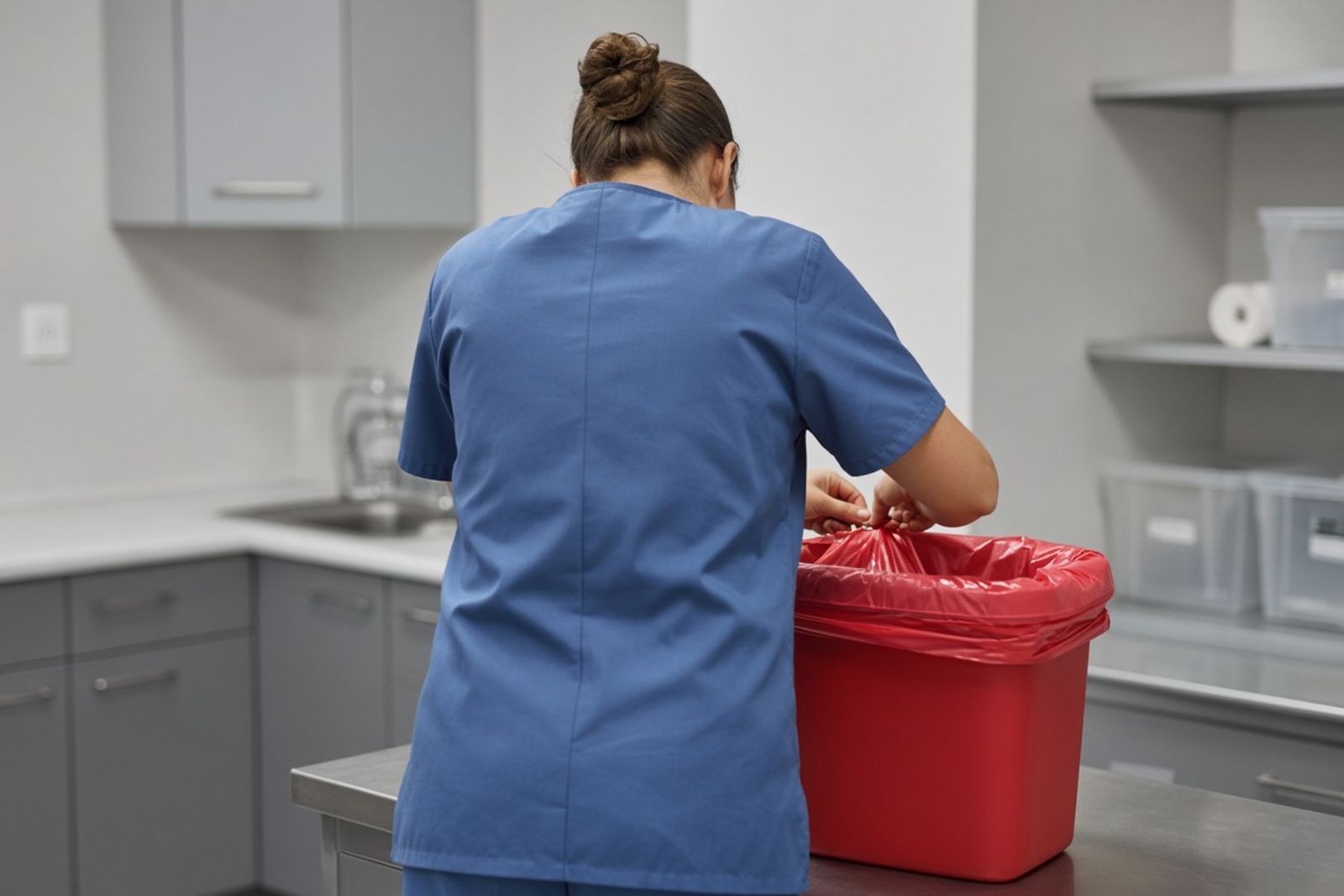
DIY vs Professional Biohazard Waste Transport: The Critical Differences
Can you haul medical waste yourself? Learn when self-transport may be allowed, when it is not, and why licensed haulers handle regulated waste differently.
For most people and businesses, biohazard waste should be moved by a licensed transporter. Households can often use approved sharps disposal programs for home-generated sharps, and some states allow small generators to self-transport under registration and packaging rules. Hauling regulated medical waste in a personal vehicle without meeting those rules can create exposure risks, penalties, and liability. Check your state before moving anything.
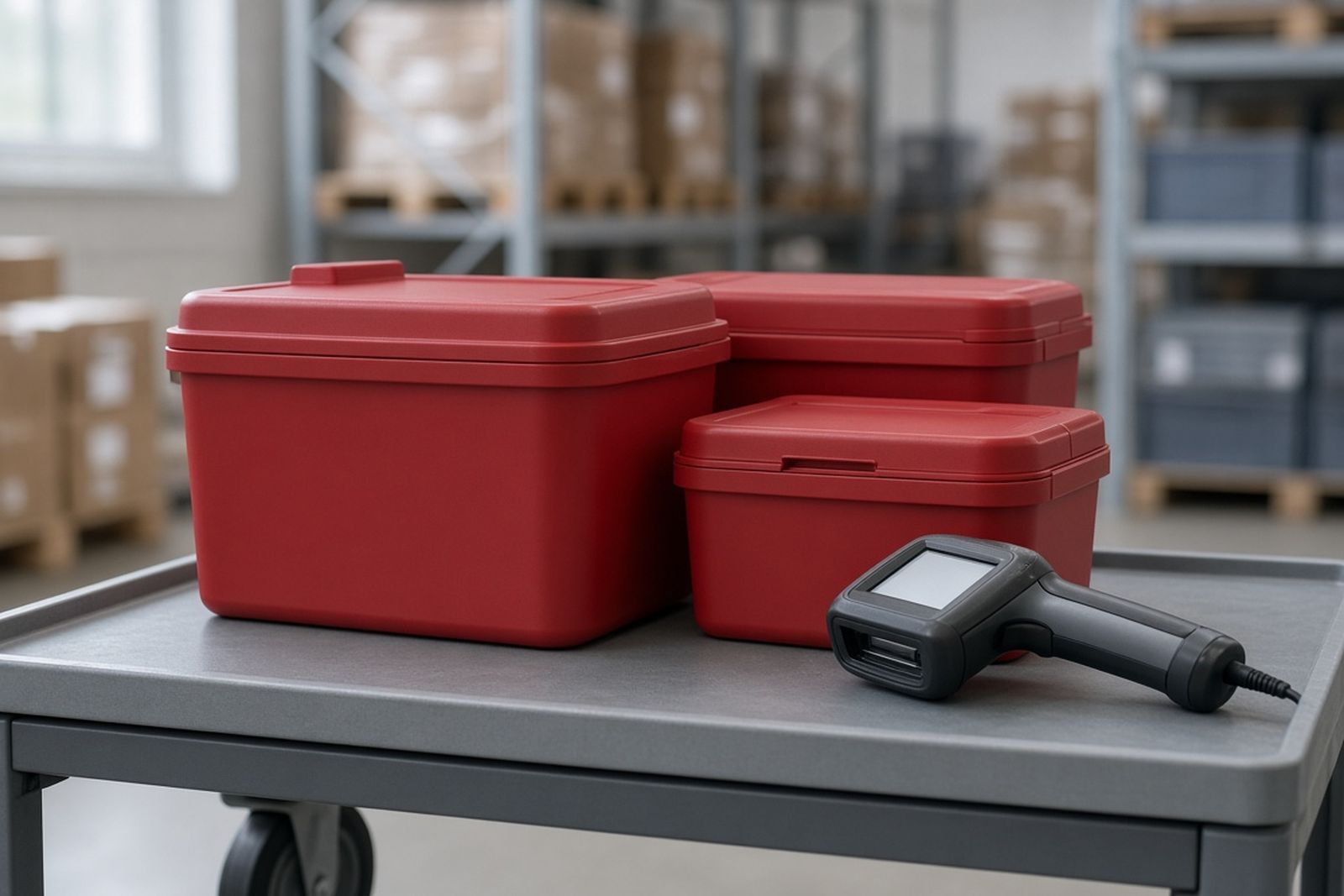
10 Biohazard Waste Transport Safety Risks to Assess Before Work Begins
Needlesticks, leaks, heavy lifts, misclassified loads, and crashes are real risks in medical waste transport. Review ten hazards to check before a pickup.
Before biohazard waste is packaged and moved, assess ten risks: needlesticks, leaks and splashes, misclassified or mixed waste, overfilled or heavy containers, load shifting and vehicle crashes, heat and storage delays, unsecured staging areas, untrained handlers, weak spill and incident plans, and documentation gaps. Each risk has a practical control, and most are settled at the point where waste is first packaged, long before the truck arrives.
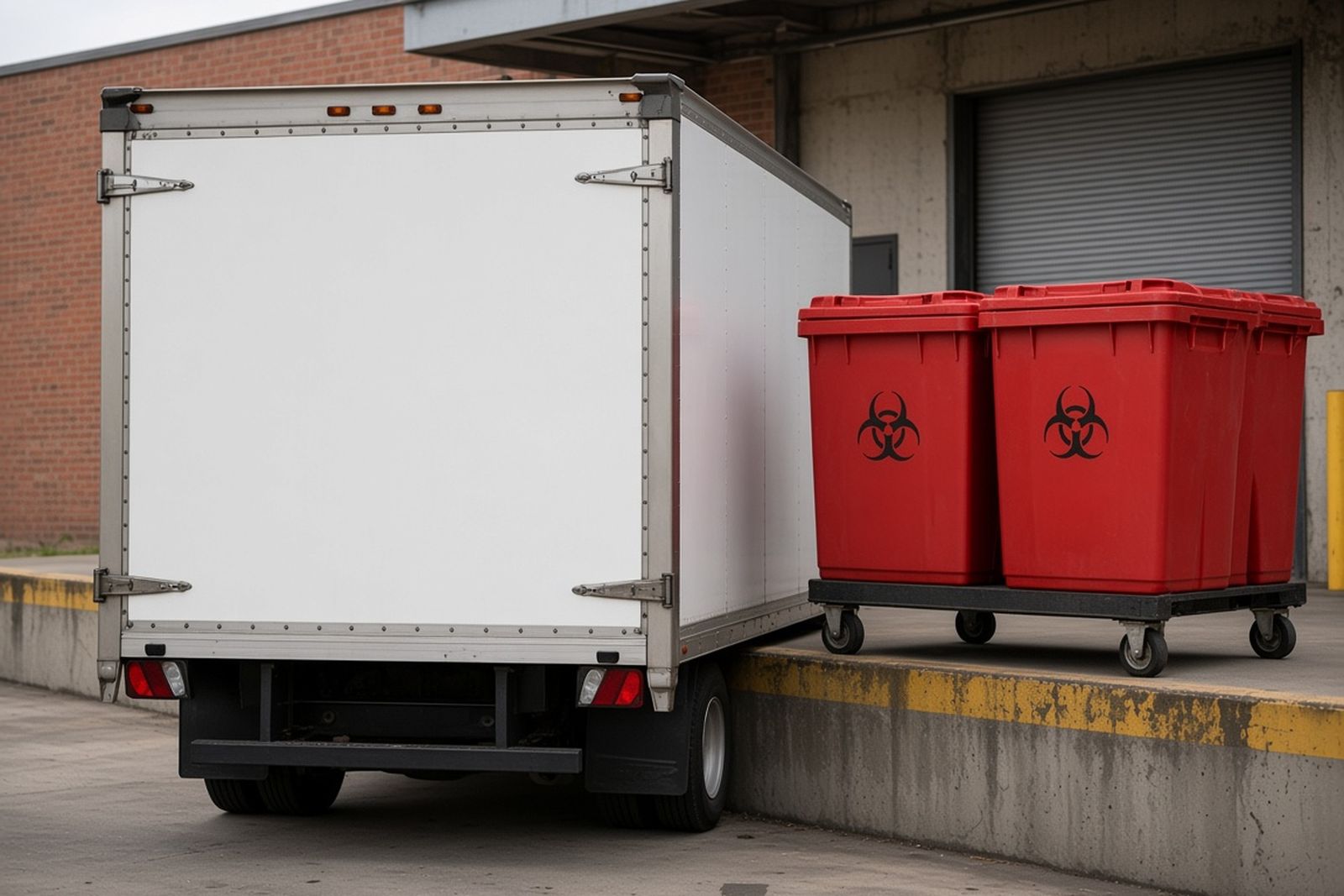
PPE Planning for Biohazard Waste Transport: Start With the Hazard Assessment
Route drivers and plant crews face sharps, leaking boxes, heavy carts, and dock traffic. Build their PPE from a written hazard assessment, not a stock list.
PPE for biohazard waste transport technicians should come from a written hazard assessment of each task on the route and at the plant. Most crews need puncture-aware gloves, eye and face protection for leaks, fluid-resistant clothing, safety footwear, and high-visibility gear for docks and roadsides. Chemotherapy, pathology, or high-risk infectious waste can call for additional protection. Gloves never replace careful handling of closed containers.
Sourced figures on safety
- 97%
Self-reported any improper disposal fell from 97% before to 70% after implementation.
Read with care: Selected drug-affected areas; secular changes possible; baseline overlaps S063.
Source: Levine et al. (2019)Miami neighbourhood walkthroughs plus 448 pre-programme and 482 post-programme survey respondents.
- 34.1%
Among those noticing a box, 34.1% had used one.
Read with care: Selected neighbourhood; disposal-box users are not necessarily people who inject drugs.
Source: Roth et al. (2021)358 residents and 78 business respondents in Kensington, Philadelphia.
- 44
San Francisco walkthroughs found 44 discarded syringes per 1,000 census blocks versus 371 in Miami.
Read with care: Cities differ in many ways; Miami baseline overlaps S062.
Source: Tookes et al. (2012)San Francisco and Miami selected-neighbourhood walkthroughs; 602 and 448 interviewees respectively.
These figures are public research and agency data, not this network's own job records. Keep each number with its population, year and limits; none of them predicts cost, timing or outcome at a specific property.
What research has found
Findings from published studies of people and properties in situations like this one. They describe what researchers observed in a specific group; they are not predictions for your case.
Patient handling also contributed to injury incidents.
Sharps-disposal availability varied substantially between responding airports.
Safety: common questions
What should staff do if a container leaks in the storage room?
Keep people away from the spill. Follow your written exposure plan and spill steps. Trained staff wearing the right safety gear can contain and clean the area with approved supplies. Then they can repack the waste in a new container. Tell your hauler before pickup so it can advise on packing. Report any exposure to your supervisor and get a medical check.
Is it safe to compress bags to fit more into a box?
No. Pressing down on what is in a bag can push needles through the plastic, cause splashes, or tear liners. It also risks overfilling the box, and a driver may refuse it. Close bags and containers when they reach the fill line marked on them. If space is a problem again and again, schedule more frequent pickups.
Can staff carry waste boxes to their own cars for drop-off?
Generally, moving medical waste on public roads falls under hauling rules, and a private car rarely meets them. Some states allow small businesses to haul limited amounts themselves under set conditions. But you should check with your state medical waste program first. Until you have a clear answer, keep waste on site for a permitted hauler.
How can we reduce lifting injuries when moving waste boxes?
Keep boxes within the weight and fill limits your hauler sets. Use carts or dollies for anything heavy. Store boxes at waist height instead of on the floor when you can. Clear the path between storage and the pickup spot. Encourage staff to ask for help with awkward loads. A short demo of safe lifting during training prevents many strains.
Should staff wear gloves even when handling closed containers?
It is a sensible habit. The outside of a container can be soiled by a small leak or by hands that touched waste earlier. Gloves also protect against rough box edges. Follow your written exposure plan, which should say what protection is expected for each task. Wash your hands after taking off gloves, even if they look clean.
How do we keep patients or clients away from waste areas?
Store waste behind a locked door in an area closed to the public. In treatment rooms, mount sharps containers or place them out of easy reach. Use signs where required. Do not leave containers in hallways or waiting areas before pickup. If your layout makes this hard, talk with your hauler about pickup times that keep the path clear.
What should we do if a waste container is found open or tampered with?
Keep people away. Do not reach in or try to sort what is inside. Wearing gloves, close the container if you can do it safely, or put it inside a larger approved container. Check the area for loose sharps. Report it to your supervisor, review who had access, and tighten storage security. Tell your hauler before pickup so the driver is prepared.
Related community polls
Every count is a real visitor vote; nothing is seeded or padded. One vote per poll per device, and you can change your answer.
How does your business get medical waste off site now?
Which part of your waste program is most frustrating?
More on biohazard waste transport
Biohazard Waste Transport services
See how medical waste hauling works, from packing and shipping records to permitted treatment, before you sign with a hauler.
Costs explained
What drives the price, published cost ranges, and how to read a written quote line by line.
Insurance and payment
Which policies may respond, how to document a claim, and what to do if coverage is denied.
Planning tools
Use planners to estimate pickup costs, check haulers, sort waste, and organize records for your medical waste program before you commit.
Community polls
See how other clinics, studios, labs, and property owners handle pickup schedules, paperwork, and hauler choices. See where opinions differ from the written rules.
Knowledge quiz
Test what you know about who is responsible, container rules, shipping records, and proof of treatment. Then review the study guide for anything you missed.