Biohazard Waste Transport: Education
Science and technology used in some biohazard waste transport scopes, with explicit limits for ATP, disinfectants, enzymes, fogging, air equipment, and moisture tools.
Education posts explain the ideas behind biohazard waste hauling. They cover how medical waste differs from normal trash, sharps, body tissue, drugs, and chemical waste. They explain why sorting waste where it is made matters. They show how treatment methods differ, such as steam under pressure versus burning. They also explain why some types of waste cannot share a container or a truck. Other posts look at tracking tools, from paper waste shipping records to online portals. They explain what technology can and cannot prove about where your waste went. You will also find explanations of red bags, sharps containers, and outer boxes, and why each layer has a job during hauling.
Get an email reply about biohazard waste transport
Send a short message to the follow-up inbox. A coordinator can reply by email. This form does not send emergency help; call 911 first if anyone is in danger.
This knowledge matters because most waste problems start with a misunderstanding. Tossing a drug vial into a red bag, or putting normal paper towels into a sharps container, can create costly or even illegal loads. When you understand why the types exist, you can train staff better. You can avoid paying to treat normal trash as medical waste. You can also ask your hauler better questions about how your containers will be handled after pickup. It helps you read a hauler's service agreement too. Those often use technical terms for waste types and container types. Once those terms make sense, you can match each line of the contract to what really happens in your storage room and on the truck.
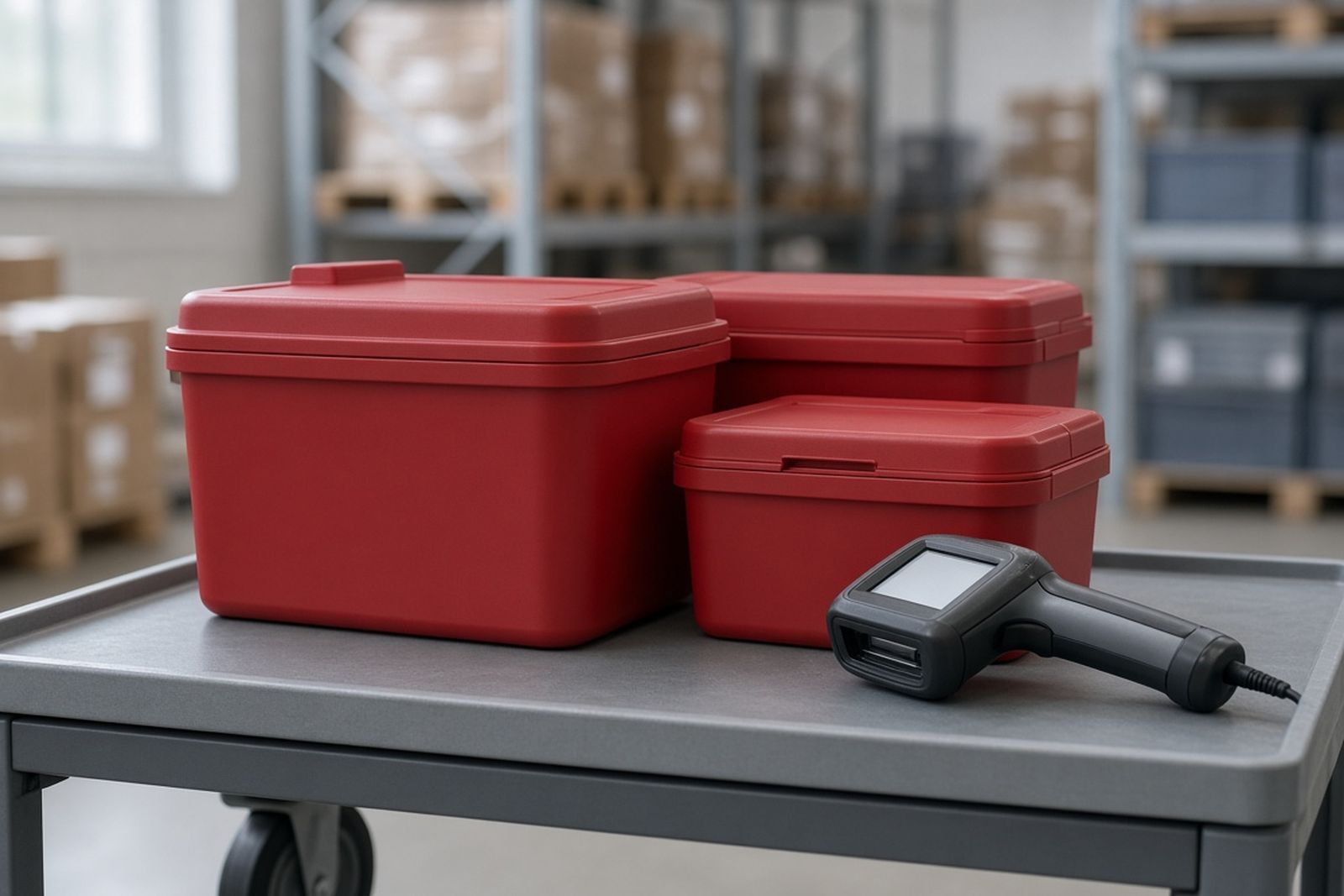
The Science Behind Biohazard Waste Transport
Why do medical waste bags, boxes, and trucks follow such strict rules? The science of containment, puncture risk, and treatment explains each step of transport.
Biohazard waste transport is built on containment science. Infectious material must stay sealed from the point of generation to a treatment facility, so packaging is designed to resist leaks and punctures, loads are segregated by hazard, and waste is treated by heat, steam, or other validated methods that inactivate pathogens. Every rule on bag size, labeling, and paperwork exists to prevent release along that route.
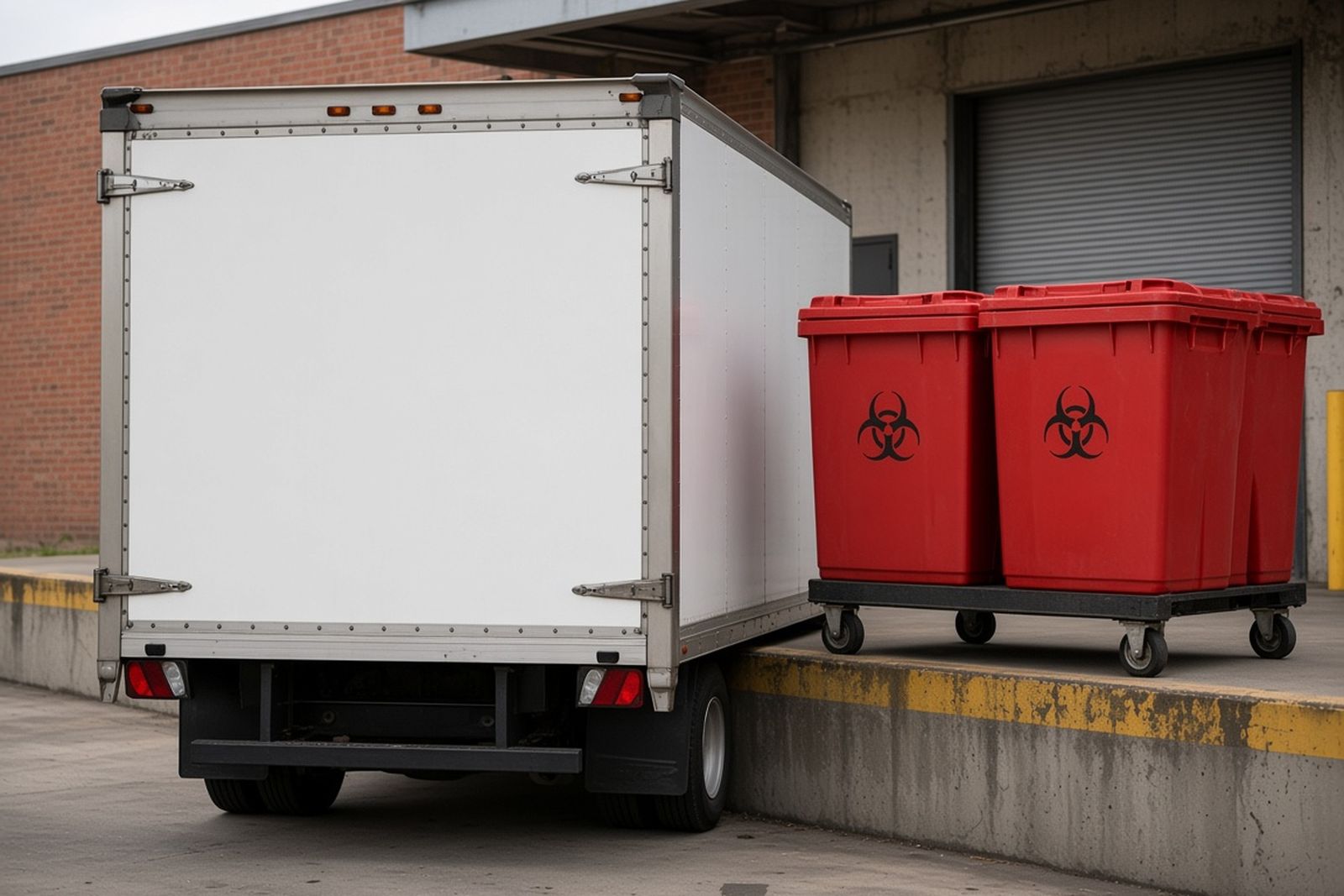
How to Evaluate Equipment Proposed for Biohazard Waste Transport
Red bags, sharps containers, rigid boxes, carts, and box trucks each have a job in medical waste transport. Learn how to judge the equipment a hauler proposes.
To evaluate equipment proposed for biohazard waste transport, check that every container is designed for the waste it will hold, that packaging meets transport rules, that the vehicle can keep loads secure and contained, and that spill response and tracking tools come along. Ask for container specifications, how reusable carts are cleaned, what is in the spill kit, and how pickups are documented.
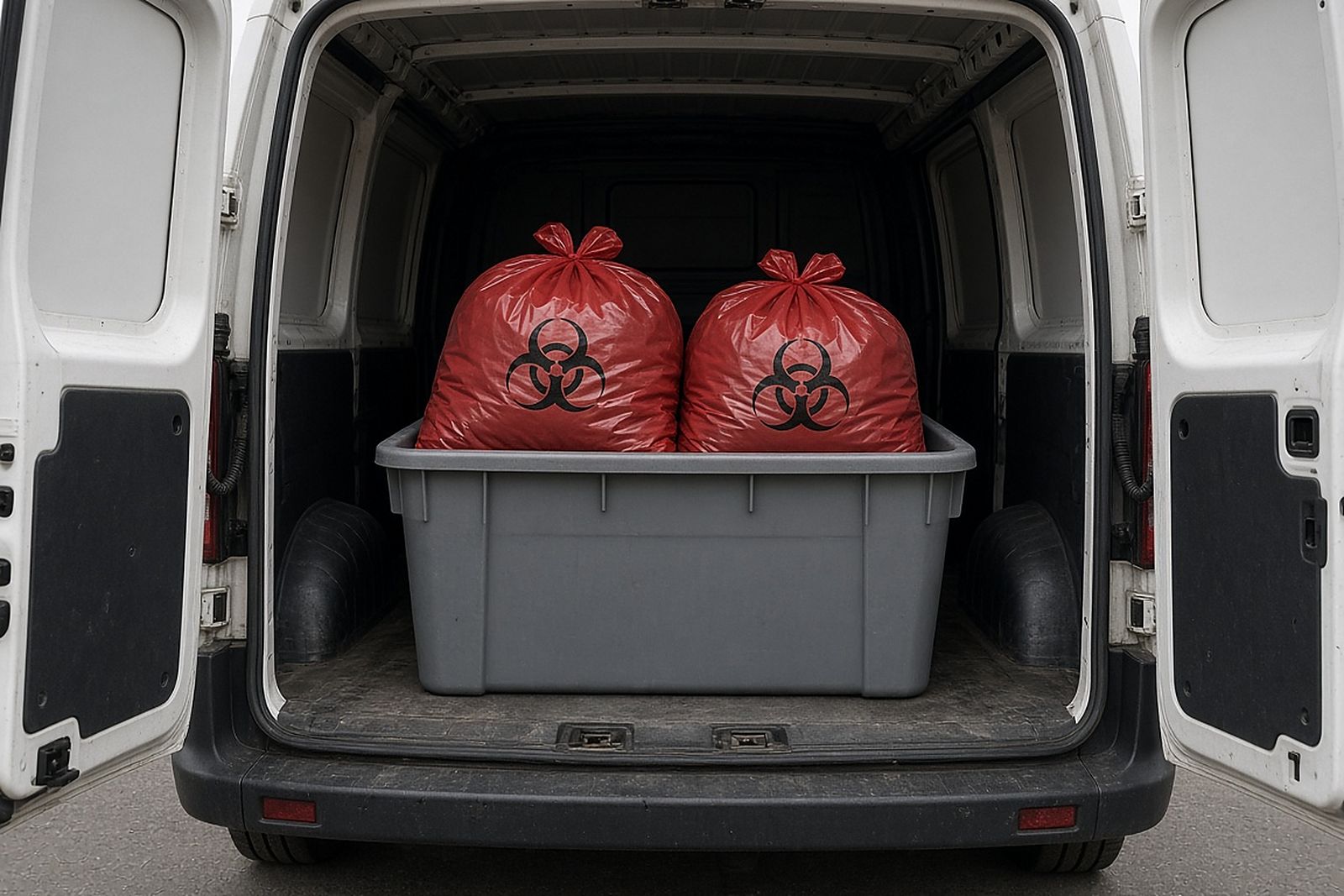
The Difference Between Cleaning and Disinfection in Biohazard Waste Transport
In medical waste transport, carts, truck boxes, and docks are cleaned then disinfected, while the waste itself is treated. Here is how the three steps differ.
In biohazard waste transport, cleaning removes visible soil and residue from reusable carts, truck cargo areas, and loading docks, while disinfection applies a registered product at its label contact time to inactivate pathogens on those cleaned surfaces. Neither step applies to the waste itself, which stays sealed until a treatment facility sterilizes or destroys it. Knowing which step happens where helps you judge a hauler's hygiene.
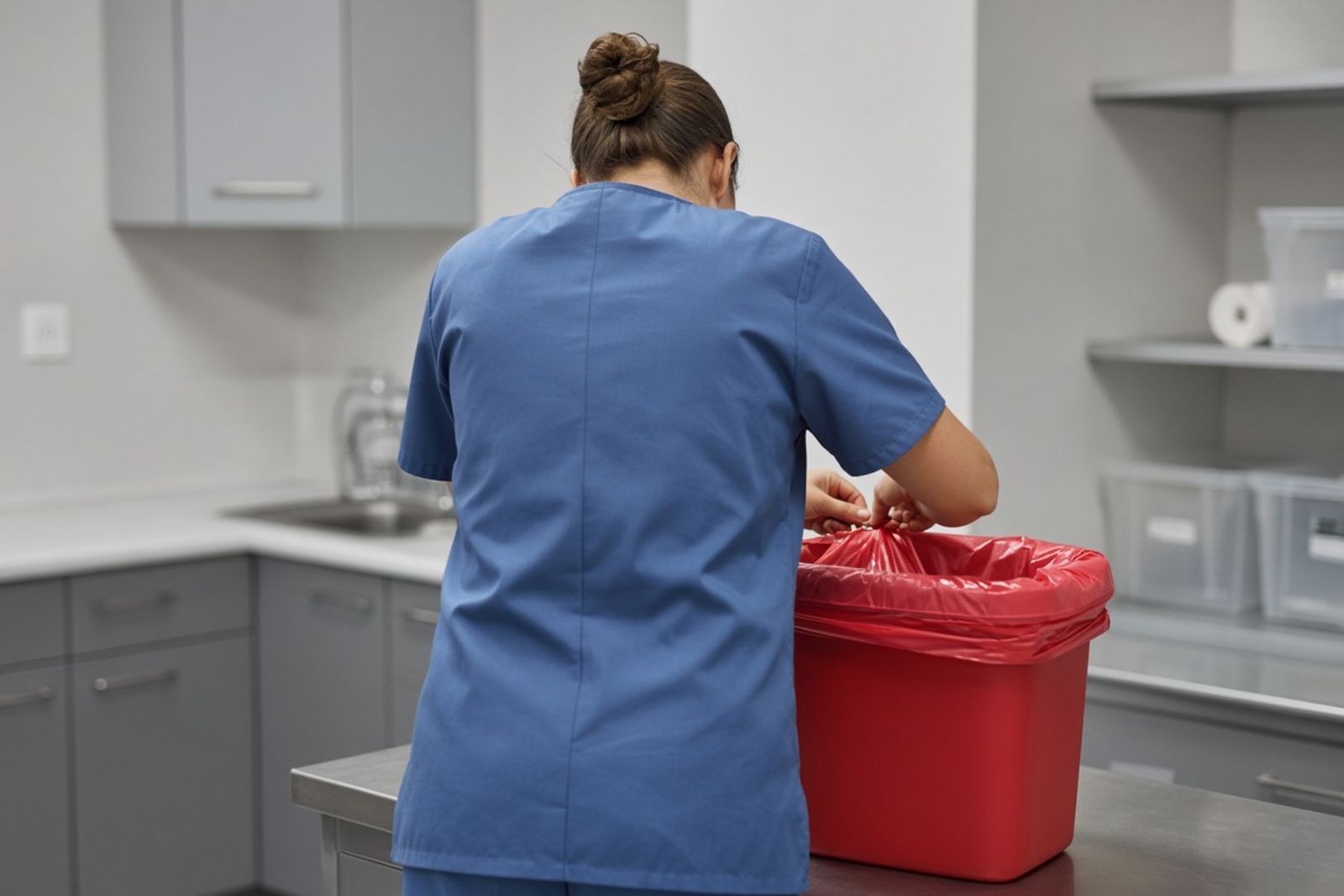
When ATP Testing Helps—and When It Does Not—in Biohazard Waste Transport
ATP swabs can show whether reusable waste carts and truck cargo floors were cleaned well. They cannot prove waste was treated or that no pathogens remain.
In medical waste transport, ATP testing is a quick check on how well a hard surface was cleaned, such as a reusable cart, tub, or cargo floor after a leak. It measures organic residue, not specific germs, and it says nothing about whether waste was properly packaged, tracked, or treated. Use it as one quality signal inside a written cleaning program, never as clearance on its own.
How to Evaluate Technology Used in Biohazard Waste Transport
Barcoded containers, e-manifests, GPS, and on-site treatment units all promise better medical waste handling. Here is how to judge whether a tool really helps.
Judge medical waste transport technology by whether it produces records your state accepts, gives you timely access to your own data, reduces handling errors or exposure, and holds up when something fails. Container barcodes, electronic tracking, GPS, and portals can help. On-site treatment devices may need state approval. No tool replaces registration, trained people, proper packaging, and a paper trail.
When Enzymes or Microbial Products Fit Biohazard Waste Transport
Enzyme and microbial products can help with cleaning and odor around medical waste, but they do not treat or disinfect it. Here is where they fit and where not.
Enzyme and microbial products play a narrow, supporting role in medical waste transport. They can loosen organic soil during cleaning, control odors in wash areas or drains, and help cleanup crews before waste is packaged. They are not disinfectants, they are not treatment, and they do not belong in sealed containers unless your state approved that use.
Sourced figures on education
- 67.8%
Among opioid-using respondents who saw boxes, 67.8% with unstable housing used them versus 45.3% with stable housing.
Read with care: Selected neighbourhood; disposal-box users are not necessarily people who inject drugs.
Source: Roth et al. (2021)358 residents and 78 business respondents in Kensington, Philadelphia.
- 49%
Discarded syringes found on walkthroughs declined 49% after programme implementation.
Read with care: Selected drug-affected areas; secular changes possible; baseline overlaps S063.
Source: Levine et al. (2019)Miami neighbourhood walkthroughs plus 448 pre-programme and 482 post-programme survey respondents.
- 385,000
CDC estimates 385,000 needlestick and other sharps injuries occur each year among hospital-based healthcare personnel, about 1,000 per day.
Read with care: Older estimate; excludes injuries in clinics, nursing homes and EMS.
Source: CDC (2008)United States hospital-based healthcare personnel
These figures are public research and agency data, not this network's own job records. Keep each number with its population, year and limits; none of them predicts cost, timing or outcome at a specific property.
What research has found
Findings from published studies of people and properties in situations like this one. They describe what researchers observed in a specific group; they are not predictions for your case.
Concern about waste from single use influenced behaviour.
Education, knowledge and attitude jointly predicted reported disposal practices in the study model.
Education: common questions
What is the difference between a generator and a transporter?
The generator is the business or person whose work made the waste. Examples are a clinic, a studio, or a property owner after a cleanup. The transporter, or hauler, moves that waste on public roads to a treatment site under its permits. Generators usually stay responsible for proper packing and records, even after the truck leaves. That is why paperwork matters.
Why can't pharmaceutical waste go into the same box as used gauze?
Drug and chemical wastes often need different treatment than infectious waste. Some fall under separate federal or state rules. Mixing them can make a load unacceptable to the hauler or the treatment site. Ask your hauler which types of waste it accepts and how to keep them apart. Check with your state agency for drug disposal options.
Does it matter whether my waste is autoclaved or incinerated?
For most businesses, the key point is that the site has a permit to treat your types of waste. Some types, such as certain body tissue or trace chemo waste, may need a set method under state rules. Ask your hauler which method will be used for each type. Then confirm it against the treatment site's permit.
What is a transfer station in waste transport?
A transfer station is a permitted site where haulers briefly gather waste from many route stops before moving it to a treatment site. It lets companies run efficient routes while sending full loads to treatment. Waste that passes through one should stay sealed, and the transfer should be tracked. Ask your hauler whether your waste goes through one, and which site it is.
How is a waste shipping record different from a certificate of treatment?
A waste shipping record, tracking form, or shipping paper travels with your waste. It is signed at pickup and records what left your site and who took it. A certificate of treatment or destruction comes later. So might a completed copy of the shipping record. It confirms that a site received and treated the waste. You need both to show the full path, so file them together by pickup date.
Can a property owner become a generator after a cleanup?
Sometimes. In many cases the cleanup company counts as the generator of waste it makes during its work. But this varies by state and contract. If a contractor leaves waste behind or asks you to sign shipping papers, you may take on the generator's duties. Ask the contractor to state in writing who the generator is. Keep copies of every record.
What does trace chemotherapy waste mean?
The term usually means items that held or touched chemo drugs but have only small leftover amounts. Examples are emptied vials, tubing, and safety gear. It is often kept apart from red-bag waste and sent to be burned. Large amounts or unused drugs are handled differently. Your hauler and state program can explain how to sort your own items.
Related community polls
Every count is a real visitor vote; nothing is seeded or padded. One vote per poll per device, and you can change your answer.
How does your business get medical waste off site now?
Which part of your waste program is most frustrating?
More on biohazard waste transport
Biohazard Waste Transport services
See how medical waste hauling works, from packing and shipping records to permitted treatment, before you sign with a hauler.
Costs explained
What drives the price, published cost ranges, and how to read a written quote line by line.
Insurance and payment
Which policies may respond, how to document a claim, and what to do if coverage is denied.
Planning tools
Use planners to estimate pickup costs, check haulers, sort waste, and organize records for your medical waste program before you commit.
Community polls
See how other clinics, studios, labs, and property owners handle pickup schedules, paperwork, and hauler choices. See where opinions differ from the written rules.
Knowledge quiz
Test what you know about who is responsible, container rules, shipping records, and proof of treatment. Then review the study guide for anything you missed.