Short answer
As a property manager, you usually are not a medical waste generator, but you often control the space where regulated waste sits and the vendors who remove it. Your job is to know who owns the waste, keep it secured and labeled until pickup, hire or confirm a registered hauler, and keep tracking records in the property file.
When medical waste lands on a manager's desk
Most managers never expect to think about regulated medical waste until a situation lands on them. A tenant dies in a unit and a remediation company fills a dozen lined boxes. A maintenance tech finds syringes behind a laundry room dryer. A tenant receiving home dialysis asks where the used supplies should go. A commercial tenant, such as a dental suite or tattoo studio, leaves boxes by the dumpster after a lease ends.
Each of these puts potentially infectious material on property you manage. Even if the waste legally belongs to someone else, you control access, you hire the vendors, and you will be the first person a neighbor, inspector, or owner calls if something goes wrong.
The goal is not to become a waste expert. It is to know enough to ask the right questions, keep people away from the material, and make sure the paper trail ends up in your files.
Who legally owns the waste on my property?
Ownership decides who must arrange and document transport. In a commercial lease, the medical or dental tenant is normally the generator and carries that responsibility. When you hire a trauma or biohazard cleaning company, the contractor usually packages the waste it produces and arranges its removal, but your contract should say so in plain words.
Household waste is often treated differently. Many states handle sharps and supplies from a resident's own home care under separate household rules rather than the rules for businesses. That does not make loose needles in a trash chute acceptable, but it can change who must pay for disposal and which containers apply.
When the answer is unclear, write down what the waste is, where it came from, and who produced it, then call your state health or environmental agency.
- Commercial tenant clinic or studio: usually the tenant's responsibility
- Contracted biohazard cleanup: usually the contractor's, if the contract says so
- Resident's own home health supplies: often under household rules
- Abandoned or unknown material: call the agency before anyone touches it
Found sharps: a simple rule for maintenance staff
Improper disposal is common, so your team will eventually find needles. In a 2022 community clinic study, Charbonneau et al. found that 25.8% of people with diabetes discarded sharps without a designated sharps container. Some of those end up in trash chutes, recycling bins, and grounds your staff service every day.
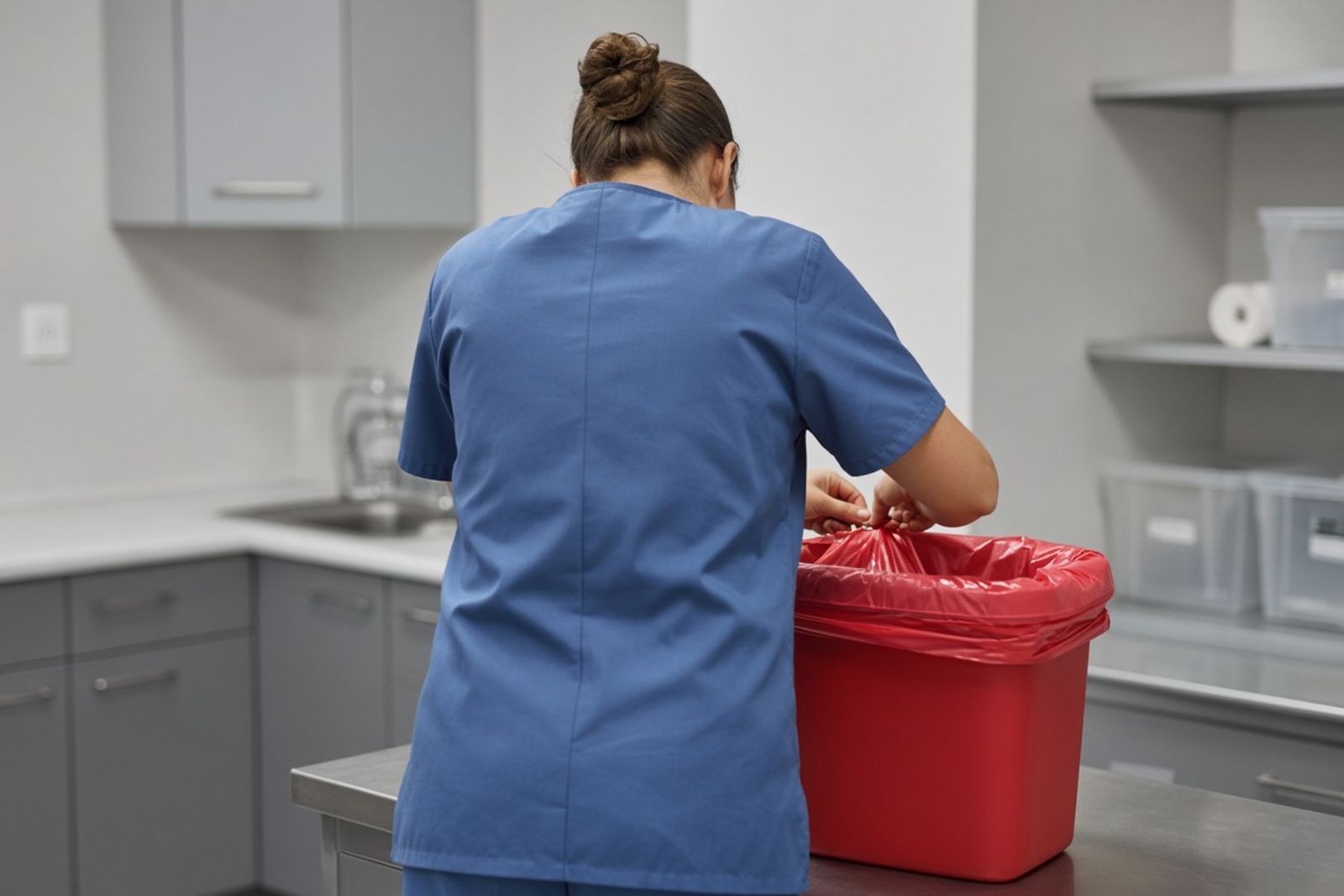
Give maintenance a simple written rule: do not pick up sharps with bare hands, do not recap or bend them, and do not push trash down with hands or feet. Keep puncture-resistant sharps containers and tongs in the maintenance shop, and train staff to use them only if your written procedure allows.
If a staff member is stuck, they should wash the area, report it right away, and seek medical evaluation. Your workers' compensation carrier and occupational health provider can tell you what follow-up is expected. Filled containers then need a proper disposal route, not the regular dumpster.
Storage until the hauler arrives
The period between packaging and pickup is where problems start. Boxes left in a hallway get opened by curious children, soaked by a leaking pipe, or tossed by a janitor who did not know what they were.
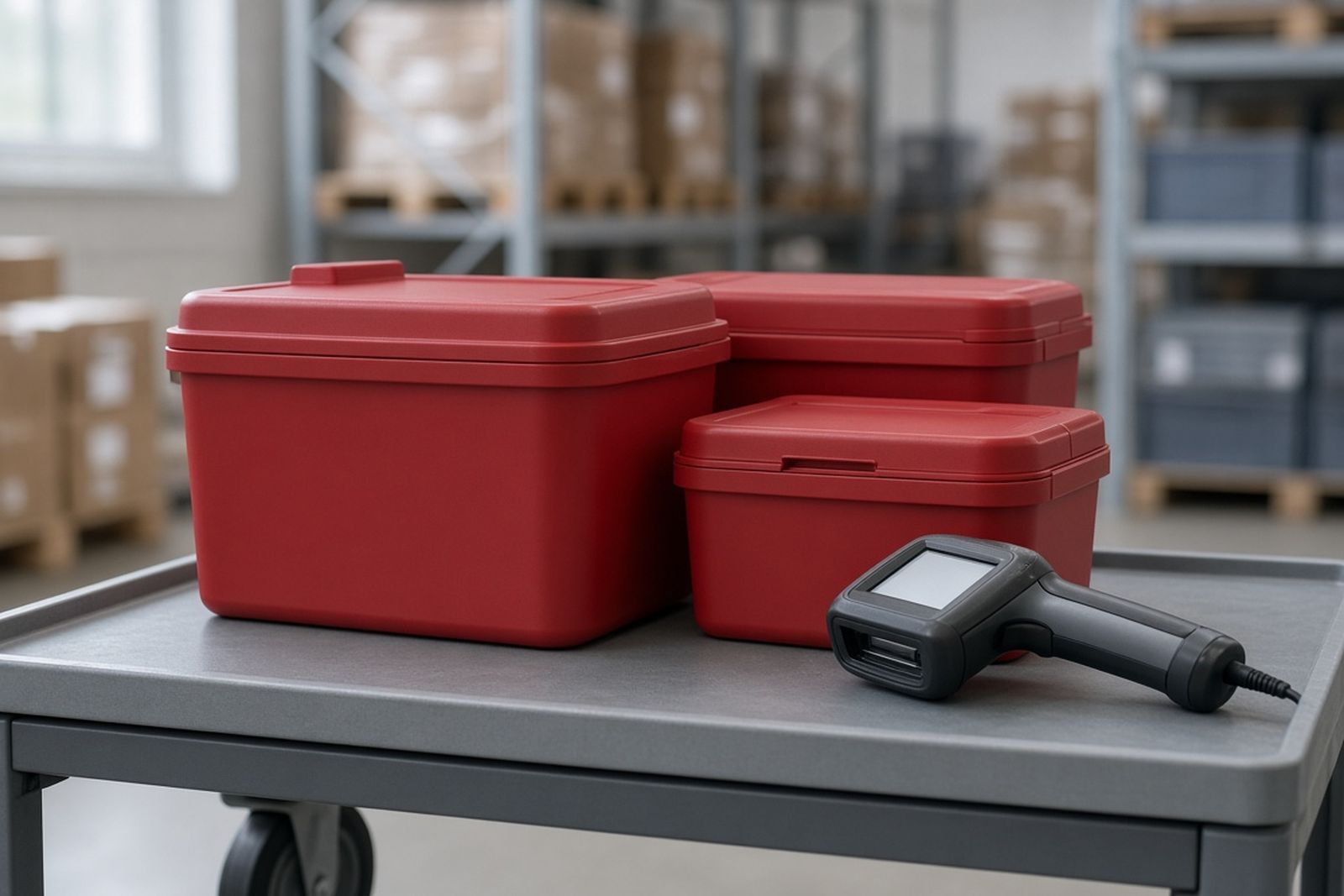
Pick a locked, dry room or cage with a floor that can be cleaned. Keep boxes closed, labeled with the biohazard symbol, and off the floor if water is a risk. Limit keys to people who know what is inside. If the waste came from a remediation job, ask the contractor how long it may be held on site before your state expects it to move.
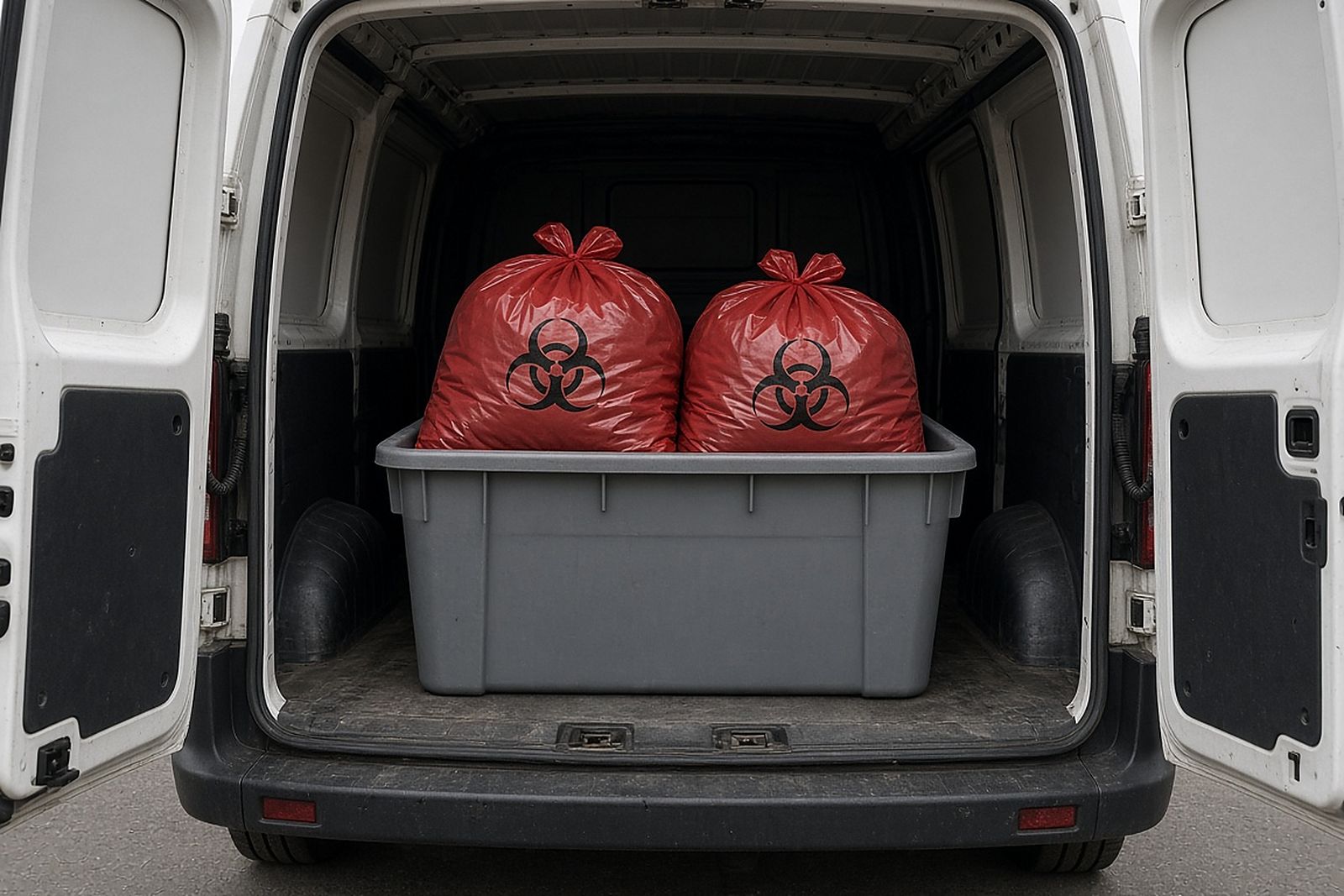
Federal transport rules also shape what the hauler will accept, including limits on how large and how full bags may be. A bag that is overstuffed or packed into the wrong outer box may be refused at pickup, leaving you to store it longer.
How do I choose or confirm the right hauler?
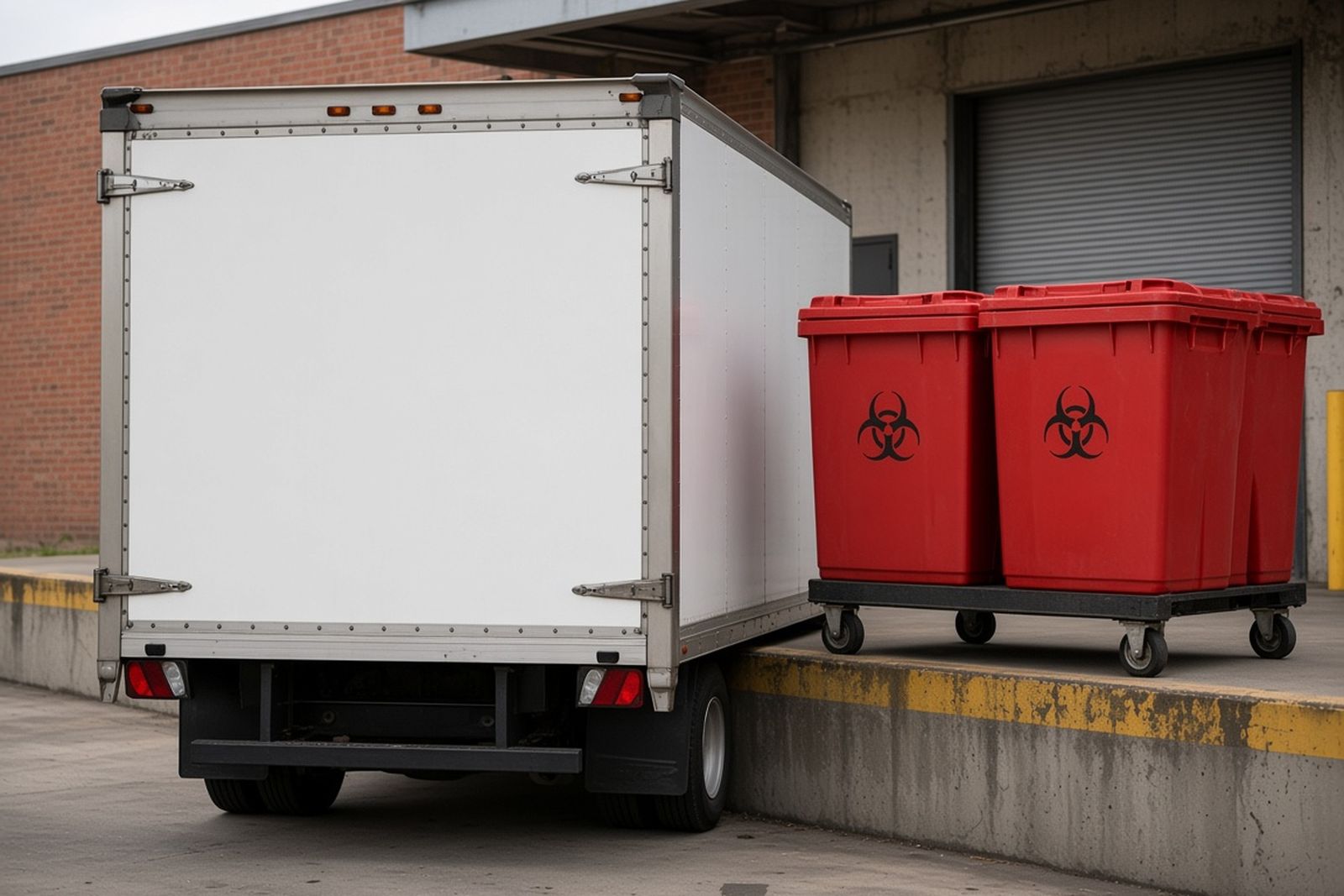
Whether you hire the hauler or your contractor does, you want the same basics confirmed. Ask for the company's state registration or permit number and check it with the issuing agency. Ask whether its drivers are trained in DOT hazmat rules and in bloodborne pathogen safety. Ask what treatment facility receives the waste.
For ongoing needs, such as a building with a medical office tenant or a senior housing community with frequent home care, a scheduled service agreement can be simpler than calling for pickups one at a time. Make sure the agreement names who is the generator, who signs shipping papers, and who receives the records.
If a contractor arranges transport for you, ask for the hauler's name and registration anyway. You are entitled to know where waste from your property is going.
Portfolio managers should also think about consistency. If you oversee buildings in several counties or states, one vendor may not be registered everywhere you operate. Keep a short list of approved haulers for each region, note the date you last confirmed each registration, and share that list with site staff so nobody is searching online at midnight when a contractor asks who should pick up the boxes.
Records for the property file
Documentation protects you if an owner, insurer, or regulator asks later what happened. It also helps the next manager who inherits the building.
Keep one folder per event, whether paper or digital, and put everything related to the waste in it. If a hauler or contractor cannot provide these, treat that as a warning sign about the rest of their service.
When a building changes hands, these folders become part of the due diligence package. A buyer's inspector or lender may ask about past biohazard events, and a complete record answers the question in minutes instead of weeks.
- The cleanup or remediation contract, including the waste responsibility clause
- Photos of the packaged waste and storage area before pickup
- The shipping paper, manifest, or tracking form signed at pickup
- Confirmation of treatment or a certificate of destruction
- The hauler's registration number and certificate of insurance
- Any staff exposure report and follow-up notes
One unattended death, handled step by step
Take a composite case, not a real property: the manager of a 120-unit apartment community who learns that a long-term resident passed away and was not found for several days. The family hires a biohazard remediation company, which removes the affected carpet, pad, and a mattress, and packs the material into lined boxes.
The contractor's crew finishes late in the day. Its usual hauler cannot come until later in the week. The crew asks to leave the boxes in the unit, but the manager has a turnover crew scheduled there. Instead, the manager offers a locked storage room with a sealed concrete floor, confirms that the contractor will label every box, and changes the lock so only the manager and contractor have keys.
Before the pickup, the manager asks for the hauler's registration number and checks it online. On pickup day, the manager watches the driver inspect each box, sign the shipping paper, and hand over a copy. Two weeks later, the contractor forwards confirmation that the waste reached a treatment facility. All of it goes into a single file under the unit number, along with the contract and photos.
Nothing about that sequence is dramatic. That is the point. Good process makes a stressful event routine for everyone except the grieving family, who should not have to think about it at all.
How can I communicate with tenants without causing alarm?
Neighbors notice unfamiliar trucks and people in protective gear. A short, calm notice is better than rumors. You can tell residents that a licensed contractor is performing cleaning in a unit and that any waste is being packaged and removed by a registered transporter. You do not need to share the reason, and you should not share details about a resident's death or health.
For residents who use sharps at home, consider posting information about local disposal options, such as mail-back programs, pharmacy kiosks, or community drop-off sites your health department lists. Making safe disposal easy reduces what your staff will find later.
If the event involved a death, keep your tone respectful in every message. Families sometimes read building notices, and the way you describe what happened can matter to them long after the trucks are gone.
The short version
Find out who owns the waste. Keep it closed, labeled, and locked up until it leaves. Confirm the hauler is registered. Collect the paper trail and file it. Protect your staff with training and supplies, and protect your tenants with calm, private communication.
When a situation does not fit your written procedures, pause and call your state agency or a qualified biohazard firm before anyone improvises. A day's delay is almost always less costly than untangling waste that went to the wrong place.