Short answer
A defensible medical waste transport scope lists every waste stream and where it goes, the containers and packaging limits for each, how and where waste is stored before pickup, the pickup schedule, who signs shipping papers, what records come back, and which materials are excluded. This hypothetical clinic closure walks through those decisions step by step.
About this composite example
The scenario below is an illustrative composite built for teaching. It does not describe a real client, a real facility, or a guaranteed outcome. Names, quantities, and timelines are invented to show how decisions connect, not to suggest what your project will require.
The example follows a small outpatient practice that is closing one location and needs every piece of regulated waste removed before the lease ends. That situation is common and forces a practice to think through waste it normally handles on autopilot.
Use it as a checklist for your own conversations with a transporter. Your state's rules, your waste mix, and your hauler's permits will change the specifics.
The practice does family medicine and minor procedures, with two exam hallways, a small procedure room, a point-of-care lab, and a supply closet. It is consolidating into a newer building across town and has three weeks before handing back the keys.
Routine medical waste has been picked up every other week by a registered hauler under a service agreement. The office manager realizes that the closure will produce waste that does not fit the normal routine: expired medications, a partly used box of lab reagents, a refrigerator of specimen supplies, and several sharps containers mounted in rooms that have never been emptied at the same time.
She calls the hauler and asks for a written closure scope rather than a single extra pickup. That decision shapes everything that follows.
Sorting the waste streams
The first step was a walk-through with the hauler's account representative, room by room, listing what was there and where it belonged. The goal was to keep each stream on its own path, because mixing streams can raise costs, violate rules, or send material to a facility not permitted to accept it.
Much of what a clinic throws away is not regulated medical waste at all. Paper, packaging, and uncontaminated supplies belong with ordinary trash, and sorting carefully keeps them out of expensive red bags.
The walk-through produced a list that the office manager and hauler both signed.
- Sharps in wall-mounted and countertop containers
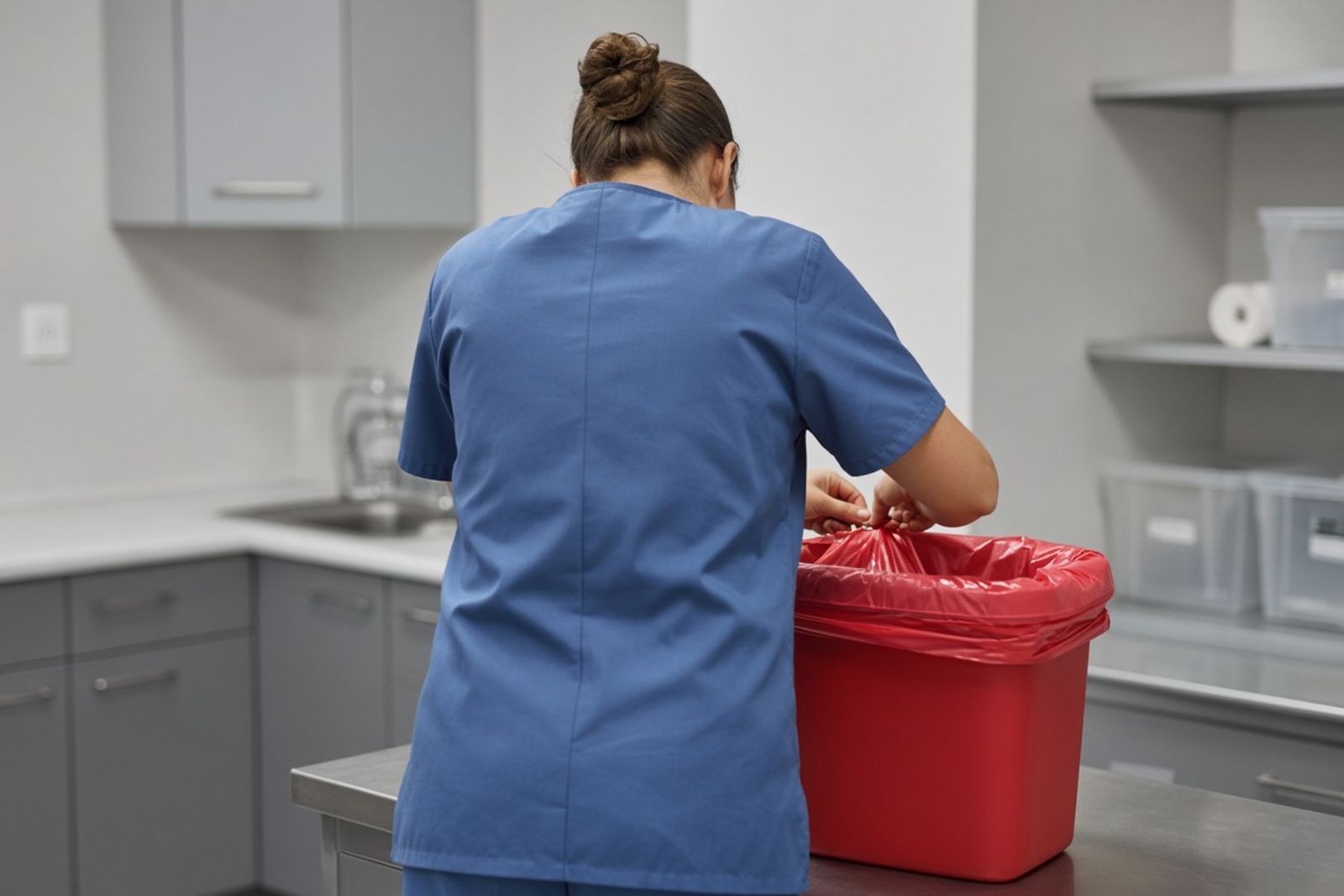
- Red-bag waste from exam and procedure rooms
- Specimen containers and lab waste from the point-of-care area
- Expired and unused medications, handled as a separate pharmaceutical stream
- Lab reagents with chemical hazards, flagged for a hazardous waste vendor
- Ordinary trash, cardboard, and furniture, handled by the building's regular services
Containers and packaging limits
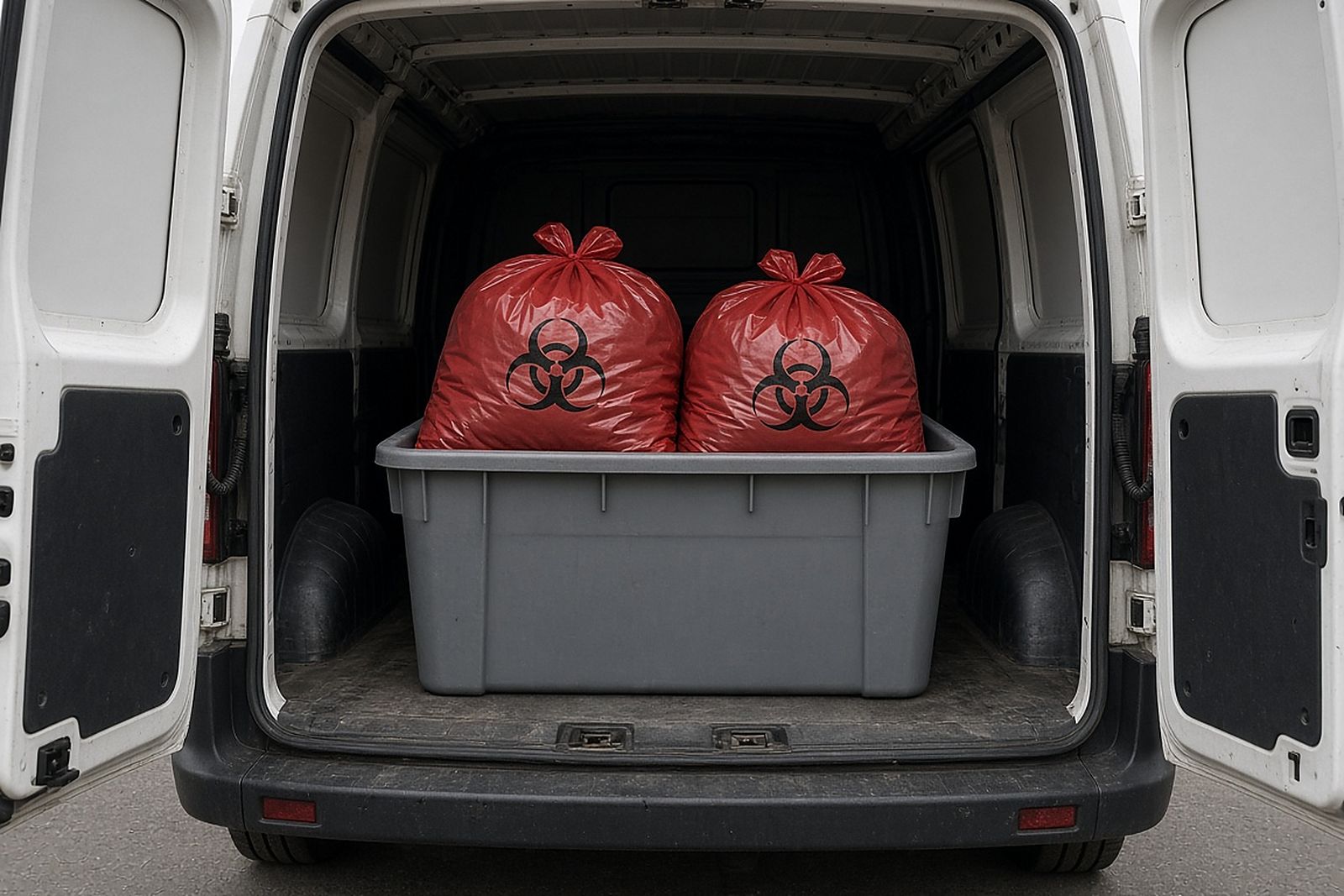
With the streams listed, the hauler specified containers for each one it would carry. Federal transport rules shape those choices. Under PHMSA's 49 CFR 173.197 as published in 2024, plastic film bags of solid regulated medical waste are capped at 175 liters (46 gallons), and inner packagings for liquid regulated medical waste may hold no more than 19 liters (5 gallons).
Those limits matter in a closure because staff are tempted to consolidate. Stuffing three half-full bags into one oversized bag, or pouring leftover specimen fluids into a single large jug, can make a load unacceptable for transport. The scope told staff to close each bag at the fill line, place it in the hauler's approved box, and leave liquids in their original closed containers inside absorbent-lined packaging.
The scope also addressed a narrow but important exception. The American Bio Recovery Association, citing 49 CFR 173.134 in 2023, notes that regulated medical waste containing a Category A infectious substance must be classed as an infectious substance and assigned UN2814, UN2900, or UN3549 rather than UN3291. The practice confirmed it had no such material, and the scope said so in writing.
Storage before pickup
A closing office has fewer staff and more people coming through: movers, IT contractors, the landlord's inspector. The scope designated the former procedure room as the only holding area for packaged waste, with a lockable door and a sign on the outside.
Staff were told that no packaged waste would sit in hallways, the loading area, or the building's shared trash room. Boxes were labeled and dated as they were filled so the manager could see at a glance what was ready.
The hauler's representative reviewed the room and pointed out one issue: a floor drain under the sink. Staff placed boxes on a raised shelf so a leak, if one happened, would not reach the drain. It is a small detail, and exactly the kind a written scope is meant to catch.
Pickup schedule and paperwork
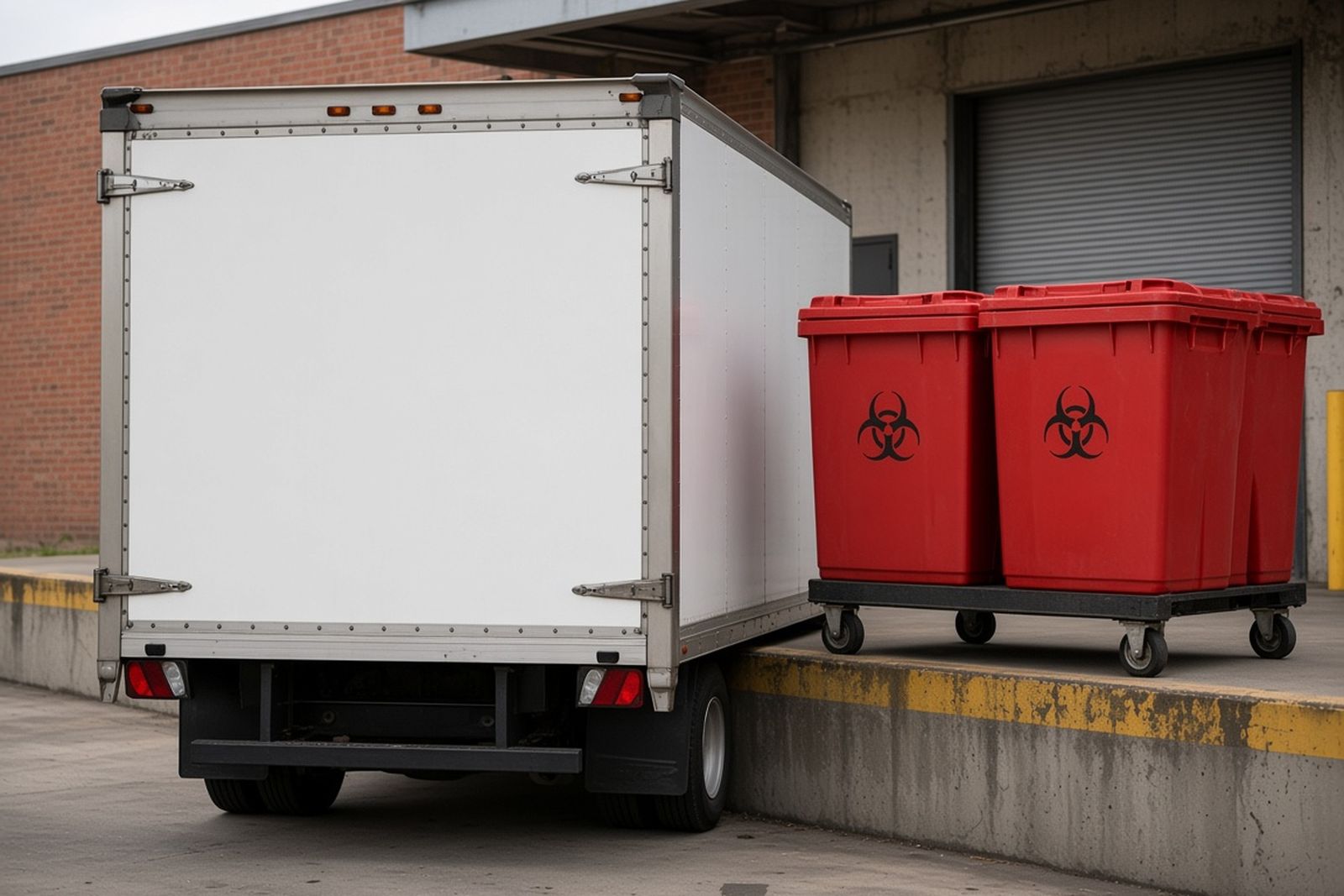
Instead of one large pickup on the last day, the scope called for three: one at the start to clear routine waste, one in the middle as rooms were emptied, and a final pickup after the last patient day. Spreading pickups out reduced the amount stored at any moment and left time to fix problems.
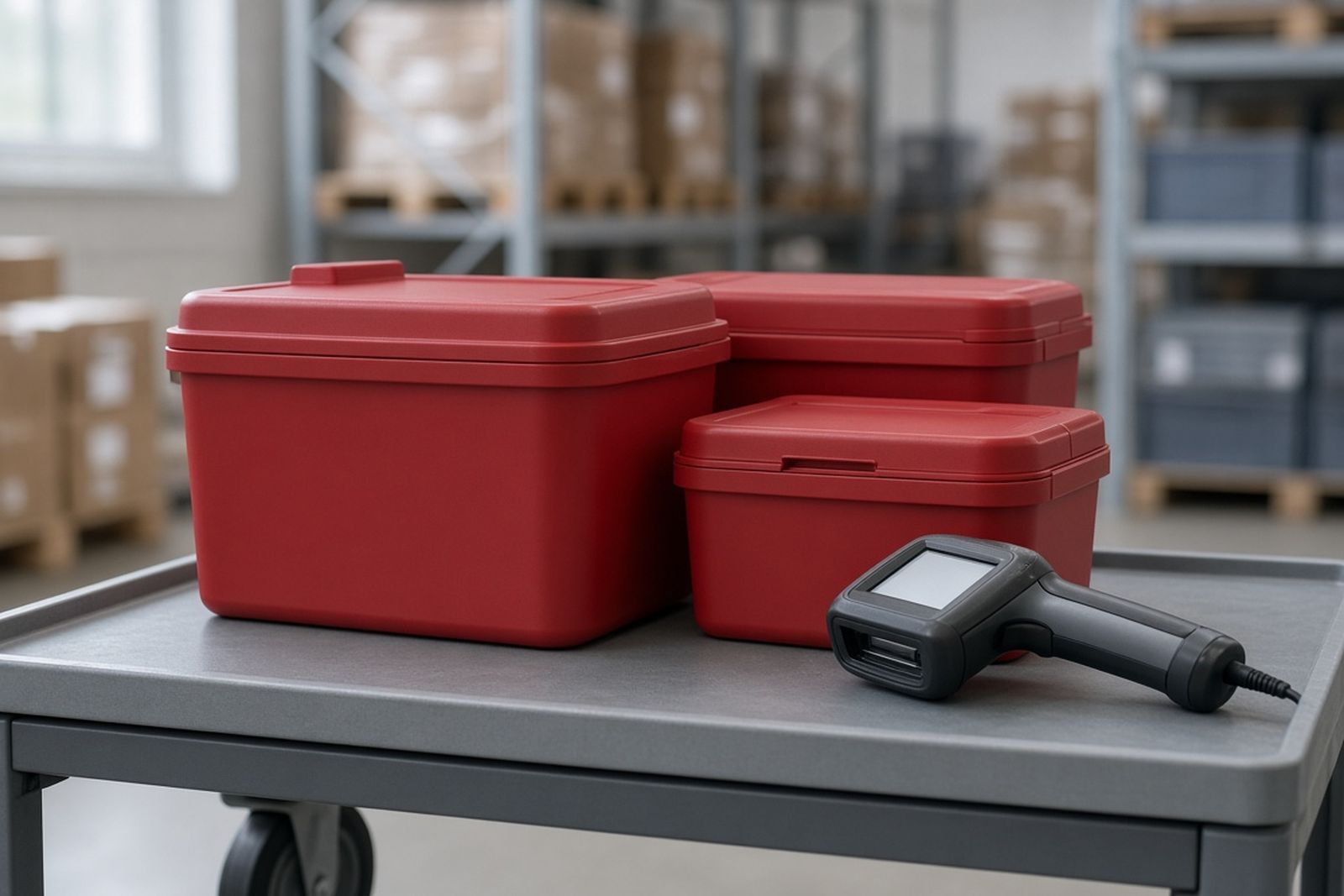
The scope named the office manager as the person who would sign shipping papers and receive tracking records. It listed what each pickup should produce: a signed shipping paper or state tracking form, a container count by type, and later confirmation that the waste reached a named treatment facility.
The pharmaceutical and chemical streams had their own pickups with vendors qualified for them. The scope listed those vendors by name so no one would hand reagents to the medical waste driver by mistake.
Exclusions and the change rule
A scope becomes defensible when it says what is not included and how surprises will be handled. This one listed exclusions plainly: no chemical reagents, no controlled substances, no furniture, and no waste found outside the practice's suite.
It also set a change rule. If staff found anything not on the list, such as an old container of unknown liquid in a cabinet, they would stop, photograph it, isolate it in the holding room, and call the office manager. Only she could approve adding it to a pickup, after the hauler confirmed it could legally carry it.
That rule came into play once. A box of old glass slides turned up behind the lab refrigerator. The hauler confirmed they could go in a sharps container, the manager approved it, and the addition was noted on the next pickup record.
Where do scopes like this usually break down?
Even careful practices run into the same handful of problems when a closure or other unusual event disrupts routine pickups. Knowing them in advance lets you write a line in the scope for each one.
The most common failure is the last-minute discovery. Staff clear out a storage room on the final afternoon and find supplies, specimens, or sharps that were never on anyone's list. With no pickup left on the schedule, the material either waits in an empty suite or goes somewhere it should not. Scheduling the final pickup a day or two after the last clean-out, rather than on the same day, gives you room to handle what turns up.
Another is unclear authority. When the office manager, a physician owner, the moving company, and the landlord all give instructions, waste can end up in the wrong place. A scope that names one decision-maker avoids that.
A third is paperwork that stops at pickup. If nobody is assigned to confirm that treatment records arrive, the file may end with a shipping paper and nothing after it. Put a follow-up date on the calendar for each pickup.
- Late discoveries with no pickup left on the schedule
- Several people giving conflicting instructions to staff and movers
- Consolidating partly filled bags or containers beyond packaging limits
- Chemical or pharmaceutical items slipped into medical waste boxes
- No one assigned to chase treatment confirmations
What closeout proved
At the end, the office manager had a folder with the signed walk-through list, container instructions, photos of the holding room, three shipping papers, three treatment confirmations, separate records from the pharmaceutical and chemical vendors, and a short note about the glass slides. If a state inspector, the landlord, or the practice's own compliance officer asked where the old location's waste went, the answer was in one place.
The takeaway is not that every closure needs three pickups. It is that each decision in the scope traced back to a real condition in the building, and every exception went through one person. That is what makes a scope defensible.
Before your own project, ask your hauler to walk the space with you, list every stream, name the containers and limits, set storage rules, schedule pickups, define exclusions, and agree on who approves changes. Your state medical waste program can confirm which of these steps its rules require.